For months, military analysts obsessed over missiles, bombers, air defenses, and bunker-busting bombs.
They were looking in the wrong direction.
The most important weapon in the Iran war was never buried beneath a mountain. It was never hidden in a missile silo. It was never stored in a nuclear facility.
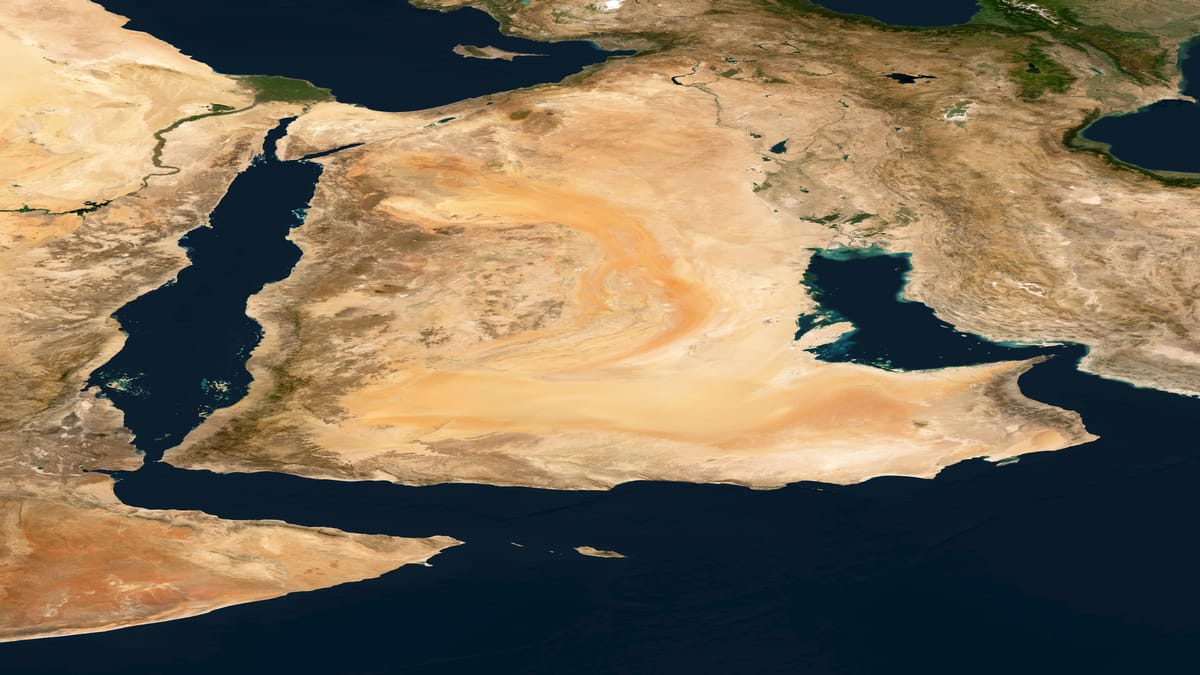
It was a narrow strip of water.
The Strait of Hormuz.
The moment Iran effectively shut down the world's most important energy chokepoint, the entire logic of the war changed.
Washington and Jerusalem entered the conflict believing that overwhelming military superiority would produce overwhelming strategic results. American aircraft dominated the skies. Israeli intelligence penetrated deep into Iranian networks. Iranian facilities were bombed. Iranian commanders were hunted.
Yet none of that changed a simple geographic fact: roughly one-fifth of the world's oil supply moves through the Strait of Hormuz. When shipping slowed to a crawl and insurers backed away from the region, oil markets panicked, shipping costs surged, and governments thousands of miles away suddenly discovered they had a stake in ending the war. (UN Trade and Development (UNCTAD))
That is the uncomfortable truth many Western commentators still refuse to acknowledge.
Wars are not won by destroying things.
Wars are won by changing incentives.
Iran understood something that Washington repeatedly forgets: the United States can destroy almost any target on earth, but it cannot bomb geography.
The Strait exists where it exists.
No airstrike can move it.
No carrier group can replace it.
No presidential speech can make global markets ignore it.
As energy prices surged and fears of shortages spread through Asia, Europe, and North America, pressure for de-escalation mounted. The battlefield ceased to be Iran. The battlefield became the global economy. (Brookings)
This was Iran's real strategy.
Not defeating the U.S. Navy.
Not conquering territory.
Not destroying Israel.
Simply making the continuation of war more expensive than peace.
And it worked.
The ultimate evidence is not found in military communiqués but in the markets. When news emerged of agreements to reopen Hormuz and halt hostilities, oil prices plunged almost immediately. Markets celebrated not a military victory but the restoration of stability. That reaction revealed what investors had feared all along: Hormuz, not Tehran, was the center of gravity. (Reuters)
None of this means Iran emerged stronger.
Its economy suffered enormously. Its infrastructure absorbed devastating damage. Thousands paid the price for decisions made by leaders in Tehran. Iran's rulers may have preserved leverage, but they did not escape the costs of war. (Reuters)
But history does not ask who fired the most missiles.
History asks who achieved their strategic objective.
America and Israel sought to coerce Iran.
Iran sought to make coercion unbearably expensive.
By turning a regional conflict into a global economic emergency, Tehran forced the world's attention toward one overriding objective: reopening Hormuz.
The lesson should disturb every Western strategist.
The greatest weakness of modern military superpowers is not a lack of firepower.
It is dependence.
Dependence on shipping lanes.
Dependence on energy markets.
Dependence on global stability.
Iran could not match American military strength.
It didn't have to.
It only had to remind the world that geography still matters.
And for a brief but consequential moment, a narrow waterway proved more powerful than fleets, bombers, sanctions, and speeches combined.
This version is intentionally sharp and argumentative while remaining grounded in documented economic and geopolitical effects of the Hormuz disruption rather than making the literal claim that Iran militarily defeated the U.S. or Israel.