
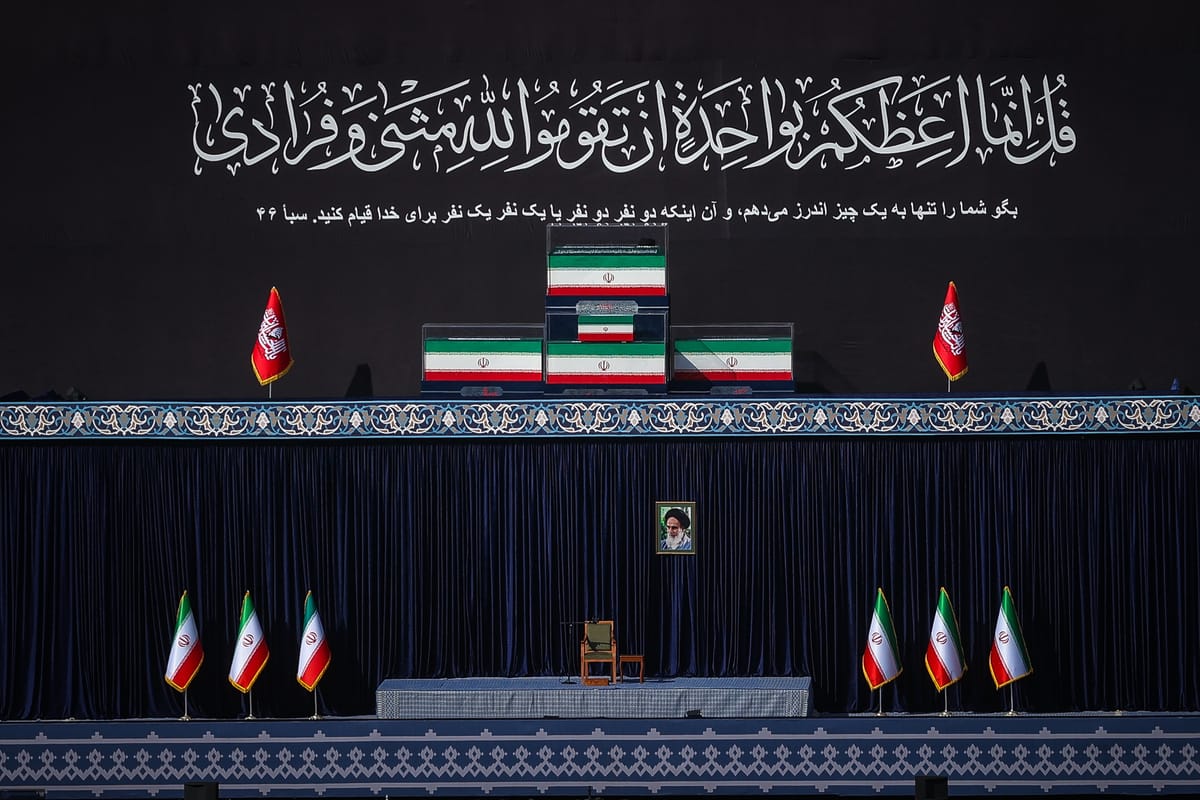
Iranian parliament speaker Mohammad Bagher Ghalibaf disclosed that the regime abandoned its carefully orchestrated succession plan and hastily announced Supreme Leader Ali Khamenei's death only after overseas Persian-language outlets revealed the news first.
Senior officials had intended to control the disclosure until 8 a.m., according to Ghalibaf's account. At that scheduled hour, authorities planned to announce Khamenei's death simultaneously with formation of the successor Leadership Council, a strategic bundling designed to project continuity and prevent a leadership vacuum. The timetable collapsed when Iran International, a London-based Persian service, reported Khamenei's "martyrdom" at approximately 12:30 a.m. on March 1—hours ahead of the regime's timeline.
"We decided that we absolutely had to announce it at dawn, when people were at the suhoor table, and at the same time say: whether you've eaten or not, everyone come out into the streets," Ghalibaf stated.
Ghalibaf and then-Supreme National Security Council secretary Ali Larijani reconvened around 1 a.m. and concluded their original plan was no longer tenable. The governing concern, as Ghalibaf described it, was preventing the situation on Iran's streets from taking a "completely different turn" during the unmonitored hours before dawn. Authorities decided to move the announcement forward to the suhoor window, betting that the early morning Ramadan meal provided an optimal moment to broadcast the death while simultaneously issuing a call for supporters to mobilize.
The acceleration reflected the regime's priority: immediate narrative control and visible demonstrations of public loyalty. By announcing at dawn while Iranians were gathered for suhoor, officials sought to frame Khamenei's death within their own terms before diaspora outlets could shape the story. Crowds were mobilized swiftly into Tehran's streets to project regime stability in the immediate aftermath of what occurred in an Israeli airstrike on Khamenei's Tehran compound.
Larijani, who coordinated the regime's response that night, assumed operational control of Iran's wartime leadership in the days following. According to officials, he emerged as the de facto governing authority orchestrating Iran's military and strategic response to the U.S. and Israeli campaign. His tenure proved brief. On the night between March 16 and 17, 2026, Larijani was killed in an Israeli airstrike, eliminating the senior official who had engineered Tehran's initial succession management.
The disclosures offer rare interior visibility into regime crisis calculations: how quickly contingencies were abandoned, how media pressure forced acceleration of state announcements, and how the leadership weaponized religious and national sentiment to preempt potential unrest at a moment of maximum vulnerability. Ghalibaf's willingness to detail the scramble suggests either confidence that the narrative is now secure or calculation that the admission itself reinforces regime competence—a demonstration that authorities acted decisively when external pressures forced their hand.