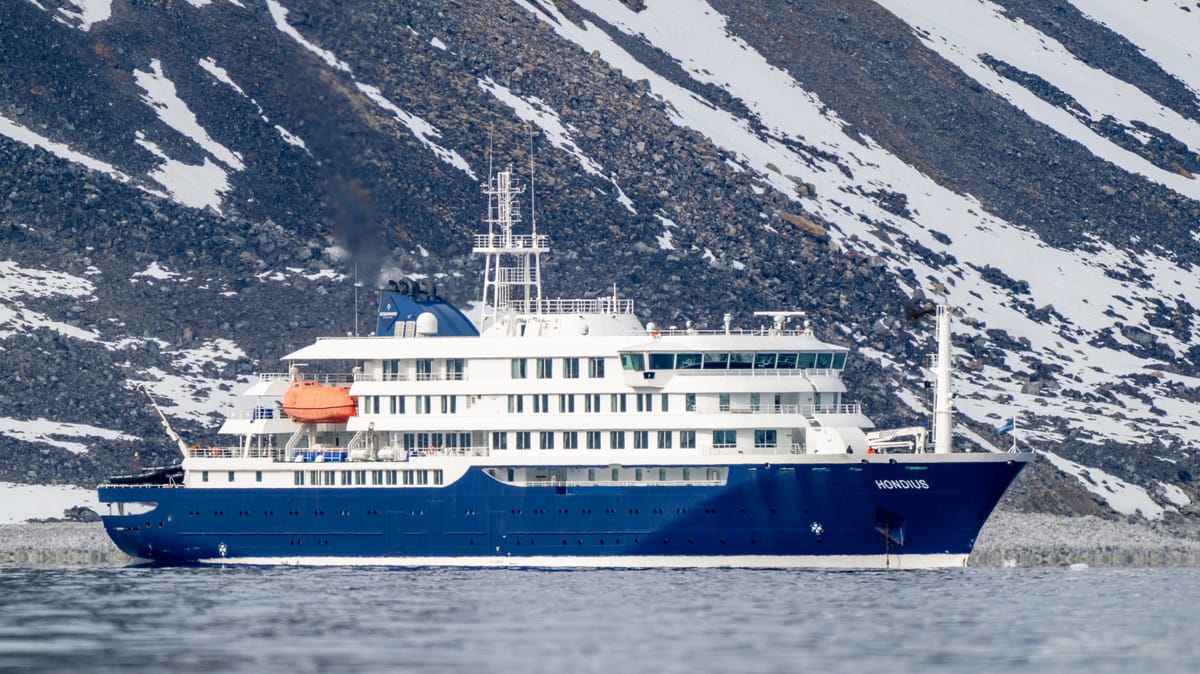
The MV Hondius, the Dutch-flagged cruise ship at the centre of a deadly hantavirus outbreak, arrived at the port of Granadilla de Abona in Tenerife in the early hours of Sunday morning, triggering one of the most complex international passenger evacuation operations since the Covid-19 pandemic. Nearly 150 people remain on board. Three are dead. Authorities in more than a dozen countries are now scrambling to bring their citizens home, and keep them isolated when they get there.
A Ship Sorted by Nationality
The overriding principle of the dispersal plan is simple: no passenger touches Spanish soil in any meaningful way. Disembarkation is being conducted in nationality groups, with each group transferred by small boat directly to sealed buses, then on to waiting dedicated aircraft. Spanish authorities have confirmed repatriation flights are scheduled for the U.S., U.K., France, Germany, Belgium, Ireland and the Netherlands. The Canary Islands' regional government has made clear it wants every passenger off the boat and out of the islands by the end of the day Sunday. The ship itself is expected to depart by nightfall.
Spanish nationals are first off the vessel. Spanish passengers will be flown to Madrid to quarantine at the Gomez-Ulla military hospital, a specialist facility with the infrastructure to handle infectious disease isolation. Spain's health minister confirmed that, as of Sunday morning, no one currently on board is showing symptoms.
United States
CDC staff have been dispatched to Tenerife to meet the 17 American passengers and accompany them home on a charter flight with a biocontainment unit, similar to those used during Covid-19 evacuations. The plane will land at Offutt Air Force Base near Omaha, from where passengers will be transported to the National Quarantine Unit at the University of Nebraska Medical Center for monitoring and evaluation.
Crucially, however, the U.S. is not imposing mandatory quarantine. A CDC official told reporters Saturday: "We are not quarantining anybody." As of Saturday, none of the 17 Americans aboard had tested positive, and officials said testing was "not recommended" for people without symptoms. Instead, each passenger will be evaluated upon arrival and may opt to go home and monitor for potential symptoms for 42 days while staying in touch with their state or local health departments.
Officials may recommend that passengers doing home-based monitoring limit activities that involve extensive contact with other people. Health officials are already monitoring passengers in at least five states, including Arizona, California, Georgia, Texas, and Virginia, who left the ship before the outbreak was formally declared on May 2.
Europe: Germany, France, Belgium, Ireland, the Netherlands
To assist EU countries without their own air transport resources, the European Civil Protection Mechanism has made two aircraft available, with flights scheduled throughout Saturday and Sunday, Spanish Interior Minister Fernando Grande-Marlaska confirmed. Germany, which lost one national on board and had a second evacuated and hospitalised (that passenger has since tested negative), is receiving its citizens directly. France is monitoring eight nationals who had contact with an evacuated passenger who died. The Netherlands, whose company Oceanwide Expeditions operates the ship, has eight passengers and five crew aboard; two Dutch nationals have already died.
United Kingdom
British passengers are also being flown home on a dedicated flight, with UK health authorities coordinating their arrival and monitoring arrangements.
The Ship
The regional government of the Canary Islands has suggested the MV Hondius continue to the Netherlands after disembarkation, with the same crew, and that disinfection be carried out there. The vessel will proceed to Rotterdam for deep cleaning before returning to service.
"This Is Not Another Covid-19"
The scale and speed of the operation reflects both genuine public health necessity and acute political sensitivity. WHO Director-General Tedros Adhanom Ghebreyesus, who travelled to Tenerife personally to oversee the evacuation, wrote an open letter to Canary Islands residents acknowledging their anxiety. "I know you are worried. I know that when you hear the word 'outbreak' and watch a ship sail toward your shores, memories surface that none of us have fully put to rest," Tedros wrote. "The pain of 2020 is still real, and I do not dismiss it for a single moment. But I need you to hear me clearly: this is not another COVID-19."
The comparison to 2020 is not idle. Fernando Clavijo, the president of the Canary Islands, had initially refused to allow the Hondius to dock, saying he "cannot allow it to enter the Canaries," citing concerns for islanders' safety rooted in the trauma of the pandemic years. The WHO countered that Spain had "a moral and legal obligation" to assist, and Madrid ultimately overruled the regional government.
The Virus: Why the Andes Strain Changes the Calculation
Most hantaviruses spread only from rodents to humans, making human outbreaks self-limiting. The Andes strain is different. It is the only known hantavirus documented to spread between people, a phenomenon attributed to cases involving close or prolonged contact. A previous outbreak in Argentina saw one introduction lead to 34 infections, a super-spreader event that health authorities are acutely aware of.
The fatality rate ranges from 25 to 40 percent. There is no vaccine and no specific treatment; care is supportive only. The incubation period can stretch to six weeks, which is why monitoring periods are set at 42 days and why authorities are racing to trace the roughly two dozen passengers who left the ship before the outbreak was formally identified.
New Jersey has said it is monitoring two people potentially exposed to an infected person after they departed the Hondius.
How It Started
The outbreak traces back to the ship's departure from Ushuaia, Argentina, on April 1. The index case, a Dutch national, developed symptoms shortly after the voyage began. He died on April 11; his body remained on board until April 24, when it was removed at Saint Helena. His wife disembarked there and died two days later in a hospital in Johannesburg.
Argentine health investigators have since published a detailed account of the index case's movements: he had completed a four-month road trip through Chile, Uruguay, and Argentina between November 2025 and April 2026, returning from Uruguay just four days before departure. Rodent-trapping and testing is now underway along the route he travelled.
Reports have pointed to a birdwatching visit to a landfill site near Ushuaia, notorious for its rodent population, as a likely point of exposure. Hantavirus is primarily transmitted through contact with infected rodent droppings, urine, or saliva.
What Happens Next
With evacuations underway, the Canary Islands regional government has said it wants the ship to depart by the end of Sunday. The coming six weeks will be the critical window: anyone currently incubating the virus could develop symptoms within that period, and health departments across Europe and North America are now the front line of containment.