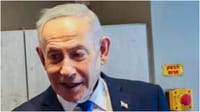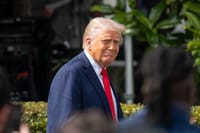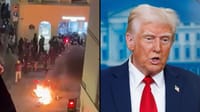
A highly sensitive, unpublicized diplomatic channel has been exposed following a series of incredibly harsh phone conversations between President Donald Trump and Prime Minister Benjamin Netanyahu regarding the ongoing war in Lebanon. Intelligence sources confirmed that the two leaders had previously reached a hidden evacuation agreement regarding the Dahiya district in southern Beirut, stipulating that a formal displacement notice would be issued strictly as an empty threat. The strategic goal of the maneuver was to place immense psychological pressure on Hezbollah to halt its rocket fire and to give the Lebanese government an ultimatum, without actually executing the physical strikes.
However, the delicate hidden evacuation agreement completely disintegrated when the White House observed a joint public announcement from the Prime Minister and the Defense Minister threatening immediate, active bombardments in Beirut. The American administration instantly concluded that the Israeli leadership was attempting to use the prior understanding as a deceptive cover to transform a tactical bluff into a real, destructive military operation. Fearing that the imminent strikes would completely shatter fragile regional negotiations, Washington acted aggressively to freeze the scheduled aerial operations, which immediately triggered a exceptionally tense and difficult phone call.
The strategic friction intensified later that evening when the Prime Minister unilaterally released an official public statement asserting that he had explicitly informed the American President that Israel would strike terror targets inside Beirut if civilian centers continued to face bombardment. This public messaging deeply angered President Trump, who viewed the statement as a complete distortion of their private understandings that played directly into the hands of hostile forces. Security coordinators later criticized the public announcement, arguing that creating a public equation where military personnel could be targeted while civilians were protected was a major tactical error.
During the subsequent late-night confrontation, which sources described as far more volatile and toxic than previous exchanges, the American President did not hold back his fury. According to senior officials, the President called the Prime Minister completely crazy and accused him of deep ingratitude for systemic past support. The President directly stated that the Prime Minister would be in prison if it were not for his personal interventions, adding that global public opinion was turning heavily against the state due to the current operational direction.
While the American administration emphasized its absolute support for the baseline right to self-defense against ongoing rocket fire, the executive branch felt that the recent localized escalations had become entirely disproportionate. The severe diplomatic fallout has left senior planners in Jerusalem deeply worried about future operational flexibility and potential restrictions on front-line maneuvers. As backchannel communication lines remain highly strained, the collapse of the hidden evacuation agreement highlights the profound friction defining the upper echelons of allied wartime command.