Missile Capabilities and Historical Context
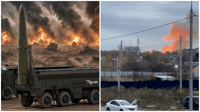
The Quds-5, a Houthi-modified version of Iran's Quds cruise missile family (unveiled in 2022-2023 parades), is designed for low-altitude, radar-evading flights with an estimated 800-1,350 km range and electro-optical guidance for naval targets. Analysts from the International Institute for Strategic Studies (IISS) note its similarity to Iran's Soumar, capable of 50% accuracy within 30 meters, though Houthi variants suffer from inconsistent performance due to supply chain disruptions. The Al-Mandab, named after the Bab al-Mandab Strait, draws from captured Chinese C-801 (YJ-81) and Soviet P-21 systems, with a 40-120 km range for coastal anti-ship roles. These have been used in over 100 attacks since October 2023, but none have successfully struck U.S. vessels.
U.S. Central Command (CENTCOM) reported intercepting similar threats routinely: On March 15, 2025, USS Gettysburg and USS Harry S. Truman downed multiple Quds variants and drones during a barrage, with no damage. A January 2024 attempt on USS Gravely came within a mile before interception. Failed strikes, like a March 2025 drone swarm on the Truman that led to an accidental F/A-18 loss during evasive maneuvers, underscore Houthi limitations despite Iranian upgrades, including hydrogen fuel cells and Russian optics.
The video's timing follows Houthi leader Abdul-Malik al-Houthi's October 18 speech reaffirming commitment to the "Flood of Al-Aqsa" campaign until Jerusalem's "liberation," despite the Gaza deal pausing attacks on Israel. Yemen's Houthis, controlling Sana'a since 2014, have disrupted $1 trillion in trade by forcing ships around Africa, per Russell Group estimates, with Suez Canal transits dropping 58% from November 2023 to October 2024.
U.S. and Allied Response
The Pentagon dismissed the video as "empty bluster from a sanctioned terrorist group," with spokesman Maj. Gen. Pat Ryder stating: "Our layered defenses—Aegis, CIWS, and allied patrols—have neutralized every Houthi attempt. Threats won't deter Operation Prosperity Guardian." The coalition, including U.S., UK, and French assets, continues patrols in the Bab al-Mandab, where 200 vessels transited in February 2025 amid elevated freight costs.
Experts warn of escalation risks if Iran bolsters Houthi guidance systems, potentially enabling hits on carriers like the Truman, which operates 1,600 km from Yemen. Washington Institute analysts recommend preemptive strikes on launch sites to signal intolerance.
No immediate U.S. retaliation has been announced, but CENTCOM footage from recent operations shows Tomahawk launches degrading Houthi capabilities.
The Houthis' persistence, even post-ceasefire, ties to broader "axis of resistance" coordination with Hamas and Hezbollah, though their 758 claimed operations against Israel since 2023 yielded minimal impact, all intercepted.