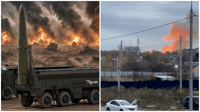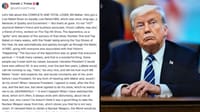
The central justification for the US-Israeli war against Iran was preventing the Islamic Republic from acquiring a nuclear weapon. It was the stated rationale for the June 2025 strikes on Fordow, Natanz, and Isfahan. It was the stated rationale again when the US and Israel launched their joint offensive on February 28, 2026, killing Supreme Leader Ali Khamenei in the opening hours of the campaign. President Trump said Iran's nuclear facilities had been "obliterated."
There is now a serious and growing body of expert opinion suggesting that the war may have achieved precisely the opposite of what it intended, that by attacking Iran without destroying its nuclear capability, the US and Israel have given the regime every incentive to accelerate its pursuit of a bomb while simultaneously degrading the international frameworks designed to stop it.
What the Strikes Actually Did
Start with the military facts. Iran's nuclear facilities were not a primary target of the 2026 US-Israeli air campaign because the previous June 2025 strikes against Fordow, Natanz, and Isfahan were largely successful in disrupting enrichment and preventing Iranian access to their buried highly enriched uranium.
But disrupting is not destroying. Iran's HEU stockpile is now assessed as a more risky scenario than before the war began, as it would leave Iran significantly closer to the capability of making nuclear bombs than the proposed settlement being negotiated in Geneva two days before the war began.
In other words: the war started while a diplomatic deal was within reach. Iran's existing stockpile, which before the June 2025 strikes was sufficient for more than a dozen nuclear weapons if further enriched, was never fully eliminated. And Iran's scientists, who can now enrich uranium very quickly, are still there.
Israel degraded Iran's weaponization pathway during both rounds of strikes, striking up to 11 weaponization facilities, the headquarters of Iran's weaponization program known as SPND, and eliminating 12 nuclear scientists in June 2025, plus five more facilities and eight scientists in the 2026 campaign.
The Paradox: Bombing Creates the Incentive
Here is the core problem, and it is one that analysts have been warning about for years. Russian Foreign Minister Sergei Lavrov articulated it bluntly in the days after the war began: "The logical consequence will be that forces will emerge in Iran in favour of doing exactly what the Americans want to avoid, acquiring a nuclear bomb. Because the US doesn't attack those who have nuclear bombs."
This is not a pro-Iran argument. It is a strategic observation with a clear historical basis. The single most powerful lesson any regime draws from watching the United States operate in the world is this: Muammar Gaddafi gave up his weapons of mass destruction program, cooperated with the West, and was ultimately overthrown with NATO's help. Saddam Hussein had no nuclear weapons and was invaded and hanged. North Korea acquired nuclear weapons and has not been attacked. Iran's leadership has read that history carefully.
Analysts at the Institute for Science and International Security assessed in February 2026 that Iran can be expected to seek shorter timelines to nuclear weapons possession, as it did before the war, noting that the probability of Iran pursuing a nuclear weapon was close to 50 percent. That figure has almost certainly risen since.
As one expert put it: "Israel and the United States have given Tehran all the incentives to pursue such a weapon."
The Inspection Problem
The damage extends beyond Iran. The Council on Foreign Relations warned that the Trump administration's counter-proliferation-through-force approach could backfire by encouraging those who want to develop nuclear programs to hide their activities rather than adhere to the successful nonproliferation approach of diplomacy and transparency. The Iran war could have a chilling effect on inspections and international engagement among states hedging with some nuclear materials, maintaining the materials and capacity to weaponize but staying below the weaponization threshold.
The logic is straightforward: if cooperating with the IAEA and engaging in diplomacy doesn't protect you from military strikes, why cooperate? The international inspection regime is built on the premise that transparency offers some protection. The Iran war has badly damaged that premise.
Russia warned that Arab countries could also join a race to build a bomb, and that "the nuclear proliferation problem will begin to spiral out of control." Saudi Arabia has made no secret of its interest in a civilian nuclear program. Turkey has accelerated its nuclear ambitions. The regional dominoes are visible.
The Negotiating Table
And yet here we are, with American and Iranian diplomats exchanging draft frameworks over enrichment levels and sanctions relief, each side knowing what the other knows: that military force set the stage for this conversation but cannot substitute for it. Trump has demanded written commitments on uranium disposal. Iran is playing for time while quietly rebuilding what it can.
Tehran concluded before the war that it was perceived as weak, both militarily and internally, and that it would eventually be attacked regardless of whether a nuclear agreement was reached. Iranian leaders assessed they were better off fighting while holding firm on their enrichment red lines than to capitulate.
That calculation has not changed. If anything, it has hardened. A regime that watched its supreme leader killed in the opening hours of a US-Israeli airstrike has every rational motive to ensure it is never that vulnerable again. The bomb is the ultimate insurance policy. The war reminded them of that.
The question now is whether the diplomatic track currently underway, with Trump demanding written nuclear commitments and Rubio spelling out enrichment conditions before the Senate, can offer Iran enough of what it needs, sanctions relief, security guarantees, regime survival, to make the bomb less attractive than a deal. History suggests that is a very narrow path. And the strikes have made it narrower.
One thing we know for sure is that if this war doesn't end with Trump getting hold of their nukes and getting a real deal regarding them not enriching uranium in the future, and a 100% guarantess that IAEA (or other) inspectors will be allowed to confirm this, the war may well have been for naught.