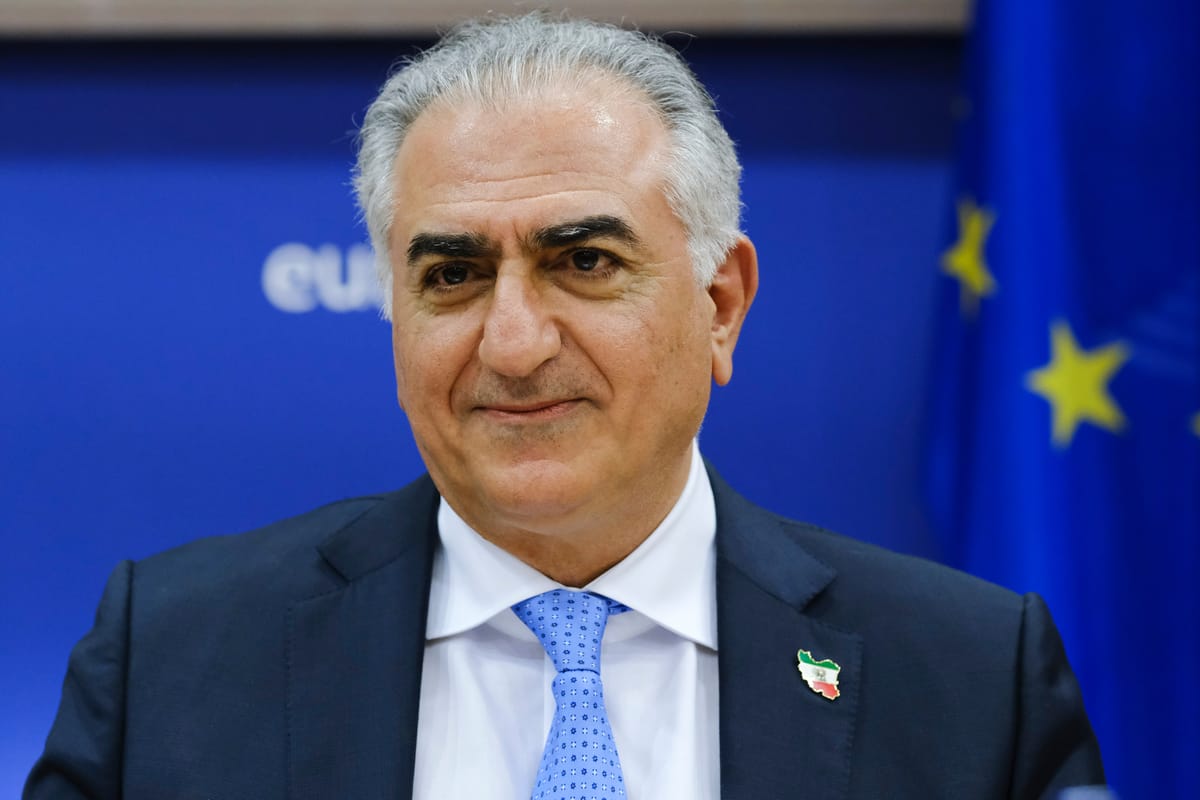
Reza Pahlavi, the exiled Crown Prince of Iran and son of the last Shah, stated in an interview with The Sunday Times that reports he has received indicate as many as 50,000 people have been killed during the ongoing protests against the Iranian regime.
In the interview, titled "Reza Pahlavi: Don't throw Iranian protesters under a bus," Pahlavi urged Western leaders not to abandon the protesters, emphasizing the scale of the crackdown and calling for stronger international support to facilitate regime change.
He urged the Iranian regular army (Artesh) to stop protecting the regime and "join the nation," framing the current conflict as a war between a "domestic occupying force" and the Iranian people.
Pahlavi specifically warned Western leaders against seeking a "deal" or stability with the current regime, stating that any attempt to normalize relations now would be "throwing the Iranian people under a bus" at their most vulnerable moment.
Building on his recent press conferences, he reiterated his readiness to serve as a "neutral arbiter" for a transitional government, proposing a 100-day stabilization plan followed by a national referendum.
Independent estimates vary: Human rights groups like Amnesty International and HRANA have reported lower confirmed figures, such as around 5,000-16,500 deaths, often citing challenges in verification due to internet blackouts and government censorship.
Recent reports indicate that as may as 30,000 protesters were massacred on January 8-9, but the continued internet blackout means that it's impossible to verify these numbers.
Pahlavi's 50,000 figure appears to be based on unverified activist reports he referenced, and it has not been corroborated by neutral observers.
The interview underscores Pahlavi's ongoing advocacy for a democratic transition in Iran, where he positions himself as a potential unifying figure for opposition forces.