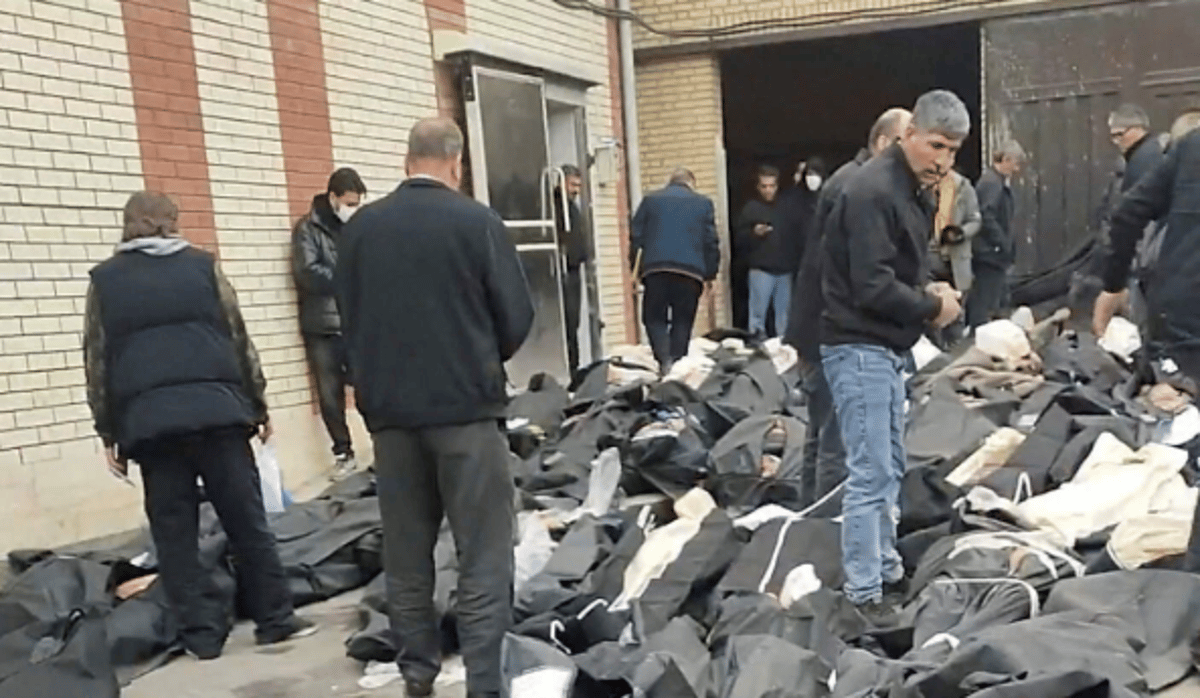
Shocking eyewitness accounts are emerging from Iran amid a nationwide internet blackout, detailing a violent suppression of protests that has left hundreds, possibly thousands, dead. Security forces allegedly fired directly into crowds of unarmed demonstrators, with reports of militia members patrolling streets and shooting at bystanders.
In a particularly grim twist, families of the slain are said to have been required to pay for the ammunition used in the killings before retrieving their loved ones' bodies.
The accounts, compiled from interviews and smuggled videos despite government efforts to sever communications, paint a picture of escalating brutality in response to widespread demonstrations against the Islamic Republic's leadership.
International media outlets, including the BBC, have corroborated some details, highlighting the regime's attempts to isolate the country from global scrutiny. One witness, identified only as Amid, a man in his 40s from a southern Iranian city, recounted scenes of chaos: "I saw it with my own eyes—they fired straight at the rows of protesters, and people fell right where they stood." He described security forces deploying Kalashnikov assault rifles against civilians who were "fighting a cruel regime with empty hands."
In the capital, Tehran, a young woman who spoke on condition of anonymity described last Friday as a "day of blood." Protesters had filled even remote neighborhoods when forces unleashed what she called an unprecedented onslaught. "The security forces just killed and killed and killed," she said. "In war, both sides have weapons. Here, people are just chanting slogans and getting killed. This is a one-sided war."
The most harrowing reports come from hospitals and morgues overwhelmed by the influx. A cemetery worker in Mashhad, Iran's second-largest city, said that before dawn on Friday, 180 to 200 bodies arrived, many with fatal head wounds, and were buried hastily. In the northern city of Rasht, medical sources alleged that authorities demanded payment from grieving families for the "price of the bullets" as a precondition for releasing corpses. Hospitals across multiple cities reported bodies "piled one on top of the other," with staff struggling to cope.
In Pardis, a suburb west of Tehran, residents described sudden ambushes by Basij paramilitary forces on motorcycles, who opened fire on gatherings. Civilian vehicles reportedly entered alleys, with occupants shooting indiscriminately at non-protesters. "Two or three people were killed in each alley," one local said. Videos from Tehran's forensic medicine center, circulated covertly, show trucks unloading bodies and black body bags stacked in warehouses and streets.
The crackdown coincides with defiant statements from Supreme Leader Ali Khamenei, who declared that "the Islamic Republic will not retreat."
The regime has blamed foreign agitators for the unrest, claiming 100 of its own security personnel were killed in what it labels acts of terrorism.Human-rights groups and independent estimates suggest a far grimmer toll among protesters. Organizations like Amnesty International peg the number of civilian deaths at least at 648, though on-the-ground witnesses insist it's significantly higher.
Iran International, a London-based Persian-language broadcaster, reported a staggering 12,000 fatalities, while Reuters cited an anonymous regime official acknowledging 2,000 deaths.The international community has reacted with condemnation. United Nations Secretary-General António Guterres expressed deep shock at reports of "violence and excessive use of force" by Iranian authorities, urging restraint and respect for human rights.
In Washington, sources indicate that President Trump is reviewing options for potential strikes on key Iranian targets, amid heightened U.S.-Iran tensions. With internet access severely restricted, activists have relied on satellite links and encrypted apps to share evidence of the violence.As the death toll mounts, questions loom about the regime's stability and the potential for further international intervention.
Analysts warn that continued repression could deepen Iran's isolation, exacerbating its economic woes amid U.S. sanctions.