U.S. Secretary of State Marco Rubio issued a blunt warning to Iran this week, declaring that Washington will never accept any arrangement under which Tehran charges fees for passage through the Strait of Hormuz, framing the issue as a foundational principle of international order with consequences far beyond the Middle East.
Speaking upon his arrival in Abu Dhabi at the start of a Gulf states tour, Rubio was unequivocal. "It's an international waterway," he said. "No country is allowed to charge tolls or fees on an international waterway. That's existing international law. That's the way it is."
Rubio went further, warning that any acceptance of Iranian tolls on Hormuz would set a precedent with cascading consequences for global trade. If one country could charge for passage through an international strait simply because it lies near its territorial waters, he argued, every nation near a major waterway would have grounds to do the same, producing what he called global chaos.
"I don't think we have anybody to convince around here in that regard," Rubio added. "I think all the countries in this region would agree with us."
The Gulf states have indeed aligned firmly with Washington on the question. Saudi Foreign Minister Prince Faisal bin Farhan said the Gulf states would only accept a prewar status quo regarding the strait. "The management of the strait was working fine before the conflict. There were no issues. Ships were navigating freely," he said, adding that the Iranian position "doesn't make sense."
The remarks came directly in response to Iran's announcement that it would suspend planned transit fees through Hormuz for 60 days while U.S.-Iran negotiations continue in Switzerland, a formulation that left little doubt Tehran intends to introduce permanent charges once the negotiating window closes. Iran's chief negotiator Mohammad Bagher Ghalibaf has signaled that Tehran views the post-war arrangement as fundamentally different from the prewar status quo, saying flatly that "Hormuz will never return" to its previous conditions.
The standoff over Hormuz has emerged as one of the sharpest points of friction in what remains a fragile and contested diplomatic process. Rubio told the Senate Foreign Relations Committee earlier this month that Iran has mined "large segments" of the strait, and that any final agreement must include Tehran's commitment not to charge tolls, not to fire on commercial ships, and to help remove the mines it laid in the waterway.
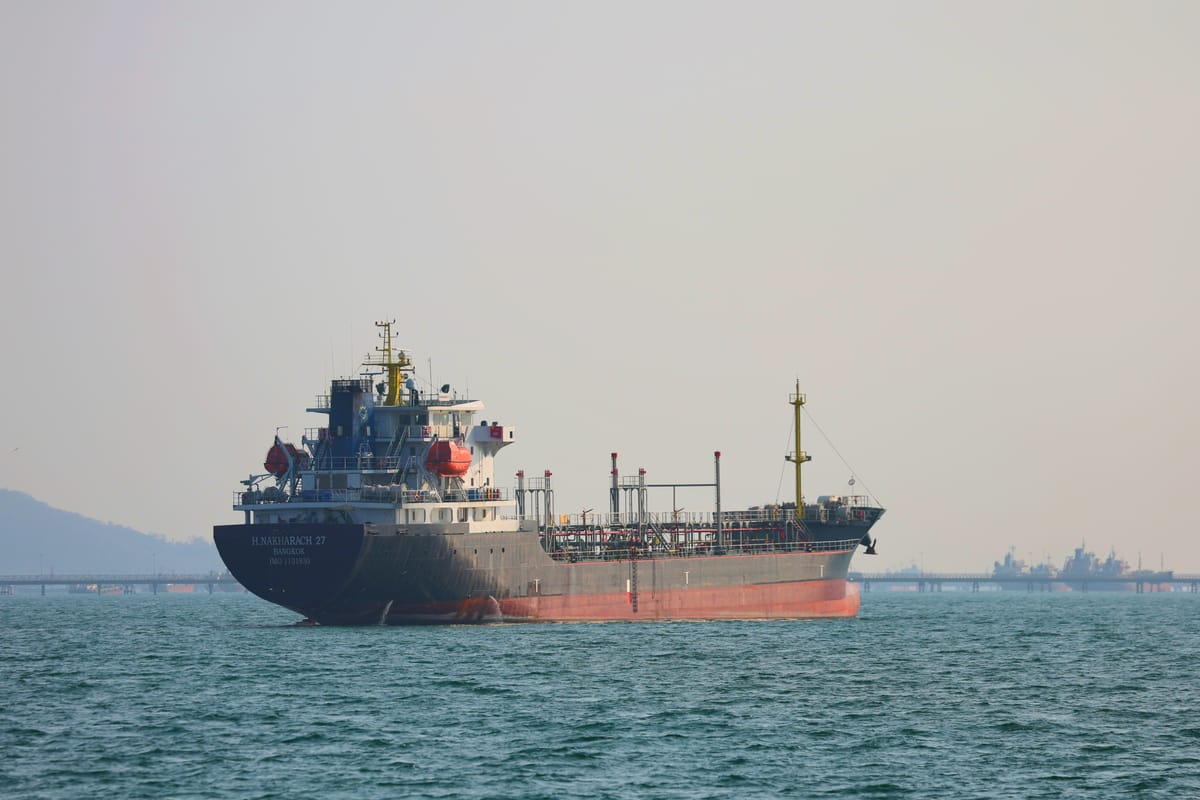
Several dozen ships have already reportedly paid Iran's toll and transited the strait safely under what Tehran calls the "Tehran Tollbooth" protocol, which routes vessels north of the traditional shipping corridor closer to the Iranian coast, though traffic remains far below the roughly 150 daily tankers that passed through before the war began.
One-fifth of the world's oil and natural gas supplies are shipped through the strait in peacetime. The question of who controls the terms of that passage, and at what price, has become central to any durable end to the U.S.-Iran conflict.