Iran has quietly resumed diplomatic contact with Washington after President Donald Trump pressured Israeli Prime Minister Benjamin Netanyahu to pull back from a planned military offensive in Beirut, according to a Reuters report citing an Iranian media source. The move reverses Tehran's dramatic announcement just days ago that it was suspending negotiations entirely.
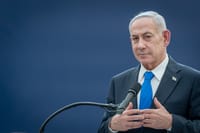
Trump pressed Netanyahu to scale back military operations in Lebanon, at points using expletives to convey his disapproval, before announcing that Israeli forces would not enter Beirut and that Hezbollah and Israel would halt attacks on each other. That apparent concession appears to have been enough to bring Iran back to the table.
Iran's chief negotiator Mohammad Bagher Ghalibaf had warned that Tehran could move beyond merely suspending talks and consider direct confrontation if Israel's military campaign in Lebanon continued — making Trump's intervention a prerequisite for any diplomatic progress.
Iran is now studying a new draft proposal submitted by Washington, conveyed through Pakistani mediators, with Secretary of State Marco Rubio saying there had been "some slight progress" while the US awaited Tehran's response.
But Iran is in no hurry. Sources familiar with the talks say Tehran is deeply mistrustful of the American side, citing what it describes as Washington's failure to honor previous understandings. Rather than a comprehensive agreement, Iran is seeking a limited interim deal — one that eases its economic pain without forcing major concessions on its nuclear program.
Tehran has insisted on war reparations, full sovereignty over the Strait of Hormuz, an end to sanctions, and the release of frozen Iranian assets as core conditions. According to the Hebrew-language report from Kikar HaShabbat, Iran is demanding access to billions of dollars in frozen oil revenues before engaging on the nuclear file at all.
The deal under discussion involves a 60-day ceasefire extension during which the Strait of Hormuz would be reopened, Iran would be able to freely sell oil, and negotiations on curbing Iran's nuclear program would be held — though the nuclear piece remains the most contentious.
Meanwhile, Iran's Revolutionary Guards are making clear they retain real leverage. IRGC officials have reportedly stated that 24 vessels passed through the Strait of Hormuz in the past 24 hours only after receiving Iranian approval — and Tehran has threatened to extend its maritime pressure to the Bab al-Mandeb Strait in the Red Sea if it doesn't get what it wants.
Trump, for his part, has demanded that Iran agree to never possess a nuclear weapon and that the Strait of Hormuz be immediately opened to unrestricted shipping with no tolls — conditions Iran's state media have described as contradicting the actual text being negotiated.
Trump told ABC News he believes a deal is reachable "over the next week," though he acknowledged he still needs "a few more points" before signing off.
The broader backdrop is a US president under heavy domestic pressure to lower fuel prices — but one who cannot afford to be seen as capitulating to Tehran. The coming days will test whether the fragile diplomatic momentum survives both Iran's hard bargaining and Israel's continued operations in Lebanon.