It started, as these things often do, with an expletive.
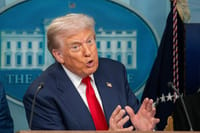
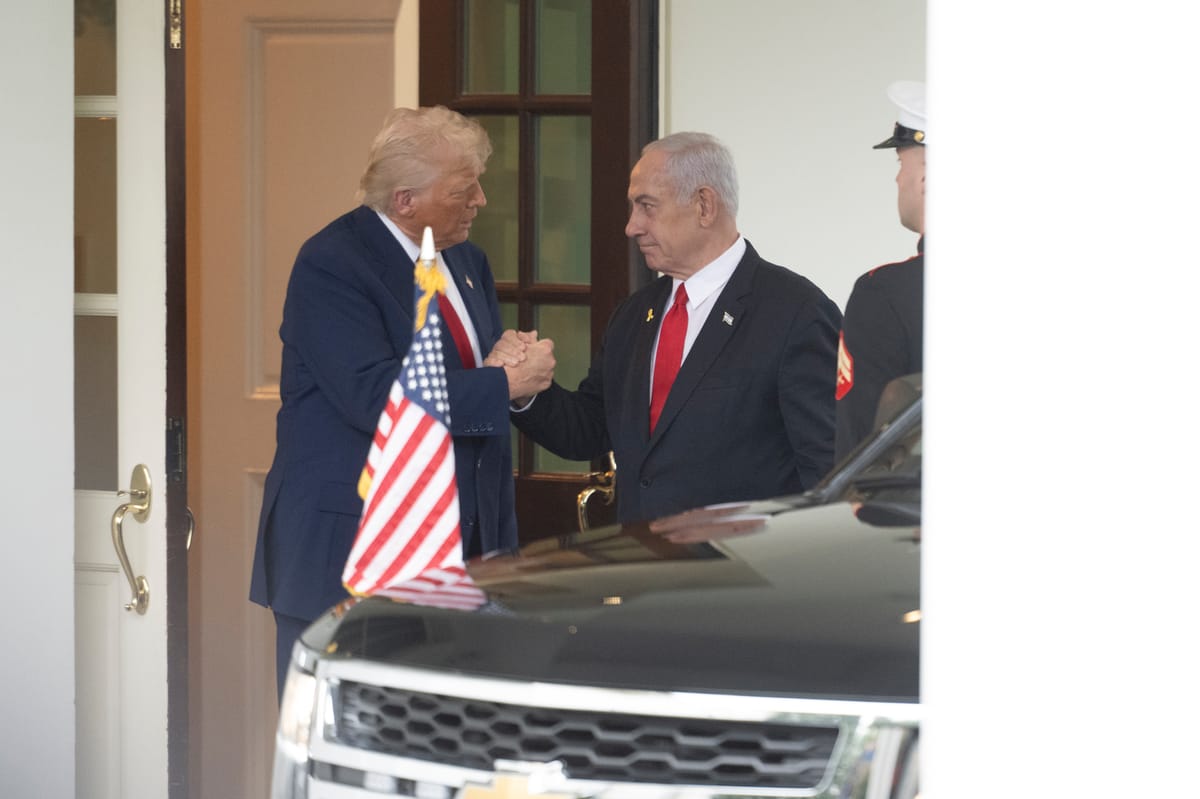
According to an Axios report citing two U.S. officials and a third source briefed on the call, President Donald Trump called Prime Minister Benjamin Netanyahu on Monday and proceeded to detonate. He called Netanyahu "-----ing crazy." He accused him of ingratitude. He invoked Netanyahu's corruption trial, still technically active, and claimed credit for keeping the prime minister out of prison. He yelled: "What the **** are you doing?"
Then, minutes later, Trump posted on Truth Social thanking Bibi warmly for being "a great guy" who "turned his troops around", (another weird detail because IDF troops were never going on foot to Beirut.)
That gap between what Trump screamed in private and what he performed in publicm is not a footnote. It is the entire story.
Why it happened: the Iran deal, not Israel's security
Here is what the White House does not want you to focus on: Trump did not halt the Dahiyeh strike because he was worried about Israeli soldiers, Lebanese civilians, or regional stability. He halted it because Netanyahu's escalation in Lebanon was threatening to blow up Trump's nuclear negotiations with Iran.
Earlier on Monday, hours before the call, Iran had threatened to walk away from talks entirely, citing Israel's actions in Lebanon as the reason. That was the trigger. Trump wasn't thinking about northern Israel when he picked up the phone. He was thinking about the memorandum his team is trying to close with Tehran.
Axios confirmed it directly: the Iran deal is the reason. The memo under negotiation reportedly includes a provision calling for an end to fighting in Lebanon, which means every Israeli strike in Beirut is a direct threat to Trump's signature foreign policy achievement-in-progress. Netanyahu, by escalating, was torching the table Trump had spent months setting.
So Trump screamed at him. And Netanyahu, for all his defiant public statement about "our position remains the same" - folded. An official told Axios that Trump had "steamrolled" him. Bibi's actual words on the call, per that official: "OK, OK, just make sure everything is taken care of."
Why this is a five-alarm problem
Let's be precise about what this means, because the diplomatic language will try to bury it.
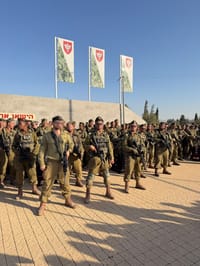
Israel had Hezbollah in a position it has not been in since before October 7th. Evacuation notices had gone out. The IDF was hours from a strike on Dahiyeh — the Hezbollah-controlled southern suburbs of Beirut — that would have carried enormous strategic weight. Then a phone call stopped it. Not a ceasefire negotiation. Not a UN resolution. A phone call from a president who needed the strike stopped so it wouldn't wreck his Iran talks.
And then — as if to underline exactly how hollow the resulting "ceasefire" was — Hezbollah fired rockets into northern Israel. A soldier was killed earlier by a Hezbollah UAV. When paramedics arrived, Hezbollah fired on them too.
The sequence is damning: Israel agrees to stop shooting. Hezbollah does not agree to stop shooting. The White House declares a ceasefire anyway.
This is the part that matters beyond today's news cycle. Every actor in the region — Iran, Hezbollah, Hamas, the Houthis, watched what happened on Monday and drew the same conclusion: if you escalate fast enough and threaten the right American priority, Israel will be called off. The phone call is the weapon. The strike will be cancelled. You just have to hold out until Washington blinks.
That lesson has now been taught in real time, at the cost of Israeli blood, with rockets as the punctuation mark.
The "Bibi owns Trump" myth, shattered
There is a narrative, beloved by a certain kind of political commentator, that Netanyahu has Trump wrapped around his finger. That AIPAC money and evangelical Christian Zionism have made the U.S. president functionally an extension of Israeli foreign policy. That Bibi pulls the strings.
Monday's call obliterates that narrative completely.
Trump did not call Netanyahu to coordinate. He called to order. He screamed. He invoked the corruption trial, a deeply personal threat, a reminder of exactly what Netanyahu owes him and how quickly that debt can be called in. And Netanyahu, for all his public bravado, said "OK, OK."
The man who supposedly owns Trump got steamrolled on his own military operation, then watched the president post a cheerful thank-you note on social media as if the conversation had been a friendly chat about golf.
That is not a patron being led by his client. That is a client being managed by his patron, and being reminded, in the most explicit terms possible, of who holds the leverage.
What comes next
The Iran deal, if it closes, will be the explanation for everything. Trump will present it as a historic achievement. The halted strike, the screaming call, the ceasefire that wasn't, all of it will be reframed as necessary steps toward a grand bargain that made the Middle East safer.
Maybe. But that deal does not exist yet. The rockets on northern Israel do. The dead soldier does. The paramedics who came under fire do. And the lesson Hezbollah learned on Monday, that you can fire on Israel inside a ceasefire and face no consequences because Washington needed the optics to hold, that lesson is already embedded. It will be acted on again.
The question is not whether Trump has the right to pressure an ally. He does. Every U.S. president has. The question is what Israel gets in return for stopping at the moment of maximum leverage, and whether an Iran deal that may or may not materialize is adequate compensation for a military window that, once closed, does not reopen on demand.
Trump yelled at Netanyahu. Netanyahu said OK. Hezbollah kept firing. And somewhere in a Washington briefing room, two officials picked up the phone and told Axios exactly what happened, because they wanted the world to know. That leak is its own story — and it suggests that not everyone in this administration thinks Monday was a win.