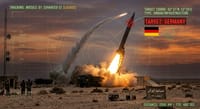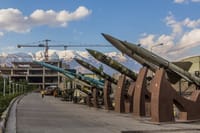
Iran has officially suspended all diplomatic negotiations with the United States and ordered the immediate closure of the Strait of Hormuz to maritime traffic, according to a report by the IRGC-affiliated Tasnim News Agency. The dramatic escalation comes in direct response to the heavy Israeli airstrikes targeting Beirut's Dahiyeh district on Monday.
In a parallel move with sweeping implications for global trade, Tehran has ordered its Houthi proxies in Yemen to reactivate attacks on shipping in the Bab al-Mandab Strait, the critical southern chokepoint connecting the Red Sea to the Gulf of Aden and the Suez Canal route.
If confirmed, the move would open a devastating dual-front blockade on two of the world's most vital maritime corridors simultaneously.
What It Means
The Strait of Hormuz is one of the most consequential shipping lanes on the planet, with around 20% of global petroleum and 20% of liquified natural gas transiting the waterway each year. Prior to the conflict, around 3,000 vessels used the strait each month, a figure that has already collapsed to approximately 5% of that level during the current crisis, pushing global oil and gas prices sharply higher.
Activating the Houthis at the Bab al-Mandab would close the second major chokepoint, cutting off the primary route into the Red Sea and onward to the Suez Canal, the artery through which a significant share of Europe-Asia trade flows. A simultaneous blockade of both straits would represent an unprecedented disruption to global shipping.
The Breaking Point
The suspension of talks follows weeks of mounting Iranian warnings that Israeli strikes in Lebanon constituted a violation of the ceasefire framework between Tehran and Washington. Earlier today, Iranian Foreign Minister Abbas Araghchi declared: "The ceasefire between Iran and the US is unequivocally a ceasefire on all fronts, including in Lebanon. Its violation on one front is a violation of the ceasefire on all fronts. The US and Israel are responsible for the consequences of any violation."
Tasnim, which is close to Iran's Revolutionary Guard, had previously warned that talks would "remain suspended" unless the US halted Israeli attacks in Lebanon. Monday's strikes on Dahiyeh appear to have triggered that threshold.
Washington's Position
The United States has consistently maintained that Lebanon was never part of the Iran ceasefire agreement. Vice President JD Vance earlier warned that it would be "dumb" for Iran to let negotiations collapse over Lebanon, saying: "If Iran wants to let this negotiation fall apart, in a conflict where they were getting hammered, over Lebanon, which has nothing to do with them and which the United States never once said was part of the ceasefire, that's ultimately their choice."
There was no immediate response from Washington to Monday's reported Iranian decision.
Markets and Regional Stability
The announcement is expected to send shockwaves through global energy markets when trading opens. Oil prices had already been elevated throughout the conflict. A formalised closure of Hormuz combined with renewed Houthi activity in Bab al-Mandab would represent the most severe disruption to global energy supply chains in decades.
This report is based on Iran's IRGC-affiliated Tasnim News Agency and has not yet been independently confirmed by Western sources. JFeed is monitoring the situation and will update as developments warrant.