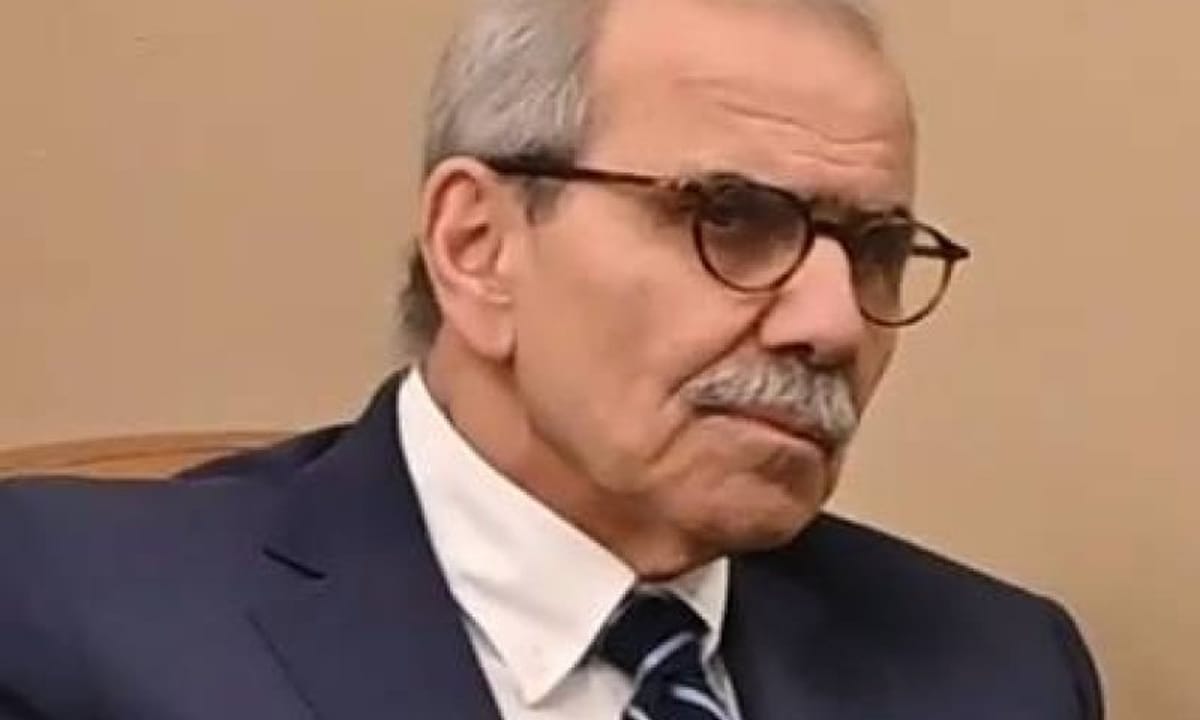
Lebanese Prime Minister Nawaf Salam broke his silence Thursday on the ceasefire framework announced a day earlier in Washington, acknowledging that the Lebanese government had been too slow to collect weapons from Hezbollah and warning that the country cannot afford to miss the current opportunity.
"We delayed too long in collecting weapons into state hands, as required by the Taif Agreement," Salam said, in what amounted to a rare public admission of governmental shortcoming on the disarmament file. "We cannot miss another opportunity to do this, because if we miss it, the consequences will be severe."
Speaking to reporters following a cabinet meeting Thursday, Salam defended the decision to negotiate directly with Israel under American mediation, framing it as a pragmatic choice among difficult alternatives.
"Negotiation is not the only way, but it is the best way," he said. "We could have stood aside facing a reality and a war we did not choose — but that is not a real option. We could have gone to the international courts, but that would have taken years while we continued suffering casualties. Or we could have gone to the Security Council and watched blockades and vetoes while the destruction continued. Choosing negotiation does not mean we will not pursue any of the other options."
Salam also addressed the Lebanese army's planned deployment to "pilot zones" in southern Lebanon as outlined in the Washington agreement, pushing back against criticism that cooperation with the framework would amount to abandoning Lebanon's demand for a full Israeli withdrawal.
"The next step is practical and tangible: the deployment of the Lebanese army in pilot zones as a first phase," Salam said, adding that "this does not prejudice our right to a full withdrawal, but brings us closer to it." He warned that every hour of inaction came at the expense of the south's residents.
He closed with a call for national unity behind state institutions. "All parties must put Lebanon's interests at the top of their priorities and share the responsibility together," he said. "I call on everyone to unite under the state. The path will not be easy or short, but it will shorten. We will be stronger when all efforts are united under state institutions."
Salam's remarks came amid a deepening crisis over the ceasefire's viability. A Hezbollah official told AFP that the group had informed Lebanese authorities it rejected the ceasefire announced after Israel-Lebanon talks in Washington, with the position passed on through parliament speaker Nabih Berri, a Hezbollah ally. The group has insisted that any truce must begin with the withdrawal of Israeli forces from Lebanese territory.
President Joseph Aoun and Salam have been seeking Hezbollah's peaceful disarmament for a year, fueling mounting tension with the group. Further political and military negotiations are scheduled for the week of June 22, with the United States continuing in the role of mediator.