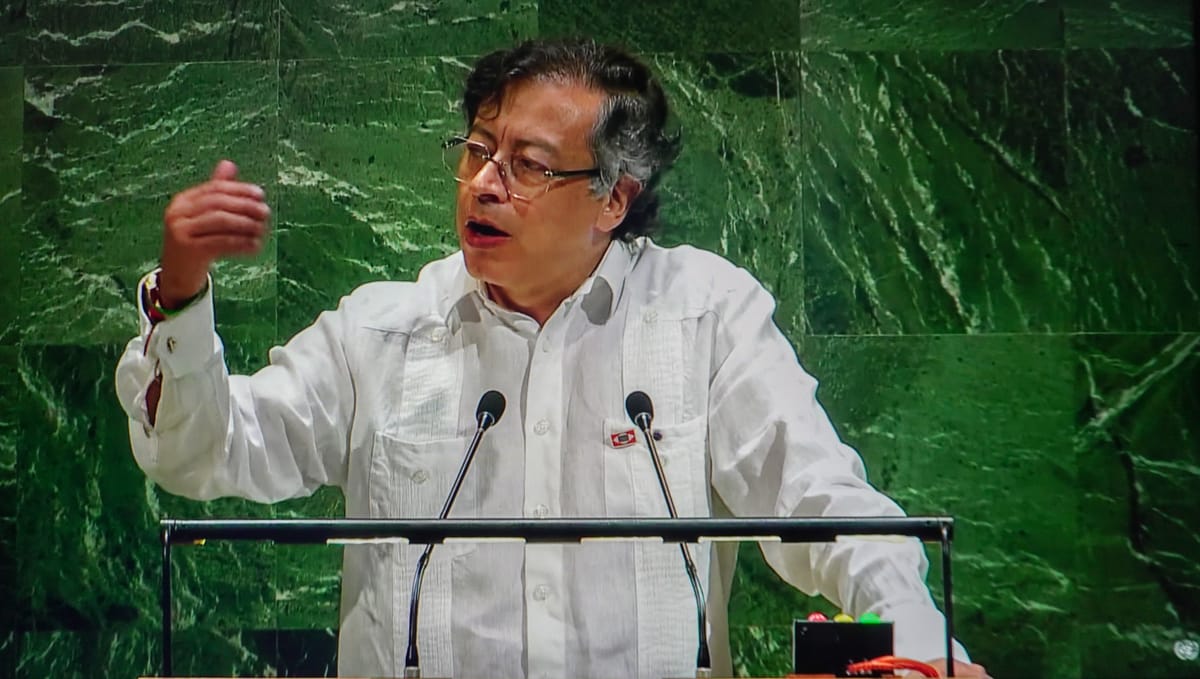
Outgoing Colombian President Gustavo Petro accused Israel of hacking Sunday's presidential election after preliminary results showed pro-Israel candidate Abelardo de la Espriella defeating leftist Ivan Cepeda by less than one percentage point, in a claim immediately dismissed as baseless by observers and sharply condemned by Jerusalem.
"The only entity in the world capable" of carrying out the alleged cyber interference is "the state of Israel," Petro wrote on X, citing what he described as suspicious changes to IP addresses on servers belonging to Colombia's National Registry. He also alleged that lawyers had been blocked from entering the main vote counting center in Bogotá, and that unsigned polling forms had been uploaded by election authorities. Petro called for a forensic audit of the electoral software, a full recount, and judicial oversight of the verification process, while urging Colombians to "remain calm" and seek national dialogue.
The Times of Israel noted that Petro raised the claims "without evidence," after Cepeda, who had consistently led polls ahead of the vote, did not win outright and even finished behind de la Espriella.
The result, if it holds, would represent a dramatic reversal of Colombia's foreign policy. De la Espriella has vowed to restore diplomatic ties with Israel and open a Colombian embassy in Jerusalem, reversing Petro's rupture with Israel after he accused it of "genocide" in Gaza, imposed sanctions including a coal export ban, joined South Africa's case against Israel at the International Court of Justice, and called for a "great army to liberate Palestine."
Israeli Foreign Minister Gideon Sa'ar congratulated de la Espriella on his "impressive victory" within hours of the preliminary results. U.S. Secretary of State Marco Rubio and Presidents Javier Milei of Argentina and Daniel Noboa of Ecuador were among the first political leaders to join in the congratulations. Trump posted "He Won, BIG!" on social media.
Petro's accusation fits a pattern of escalating and increasingly incendiary anti-Israel rhetoric during his four years in office. In January 2025, he claimed that Zionism was supported by international financial capital, comments critics said echoed classic antisemitic tropes. In September 2025, his U.S. visa was revoked after he joined a pro-Palestinian demonstration in New York and called on U.S. soldiers to disobey orders. Days later, he announced that Colombia would expel Israeli diplomats after Israel intercepted the Global Sumud Flotilla.
The Israel-hacking claim drew additional attention because of its timing relative to a separate, unrelated investigation in France. Petro's remarks came just weeks after French authorities linked the Israeli firm BlackCore to digital interference campaigns targeting elections featuring leftist candidates in France, Scotland, New York City, Angola, and other countries, though French investigators have not identified who commissioned those operations. Petro appeared to be connecting the two, though he offered no evidence linking BlackCore or any Israeli entity to the Colombian vote.
Israel has not formally responded to the hacking allegation. De la Espriella, constitutionally barred from taking office until August, has not commented on the claim. Colombia's National Registry has not confirmed any irregularities in the server IP addresses Petro cited.
The election's outcome carries significant implications for Jerusalem. Under Petro, Colombia became one of Israel's most hostile critics in the Western Hemisphere. A victory for de la Espriella would signal a likely reversal of the country's foreign policy toward both Washington and Jerusalem, and would be the latest in a string of right-wing election wins across Latin America that have broadly favored closer ties with Israel and the United States.