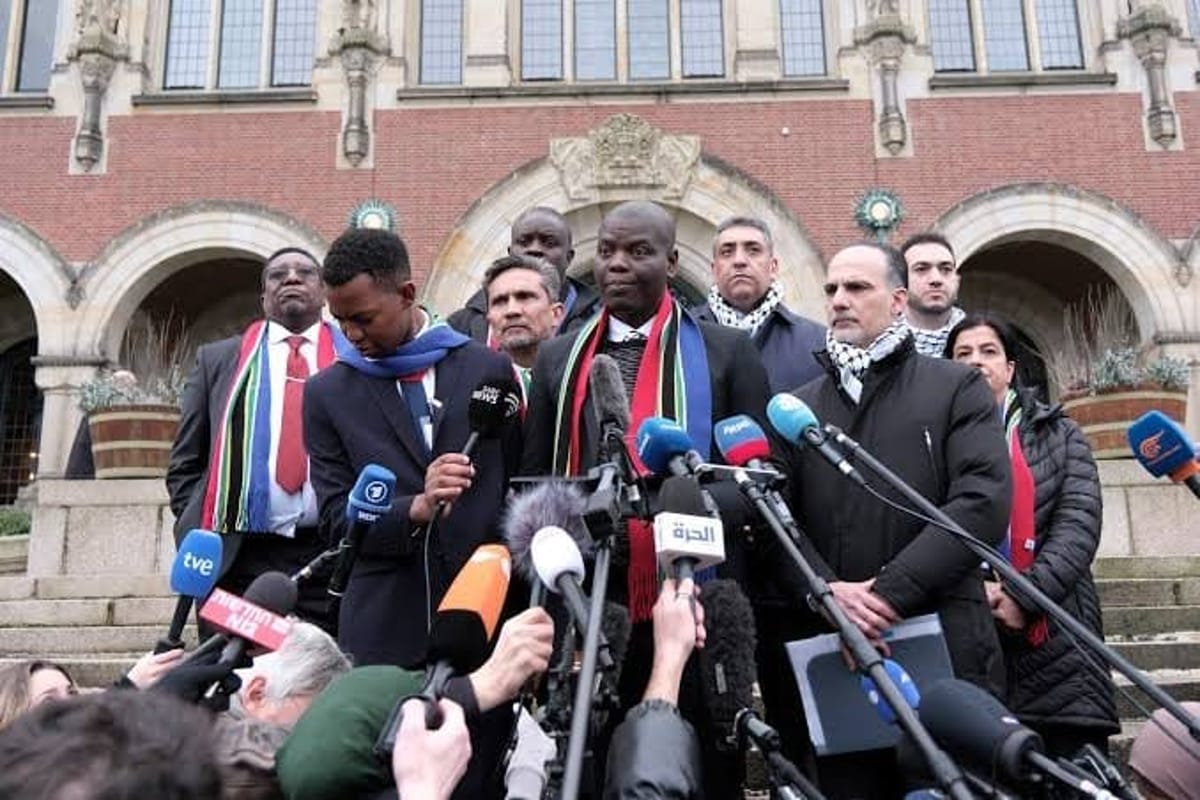
The legal battle between South Africa and Israel at the International Court of Justice (ICJ) is set to continue, even after the recent implementation of a Gaza ceasefire. South African President Cyril Ramaphosa has unequivocally stated that the cessation of hostilities will have "no bearing" on the ongoing genocide proceedings, signaling a firm commitment to long-term accountability.
Why the Ceasefire Won't Stop the Case
The decision to press ahead underscores the fundamental difference between a temporary political agreement and a lengthy international legal process. The ICJ case, formally known as Application of the Convention on the Prevention and Punishment of the Crime of Genocide in the Gaza Strip (South Africa v. Israel), is not primarily focused on forcing a cessation of immediate fighting, but on judging past and alleged ongoing actions to determine if they constitute violations of the 1948 Genocide Convention.
Speaking to Parliament this week, President Ramaphosa emphasized that "True peace requires justice, recognition, and reparations."
The current stage of the proceedings is the case on the merits, where South Africa must prove that Israel acted with "genocidal intent" to destroy the Palestinian people in Gaza, in whole or in part. A ceasefire, while welcomed, does not erase the evidence or the need for a final legal ruling on this core allegation.
The ICJ process is notoriously slow. South Africa submitted its comprehensive legal brief (the Memorial) in October 2024, detailing evidence of mass killings, infrastructure destruction, and obstruction of aid. Israel's response is reportedly due in January 2026, with oral hearings not expected until 2027 and a final judgment potentially as late as 2028. The military status on the ground does not alter this judicial calendar.