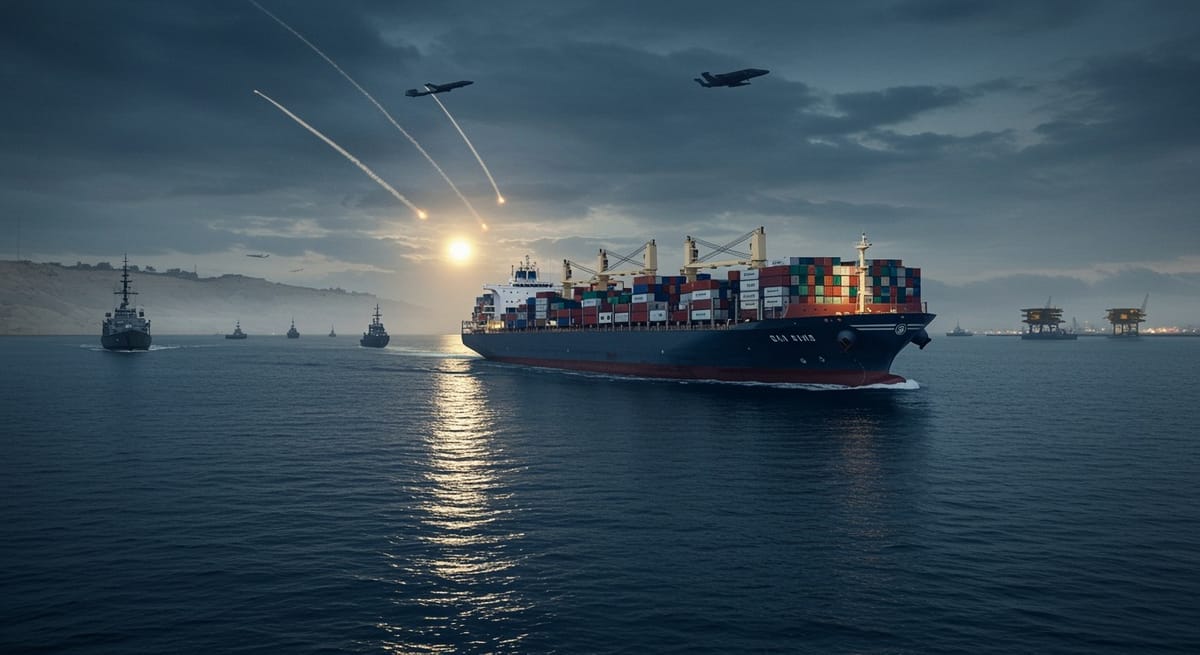
Iranian Revolutionary Guard Corps naval forces have renewed warnings to commercial vessels against transiting the Strait of Hormuz, according to reports circulating on social media from Iranian journalist and activist accounts Thursday, amid growing uncertainty over implementation of the Islamabad Memorandum of Understanding signed earlier this week.
The reports, which have not yet been independently confirmed by Western maritime authorities, describe IRGC broadcasts over maritime radio Channel 16 — the international distress and calling frequency monitored by vessels at sea — ordering ships to stand clear of the strait. Claims also include warning shots fired in the area. Iranian sources have tied the continued closure to Israeli military operations in southern Lebanon and the presence of U.S. forces in the Persian Gulf, framing the restrictions as a response to what Tehran characterizes as violations of the ceasefire framework.
No official confirmation of fresh incidents has emerged as of publication from UKMTO, U.S. Central Command, or commercial vessel tracking services, and tanker traffic had been resuming in the days following the MOU's signing.
The warnings, if confirmed, would follow a now-established pattern. On June 14 — the very day Trump announced a peace deal would be signed and that the strait would reopen — the IRGC broadcast an audio warning to all commercial vessels ordering crews to "absolutely refrain from any movement in the Strait of Hormuz until further notice," according to audio obtained by Xinhua from a crew member aboard a ship near the strait. That broadcast declared the waterway "completely closed" and warned that any movement would be dealt with "decisively."
Since the crisis began in late February, the IRGC has transmitted warnings via VHF radio to vessels in the strait, stating that "no ship is allowed to pass," a tactic used repeatedly during successive flare-ups over the past four months.
The renewed signaling comes at a particularly fragile moment for the diplomacy meant to end it. The Islamabad MOU, signed around June 17, was intended to reopen the strait on a toll-free basis, lift the naval blockade, and allow resumed Iranian oil exports, with a 60-day window for broader negotiations. But implementation has been contested from the start. Iranian Foreign Minister Abbas Araghchi stated that the U.S. must choose between ceasefire and continued war via Israel, warning that "it cannot have both" — citing Israeli strikes on Lebanon that continued even after the MOU framework was established.
Analysts tracking the conflict have flagged today as a critical juncture, with a potential MOU signing ceremony and the first sustained multi-tanker transit window both identified as high-stakes markers — noting that Israeli air strikes on Lebanon continuing despite the ceasefire framework could trigger Iranian hardliners to demand an IRGC mining restart in the strait.
The economic stakes remain enormous. Before the current crisis, roughly 25 percent of the world's seaborne oil trade and 20 percent of global liquefied natural gas passed through the Strait of Hormuz daily. The human toll has been severe as well: the International Maritime Organization confirmed 46 shipping incidents in and around the strait as of June 11, resulting in 14 merchant seafarer fatalities.
JFeed is monitoring for official maritime authority statements and vessel tracking data.