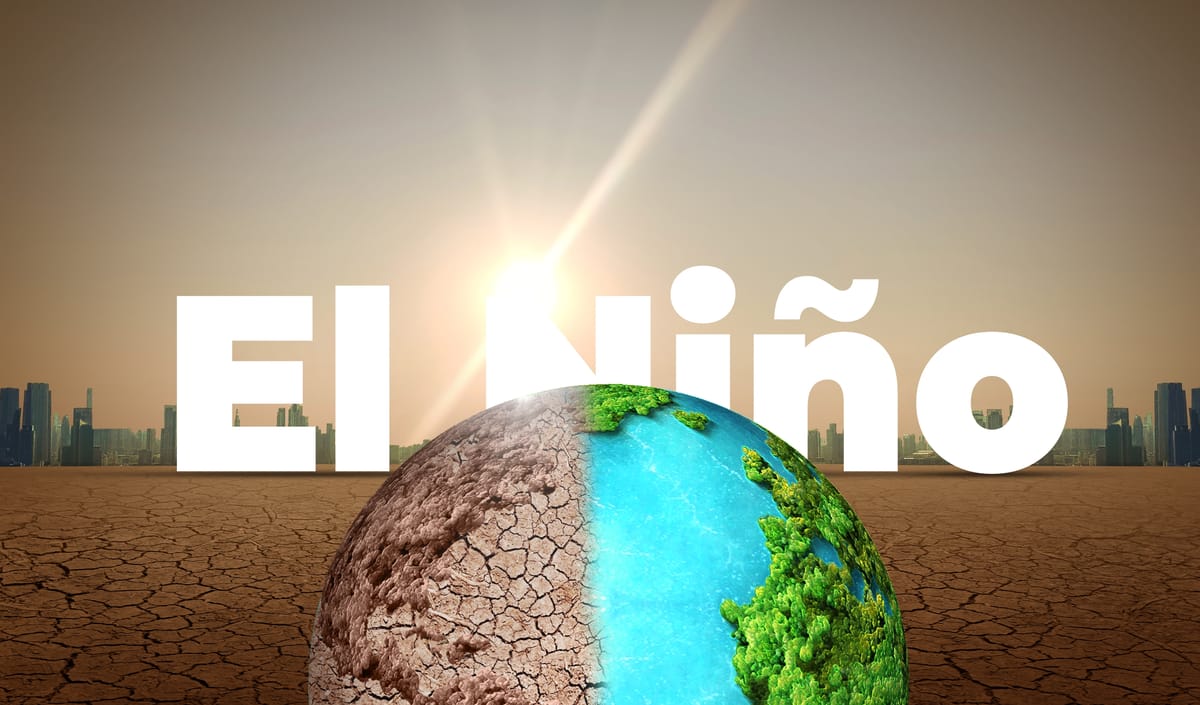
The El Niño phenomenon now developing in the Pacific Ocean has already reached levels never before measured, and according to some scientists it has not yet peaked. Professor Matt Collins, a climate researcher at the University of Exeter, said the event is already breaking records and could become the strongest in the past thousand years.
On September 19, the average sea surface temperature in the "Niño 3.4" region in the central Pacific was 3.05 degrees above the average. According to the Washington Post, this is the highest daily reading ever recorded. The previous record was set in November 2015, meaning this time it was broken about two months earlier in the season.
NOAA has not yet officially declared a record, because their official metric is based on a three-month average. However, according to the Climate Prediction Center, there is a 75% chance that between October and December the event will surpass in strength every El Niño measured since 1950.
The comparison to a thousand years also rests on research published in August in the journal Science. The researchers examined corals from the Galápagos Islands and found that El Niño events in the past four decades were nearly 40% stronger than those that preceded the industrial era, and stronger than any event in the 1,000 years before that.
The effects are already being felt. Reports link the phenomenon to drought and crop damage in Central America, a weak monsoon in India, and high fire risk in Indonesia. At the same time, an international campaign called "Alerta El Niño" has been launched. The campaign was initiated by the production studio of director Adam McKay, and is supported by Jane Fonda, Mark Ruffalo, and Javier Bardem, among others. The organizers are demanding that governments incorporate the risk into their emergency plans. Spanish researcher Antonio Turiel warned that in some cities in southern Spain, temperatures could reach as high as 50 degrees Celsius next summer.