Get our mobile app
Download on the App StoreGet it on Google Play

Palestinian flags and terror support at rallies

France: 891 schools shut in mass protests

Students, teachers and unions march against crumbling buildings, overcrowded classes and teacher shortages, as far-left groups back the demonstrations and Palestinian flags appear at rallies | Over 86,000 protesters in the streets, 715 police injured

France: 891 Schools Shut, 6,100 Arrested as Student Protests Spread Nationwide

Protests that erupted in France two weeks ago entered a new phase Tuesday, as high school students, university students, teachers and parents took to the streets across the country in demonstrations against the state of the education system. According to the French Education Ministry, 891 secondary schools out of approximately 3,700 nationwide were affected by disruptions, with classes either fully or partially suspended. In the Paris region alone, around 250 institutions were impacted.

The student protests are being orchestrated by far-left organizations and the country's powerful labor unions.

Right-wing groups accuse the far left of fueling the unrest and attacks on police. Palestinian flags were seen at the demonstrations and antisemitic slogans were heard, including a song in support of terrorist Mohamed Merah, who carried out the deadly attack at the Otzar Hatorah Jewish school in Toulouse.

The Interior Ministry reported that approximately 86,000 people participated in demonstrations outside Paris by midday. In the capital itself, a major march was planned that was expected to draw tens of thousands. Student and university organizations called for the protests to continue, with major education-sector unions joining the call for demonstrations.

What the protesters are demanding

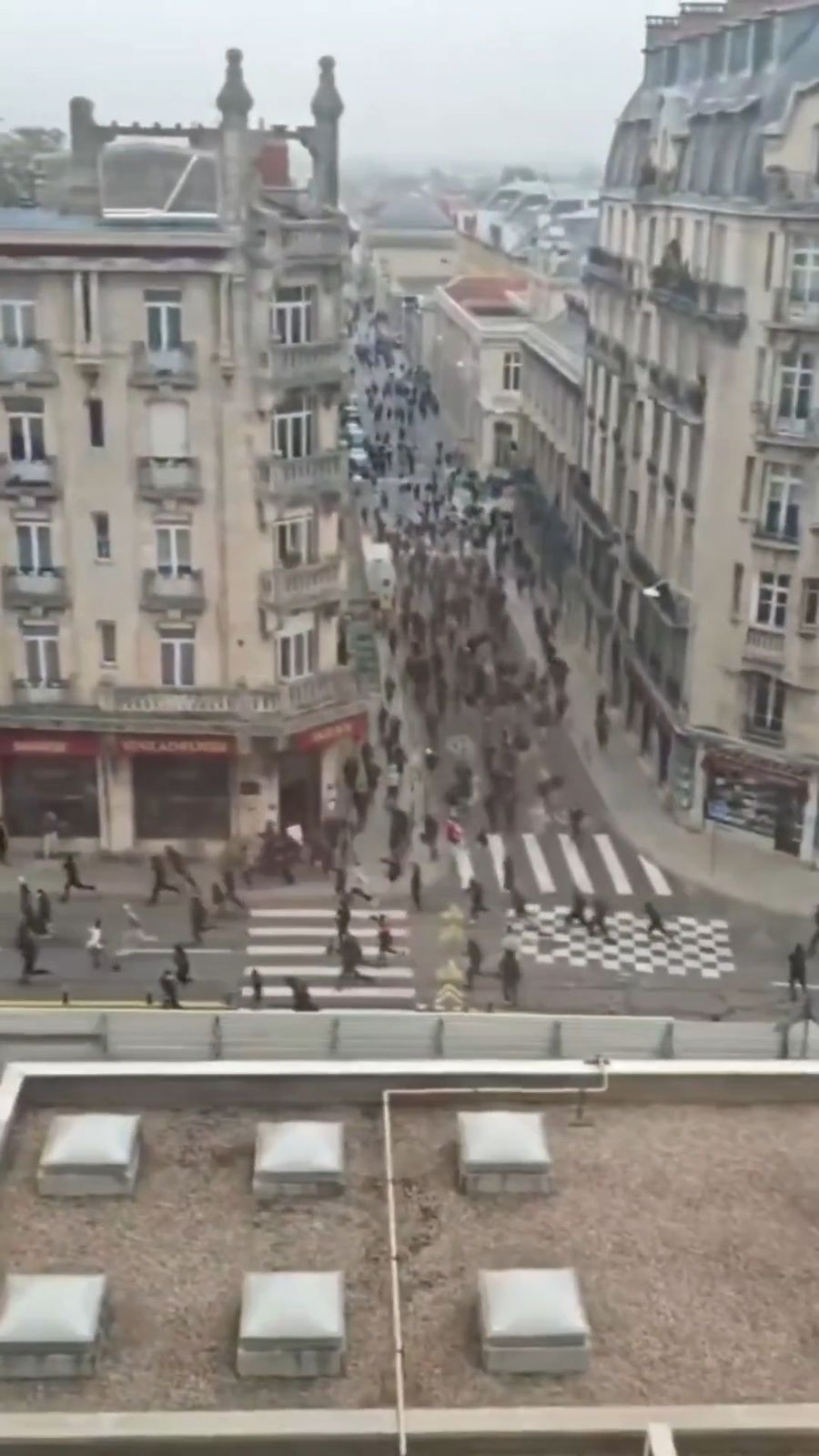
The protests began in mid-September in the Paris suburbs but quickly spread to cities across France. Among the protest centers are Paris, Marseille, Lyon, Rennes, Nantes, Toulouse, Lille, Strasbourg and Nice. Students point to a long list of problems in the education system: neglected buildings, overcrowded classrooms, teacher shortages and lack of substitutes for absent teachers, poor sanitary conditions, and criticism of the higher education admissions system.

A 17-year-old student from Strasbourg described the situation: "We're 35 students in a classroom. There aren't enough bathrooms, and there are water leaks in some of the rooms. The building is falling apart, the cafeteria is too small. There's zero budget, zero resources." Some students also claim that the school day is too long and that schools are not adapted to students' needs.

The event is no longer just a student protest. Major labor unions, including CGT, FSU, FO, CFDT, UNSA and Solidaires, called on their members to join the demonstrations. University students also joined the campaign. According to the French student union, dozens of university sites were blocked or disrupted. In Paris, protest activity was reported around major academic institutions, including the Sorbonne.

Some teachers chose to stand alongside students at the blockade sites. Juliette Esteville, a Spanish teacher from Paris, said: "I'm here simply to provide protection, to create a buffer between the police and the students. Today it went peacefully, it's going well, but I think the teachers who come to the blockades really come to protect our young people."

Meanwhile, students who identify with the right in France decided to express their protest against the disruptions and were seen arranging trash cans that had been thrown into the middle of the road, and applauding police who arrived to restore order.

More than ever, the protests are now taking on a prominent political character, which is also reflected in how the demonstrations are covered by different media networks in the country.

Protests in France
Protests in France (Per Section 27a)

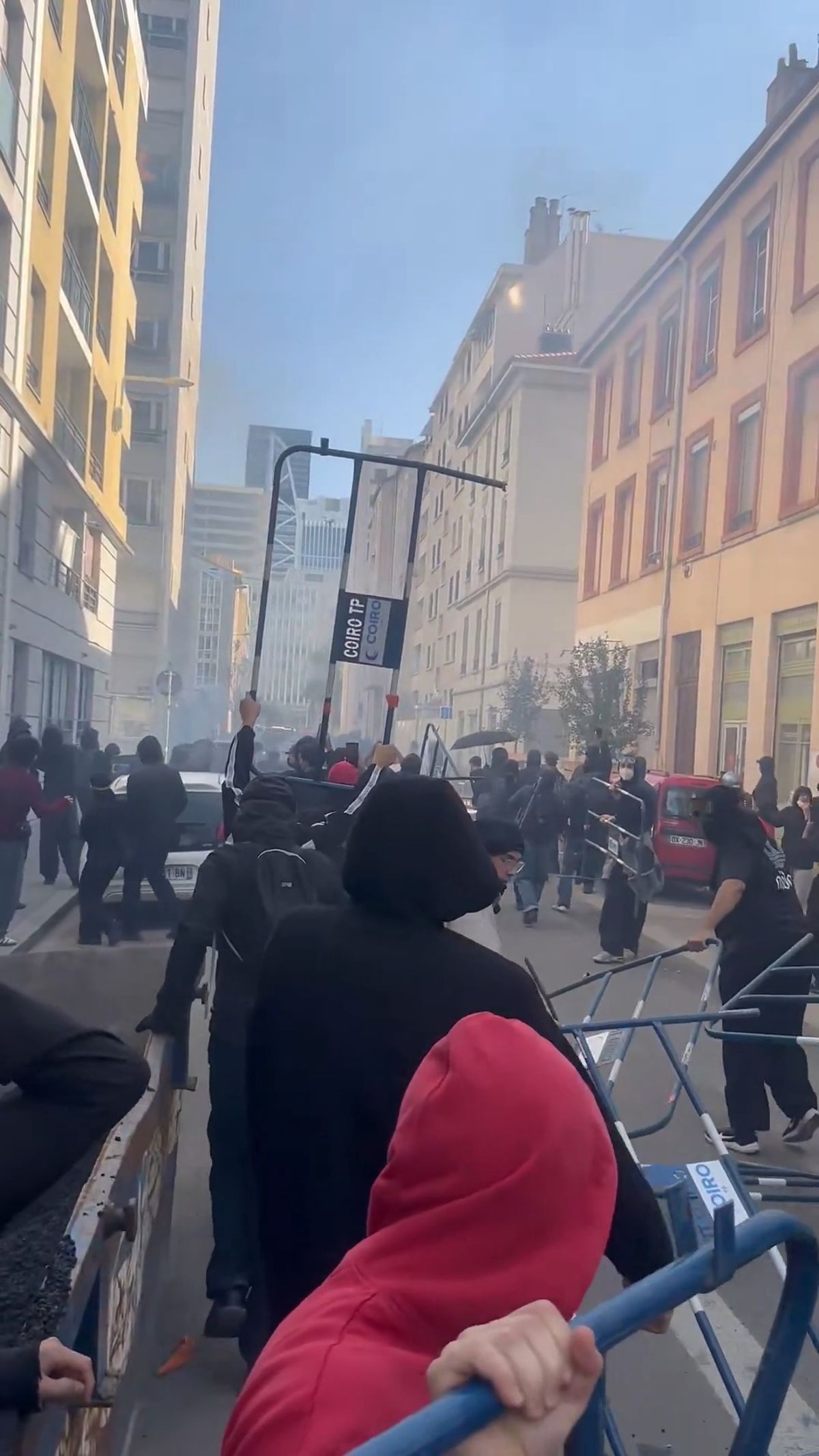
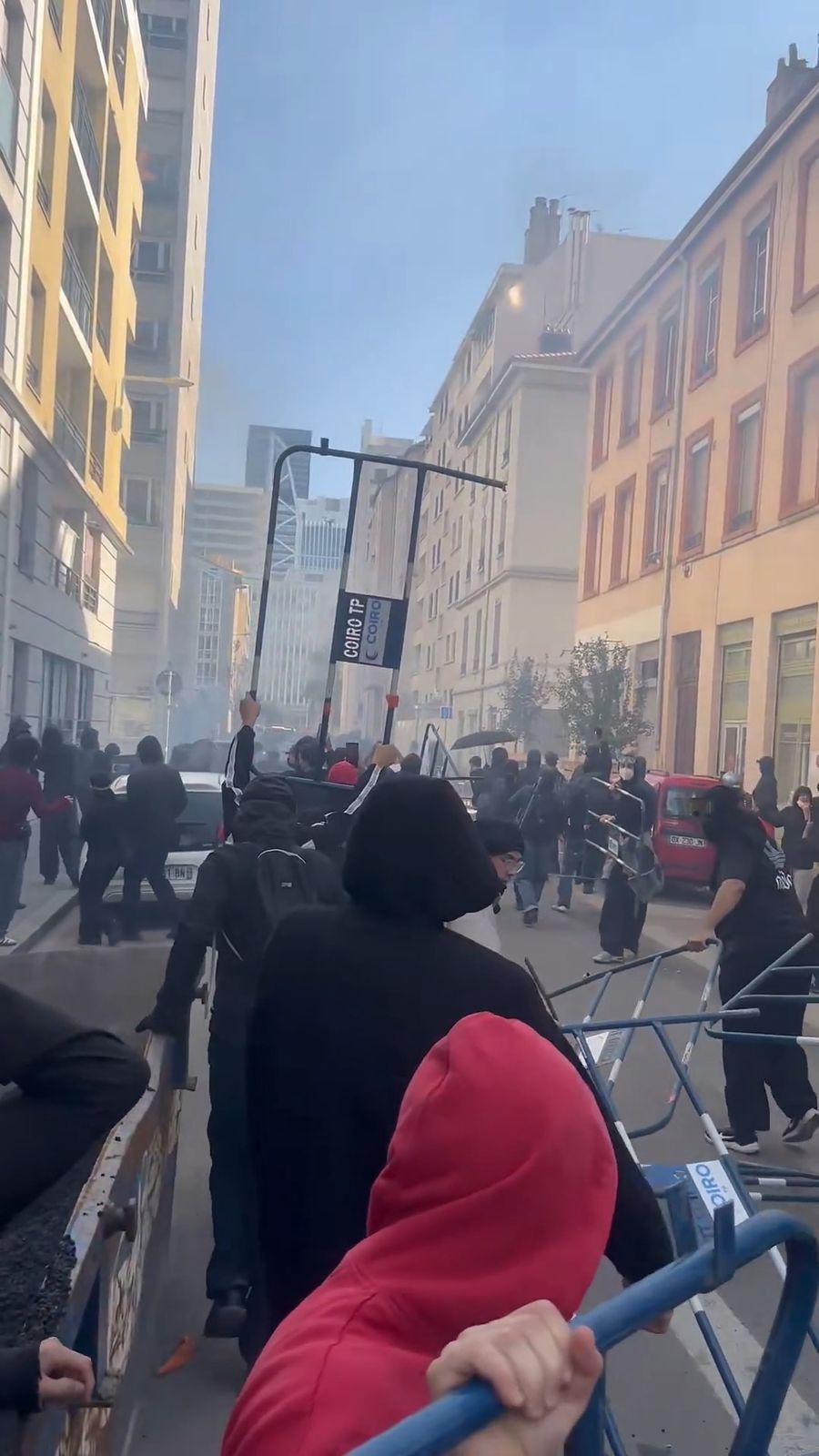
Alongside the peaceful demonstrations, clashes developed between protesters and security forces in several cities. Tear gas was reported to have been used in Strasbourg, Lyon and Rennes, while in some locations arson and objects thrown at police forces were reported. In Marseille, Nantes and Toulouse, parallel demonstrations took place in which the atmosphere was mostly calm.

The scale of the clashes led to a sharp increase in arrests. The Interior Ministry reported that 6,100 people have been arrested since the protests began, the vast majority of them minors. According to the Justice Ministry, more than 1,800 people face legal proceedings, including 1,483 minors. According to the Prime Minister's office, since the unrest began, 215 students and 715 police and gendarmerie personnel have been injured.

Human rights organizations have criticized the police's handling of the demonstrations. Amnesty International called on French authorities to avoid excessive use of force and to ensure young people's right to demonstrate peacefully. The government, on the other hand, argues that part of the protest went beyond legitimate demonstration and turned into violent riots.

Prime Minister Sébastien Lecornu ordered the government to advance solutions to some of the students' demands. Among the issues being examined: improving the condition of buildings, addressing teacher shortages and substitutions, re-examining the structure of the school day, and improving learning conditions. The Education Ministry also opened a nationwide consultation with high school students today, which will continue until October 23. Students can anonymously submit their problems and suggestions.

However, the government faces a significant constraint: France's financial situation. The country is dealing with a budget deficit and high debt, with financing costs having risen in recent months. Even if the government recognizes some of the problems raised by the protesters, broad implementation of their demands requires resources that are not easy to obtain.

The protests come at a particularly sensitive time for France, just months before the presidential elections that will be held after Emmanuel Macron's term ends. The demonstrations began around the education system but quickly expanded to broader questions of cost of living, inequality, France's economic situation, and young people's feeling that their voice is not being heard.

At the same time, the French political system is trying to interpret the protest and influence the discourse around it. The radical left party "France Unbowed" (LFI) expressed support for the protesters, while the right accused left-wing elements of stoking the unrest.

The protest also joins a broader wave of discontent in France. At the end of September, hundreds of thousands of public sector workers took to the streets in demonstrations against the erosion of purchasing power and wage freezes in the public sector.

Ready for more?

Join our newsletter to receive updates on new articles and exclusive content.

We respect your privacy and will never share your information.

Enjoyed this article?

Yes
No
Follow Us:

Unmissable content


Loading comments...

Also of Interest