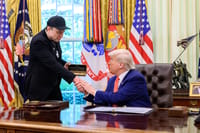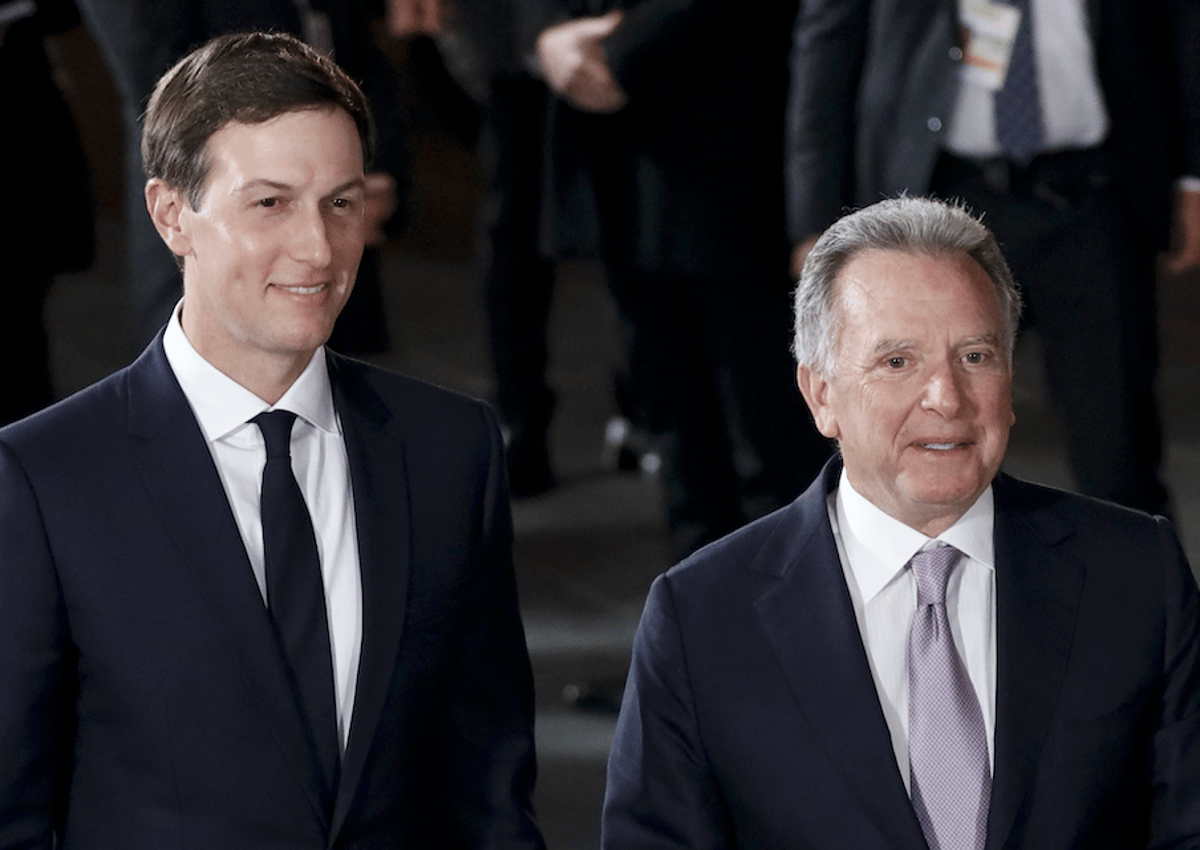
President Trump's decision on whether to authorize military strikes against Iran is resting heavily on the counsel of two men: Steve Witkoff, his special Middle East envoy, and Jared Kushner, his son-in-law and senior adviser, according to people familiar with the matter.
Both men have privately encouraged the president to allow more time for diplomacy before ordering military action, making them the leading voices of restraint inside an administration that is otherwise growing increasingly hawkish on Tehran's nuclear program.
The dynamic has come into sharp relief ahead of Thursday's talks in Geneva, where Witkoff is expected to gauge whether Iran is prepared to negotiate seriously over its nuclear program. Trump has indicated he will weigh their assessment before making any final decision on military options, according to people briefed on the discussions.
"Witkoff and Kushner have both encouraged the president to allow time to see whether a deal is possible," one person familiar with the deliberations said.
The two men represent what associates describe as the administration's pragmatic, business-oriented wing, advisers who see a potential nuclear agreement not only as a security achievement but as an economic opening. That instinct has put them at odds with a vocal hawkish contingent in Washington. Sen. Lindsey Graham (R., S.C.) has openly complained that unnamed advisers around Trump are counseling against military action.
Neither Witkoff nor Kushner is urging Trump to abandon the military threat entirely.
Witkoff said on Fox News this weekend that Iran is "probably a week away" from having sufficient material to produce a nuclear weapon and questioned why Tehran had not yet "capitulated" to American demands, language that underscored the urgency both men say they feel.
But the prevailing message they have delivered to the president, for now, is patience.
Trump's final call could come as soon as this week. Much depends on what Witkoff and Kushner tell him when they return from Geneva.