Iran's Foreign Minister Abbas Araghchi issued a fierce warning on Monday, declaring that Israel's ongoing military operations in Lebanon constitute a violation of the ceasefire framework between Tehran and Washington - and that any breach on one front amounts to a breach on all fronts.
"The ceasefire between Iran and the US is unequivocally a ceasefire on all fronts, including in Lebanon. Its violation on one front is a violation of the ceasefire on all fronts," Araghchi wrote on X. "The US and Israel are responsible for the consequences of any violation."
The statement came hours after Israel ordered strikes on Beirut's Dahiyeh district and as the IDF expanded its ground operations in southern Lebanon, including north of the Litani River.
Iran's foreign ministry separately reiterated that a ceasefire in Lebanon remains a key condition for any broader deal with the United States, with a ministry spokesman saying: "We insist that a ceasefire in Lebanon is an essential condition for any deal aimed at ending the war."
Washington and Tehran at Odds Over Scope of the Deal
The dispute cuts to the heart of a fundamental disagreement between Iran and the United States over what their ceasefire agreement actually covers. The US has maintained that Lebanon was never part of the deal. "If Iran wants to let this negotiation fall apart, in a conflict where they were getting hammered, over Lebanon, which has nothing to do with them and which the United States never once said was part of the ceasefire, that's ultimately their choice," Vice President JD Vance said earlier this month. "We think that would be dumb, but that's their choice."
Iran had sought to include Lebanon in the ceasefire framework from the outset. One of Iran's negotiators, parliament speaker Mohammed Bager Qalibaf, had said any negotiations with the US would be "unreasonable" if the Israel-Hezbollah conflict continued.
Sources in the Iranian-led axis, however, are reading the situation differently. According to the Hebrew-language report by journalist David HaCohen, figures close to Tehran see the American green-light for Israeli strikes on Dahiyeh not simply as military escalation, but as a deliberate pressure tactic in the ongoing nuclear negotiations: Washington using the military threat as leverage to extract Iranian concessions on the nuclear file.
Israel Deepens its Lebanon Operation
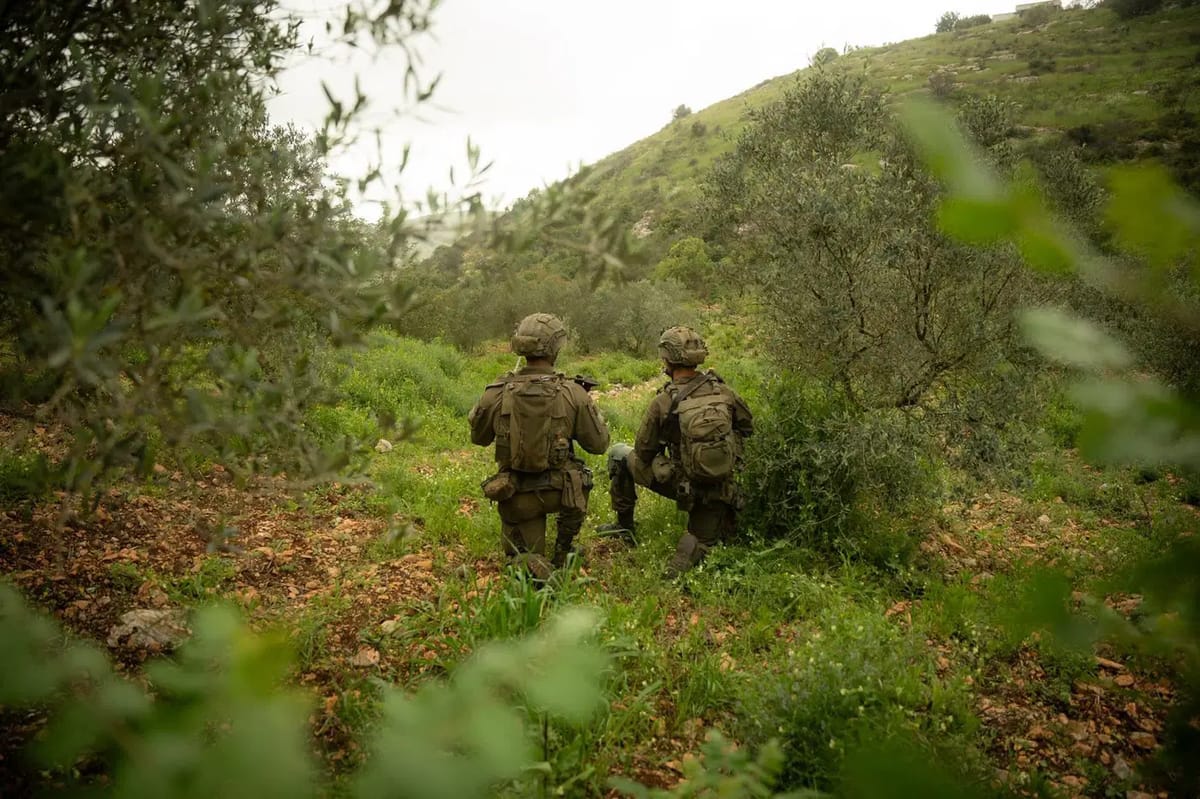
On the ground in southern Lebanon, Israeli military activity has dramatically intensified. The IDF's special operation, reportedly in planning for over a year, has expanded north of the Litani River. The army issued evacuation orders Monday for seven villages in southern Lebanon, including Houmine al-Faouqa, Bnaafoul, Arab Salim, Roumine, Aazze, Arkey, and Jbaa, warning residents to move at least one kilometre from their homes ahead of strikes targeting Hezbollah.
Engineering units have reportedly constructed at least five bridges over the Litani River and opened new routes through difficult terrain in the Lebanese interior. The IDF captured the historic Beaufort Castle over the weekend, planting Israeli and Golani Brigade flags atop the medieval fortress in what Defence Minister Israel Katz described as a strategic message to Israel's enemies.
Netanyahu and Katz reiterated Monday that Beirut would not remain a sanctuary while northern Israeli towns are being targeted. "If there is no quiet in the north, there will be no quiet in Beirut," Katz declared.
Nuclear Diplomacy in the Background
As military and diplomatic tensions intersect, Prime Minister Netanyahu published an image of himself alongside President Trump, beneath Trump's well-known declaration that Iran would never obtain a nuclear weapon. The move was widely read as either a reassurance to the Israeli public - or a pointed reminder to Washington of its stated commitments, amid Israeli concern over the contours of any emerging Iran-US nuclear arrangement.
Rubio has separately pledged that "Iran will never hold a nuclear weapon, certainly not while Donald Trump is president of the United States."
New Warning System for Israeli Civilians
Meanwhile, Israel's Home Front Command announced a significant upgrade to its civilian alert infrastructure. For the first time, the public will receive advance warning of rocket and missile fire from Lebanon before the standard air raid sirens are activated, giving Israelis additional seconds to seek shelter ahead of an incoming attack.
The announcement underlines what Israeli officials and military analysts have been saying for weeks: the ceasefire in Lebanon is collapsing in real time, and the country must prepare accordingly.