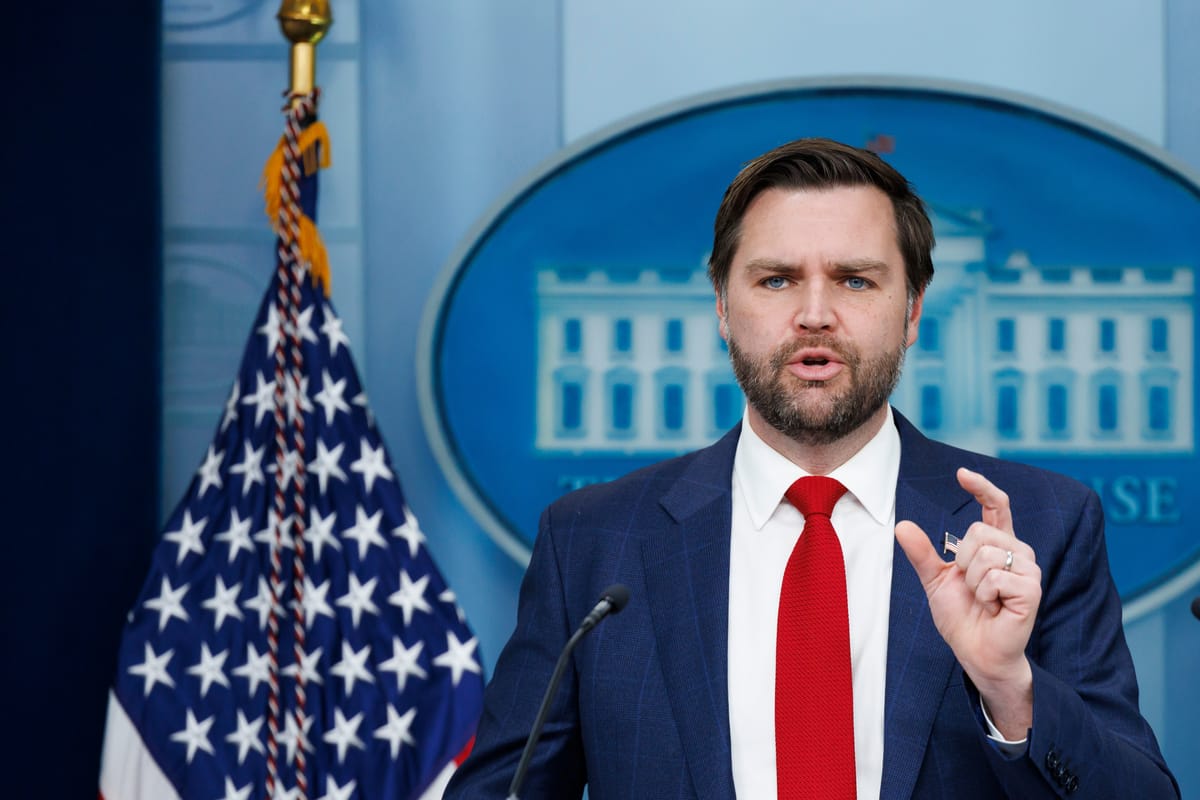
Vice President JD Vance pushed back forcefully against Israeli criticism of the Trump administration’s new memorandum of understanding with Iran, telling The New York Times that what he called a “strange panic” and “freakout” in Israel reflects a lack of trust rather than the substance of the agreement.
“There is this weird panic almost in the Israeli system that I’ve picked up on where they assume that everything that is contemplated that is good for Iran will happen — but that will happen without the Iranians changing any behavior,” Vance said in the interview published Thursday. “I just don’t know why anybody would think that’s true.”
He added: “I find this whole freakout in Israel a little bit odd because I think that it comes from a place of mistrust, and I think that America has earned the trust of that region of the world. We’ve done a very good job by that particular country and that particular government, and I think that the idea that we’ve made a terrible deal is not supported by the facts.”
Tensions Escalate as U.S. Defends Deal
Vance’s comments come amid growing friction between Washington and Jerusalem. President Trump has separately accused Israel of backing out of the 2020 Soleimani strike and suggested Netanyahu’s government should show more gratitude for U.S. efforts. Israeli officials and media across the political spectrum have lambasted the memorandum as a “catastrophic capitulation” that fails to dismantle Iran’s nuclear capabilities or curb its proxies. theguardian.com
Vance argued Israel should trust the U.S. track record and questioned reliance on military solutions alone. “You’re a country of nine million people. You can’t just kill your way out of solving every single national security problem that you have,” he said, while acknowledging some Israeli elements support the deal and others rely on “misinformation.”
Deal Details and Next Steps
The memorandum, signed this week, includes a temporary ceasefire, efforts to reopen the Strait of Hormuz, and a two-month window for broader nuclear negotiations. The administration claims it destroyed key elements of Iran’s nuclear program and prevents a worse outcome. Israel strongly opposes it, fearing it rewards Tehran without verifiable behavior changes.
Vance has emerged as the administration’s chief defender, insisting the agreement prioritizes U.S. interests in preventing a nuclear Iran while maintaining that Israel will eventually come around. Netanyahu himself has been relatively restrained, but his far-right coalition partners and much of the Israeli public remain sharply critical.
The exchange highlights deepening U.S.-Israel policy divergences even as both sides emphasize their longstanding alliance. As details of the deal circulate and implementation begins, questions persist about compliance, enforcement, and whether the fragile understanding will hold.