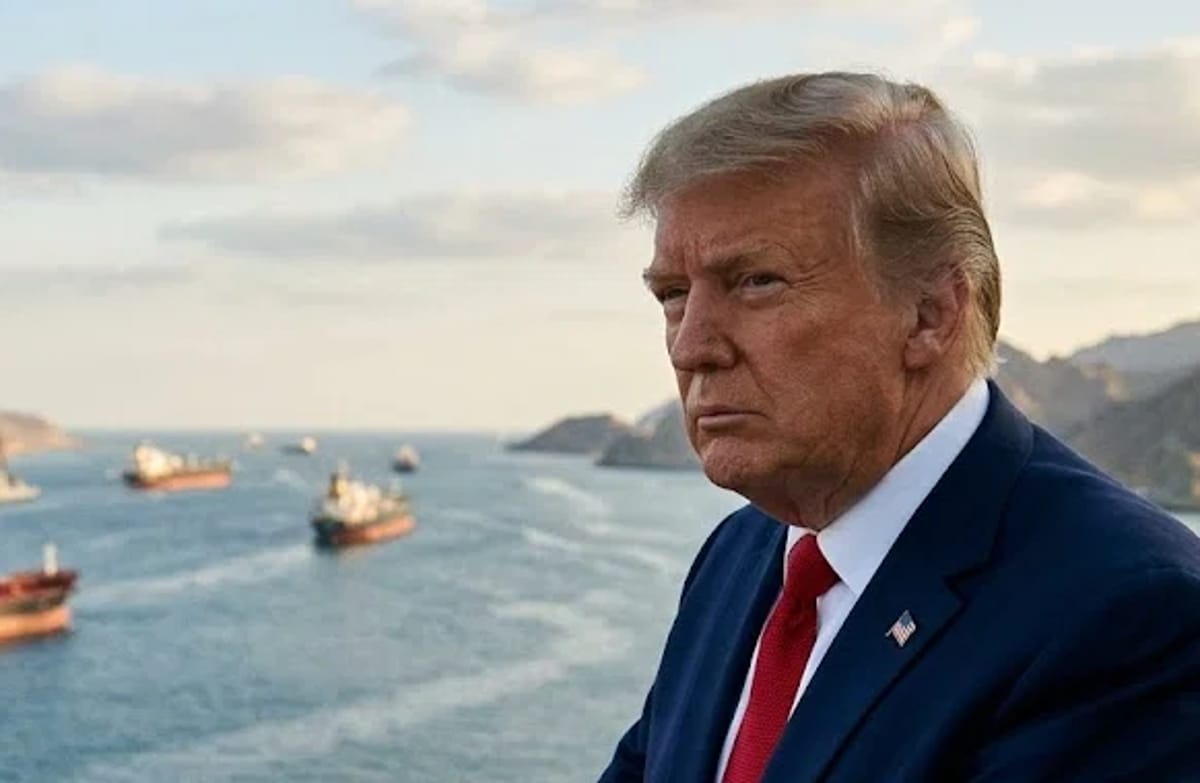
The Middle East is standing on the edge of a major escalation as the U.S. naval blockade of the Strait of Hormuz, ordered by President Donald Trump, is set to commence today, Monday, at 5:00 PM.
Israel is currently on high alert for a potential collapse of existing agreements and a return to active warfare. During a cabinet meeting today, ministers received security briefings on Iran and Lebanon, with a clear directive to prepare for any scenario, including the possibility of a surprise Iranian strike.
The "Explosion" of Negotiations
Prime Minister Benjamin Netanyahu informed his cabinet that the shift toward military pressure followed a breakdown in diplomatic efforts. Netanyahu detailed a conversation with Vice President J.D. Vance, who reported from his flight back from Islamabad that negotiations had "exploded."
"The explosion came from the American side, which could not tolerate Iran's blatant violation of the agreement," Netanyahu said. He explained that while a ceasefire was predicated on Iran immediately opening the Straits, Tehran failed to comply.
Netanyahu emphasized that the Trump administration’s ultimate goal is the total removal of all enriched material from Iran and a long-term guarantee, potentially spanning decades, against any further domestic enrichment.
Rules of Engagement: The Blockade Begins
The U.S. military has issued a formal notice to mariners. Starting at 17:00, any vessel entering or exiting the blockade zone without authorization will be subject to:
- Interception and Seizure
- Diversion from its route
- Boarding and search (including neutral vessels to check for prohibited cargo)
The blockade will be enforced in the Gulf of Oman and the Arabian Sea, east of the Strait of Hormuz. While humanitarian shipments (food and medicine) will be permitted after inspection, the blockade applies to all traffic regardless of the flag the vessel flies.
To support this operation, the U.S. has surged forces to the region, including F-15 and A-10 aircraft, 2,000 troops from the 82nd Airborne Division, and the aircraft carrier USS George H.W. Bush.
Iran Strikes Back: "Piracy"
Tehran has reacted with fury. Hatem al-Anbiya, head of Iran’s Unified Command, labeled the blockade "illegal and acts of piracy." He warned that if Iranian ports are threatened, "no port in the Persian Gulf or the Sea of Oman will be safe." He further asserted that "enemy vessels" would be barred from the Strait entirely.