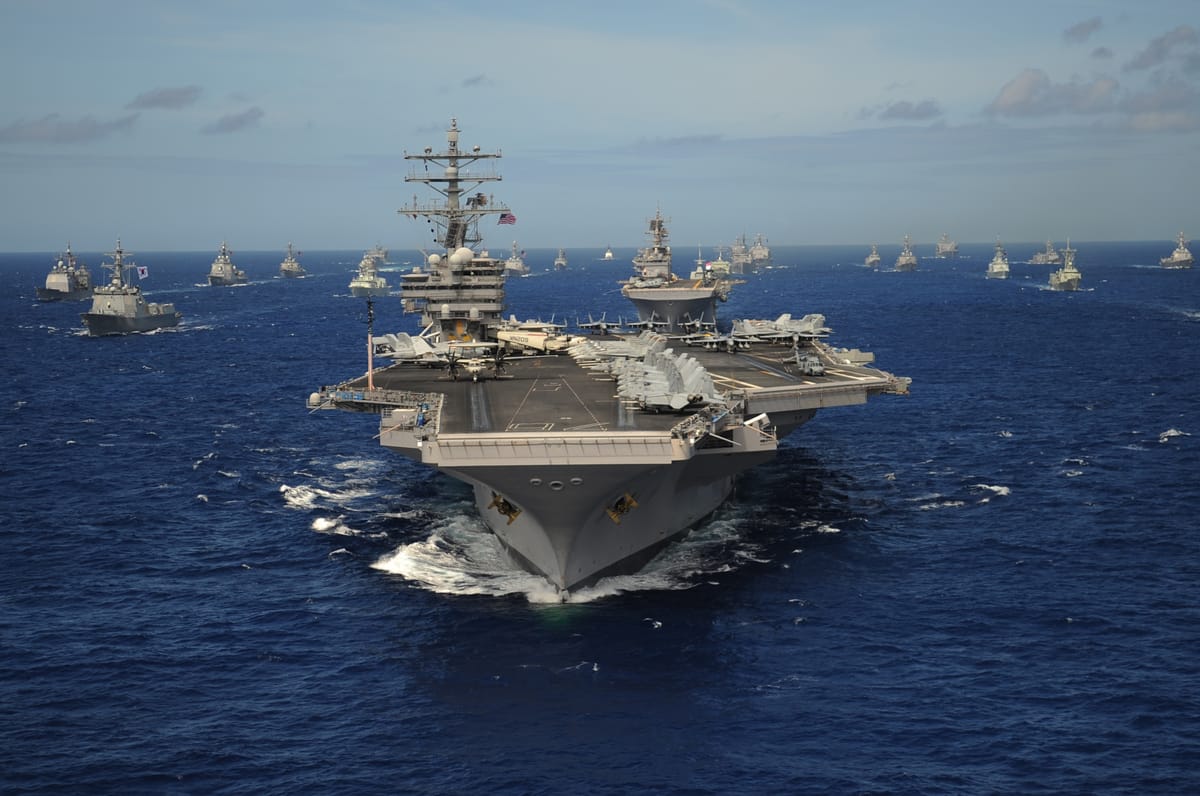
The Middle East has reached a historic point of no return as the United States military shifts from a posture of deterrence to one of active combat readiness. Satellite imagery confirmed on Wednesday that the U.S. Fifth Fleet has completely evacuated its primary base in Bahrain, a move mirroring the tactical withdrawals seen shortly before the precision strikes of June. Within the Israeli Defense Forces, senior officials believe that President Donald Trump has moved past the stage of negotiation and is now awaiting the final operational window to launch a multi-front campaign against the Ayatollah regime. With elite F-22 Raptors stationed in Israel and the EC-130H Compass Call electronic warfare "ace" in position to blind Iranian sensors, the question is no longer about diplomatic progress in Geneva, but about surviving the coming "flood" of regional fire.
The Point of No Return
Military analysts and senior reserve officers suggest that the chance of the United States backing down is decreasing by the hour. The evacuation of Bahrain is a clear defensive measure, as that base would be a primary target for Iranian ballistic missiles the moment a war begins. "The chances that the United States will not attack are diminishing every hour. The question is when the first strike will be, what it will look like, and how wide it will be," a senior officer remarked. In Jerusalem, the political and military leadership is operating under the assumption that they will receive only a very short warning from Washington before the first missiles are launched. The Israeli public, meanwhile, has been informed they will only receive alerts if and when retaliatory fire is detected heading toward Israeli cities.
Hezbollah’s Red Line and the Beirut Ultimatum
One of the most critical variables in the coming war is the reaction of Iran’s proxies. A senior Hezbollah official informed international media that the terror group would not intervene if the United States carries out a "limited strike" against military targets. However, he emphasized a terrifying "red line," stating that Hezbollah would launch a full-scale intervention if the U.S. attempts to harm the Supreme Leader, Ali Khamenei. In response, Israel has delivered a direct and brutal warning to the Lebanese government: if Hezbollah fires a single rocket in support of Tehran, the IDF will target Lebanon’s national infrastructure, including Beirut International Airport, which has been spared in previous rounds of fighting. While Nabih Berri, a key ally of the group, has tried to offer reassurances of neutrality, the Israeli defense establishment is preparing for a "multi-arena flood" of missile launches from Iran, Lebanon, and Yemen.
The Economic Death Blow
While the "beautiful armada" takes its final positions, the Trump administration has launched a massive economic offensive. On Wednesday, the Treasury Department slapped sanctions on over 30 individuals, companies, and vessels linked to Iran’s "shadow fleet." This network of tankers has been the regime's primary source of funding for its missile programs and regional terrorism. The sanctions also dismantled procurement networks across Turkey and the UAE that were smuggling sensitive chemicals and components for the "Shahed" drones used by terrorists across the region. By cutting off the regime's cash flow and its ability to build new weapons simultaneously, the U.S. is ensuring that when the war begins, the Iranian military will be as hollowed out as possible.