In a powerful and high-stakes State of the Union address delivered between Tuesday and Wednesday, President Donald Trump laid out the stark reality of the Iranian nuclear threat. "We wiped out their nuclear facilities and they want to start everything over, they are now pursuing their evil ambitions," the President told the nation, referring to the aftermath of Operation With All Lavi. While previous joint American and Israeli strikes dealt a massive blow to the regime’s infrastructure, intelligence reports suggest that the Ayatollahs have not abandoned their quest for the bomb. Instead, they have shifted toward a strategy of reconstruction, deep fortification, and the development of long-range delivery systems. As the 48-hour deadline for a new deal expires, the White House is highlighting the "hidden" elements of the Iranian program that survived the last war, including a secret mountain facility and hundreds of kilograms of highly enriched uranium.
The Damage and the Recovery
Operation With All Lavi and the subsequent American "Midnight Hammer" strikes successfully targeted the three pillars of the Iranian program: Fordow, Natanz, and Isfahan. Analysts believe that the majority of Iran’s 18,000 centrifuges were damaged or destroyed, and the targeted assassination of nine top-tier nuclear scientists severely depleted the regime’s "knowledge bank." However, despite the claims of total victory from Washington and Jerusalem, experts like Danny Citrinowicz from the Institute for National Security Studies warn that the damage may be partial. Iran was only weeks away from weapons-grade enrichment before the war, and while the strikes hampered their industrial capacity, the most critical asset remained untouched: a stockpile of 400 kilograms of uranium enriched to 60%.
Technologically, the jump from 60% to the 90% needed for a bomb is a very small step, and without the 400kg stockpile being surrendered to a third party, Iran remains on the nuclear threshold. Since June, the regime has been feverishly repairing Natanz and Isfahan, installing new roofs to hide their work and covering tunnel entrances at Fordow with thick layers of ash to protect against bunker-busting bombs.
The Secret Facility at Mount Ma'ader
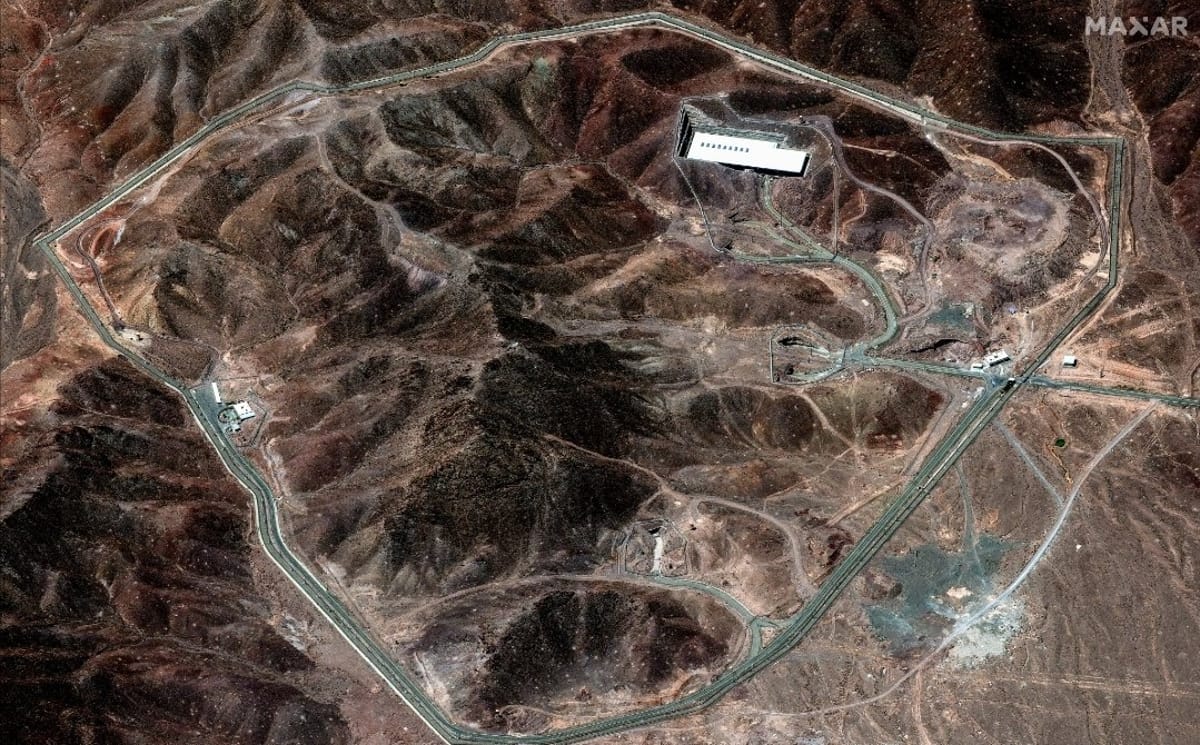
Perhaps most concerning for the Trump administration is the discovery of a new, secret nuclear site at Mount Ma'ader, located just south of Natanz. This facility is buried so deep within the mountain that it is considered at least as difficult to strike as the infamous Fordow site. The regime has consistently denied access to the International Atomic Energy Agency, leading Western intelligence to believe it may house a secret centrifuge assembly plant or a hidden enrichment hall. This site represents the regime’s "Plan B," an insurance policy against future air strikes that could allow them to continue their work even if their primary sites are leveled.
The ICBM Threat and the "Civilian" Space Cover
President Trump also highlighted the growing threat of Iranian Intercontinental Ballistic Missiles (ICBMs), which the regime is developing under the guise of a civilian space program. To reach American soil, Iran is working on three critical technologies: multi-stage engines that separate in flight, precision navigation systems where a single millimeter of error can lead to a kilometer of deviation at the target, and thermal protection shields for warheads re-entering the atmosphere. By launching satellites, the IRGC is testing the very same engines and liquid fuels required to carry a nuclear payload across the Atlantic. While experts believe this technology has not yet fully matured, the investment in independent spy satellites suggests that Iran is building its own "balance of terror" to keep the United States at bay.