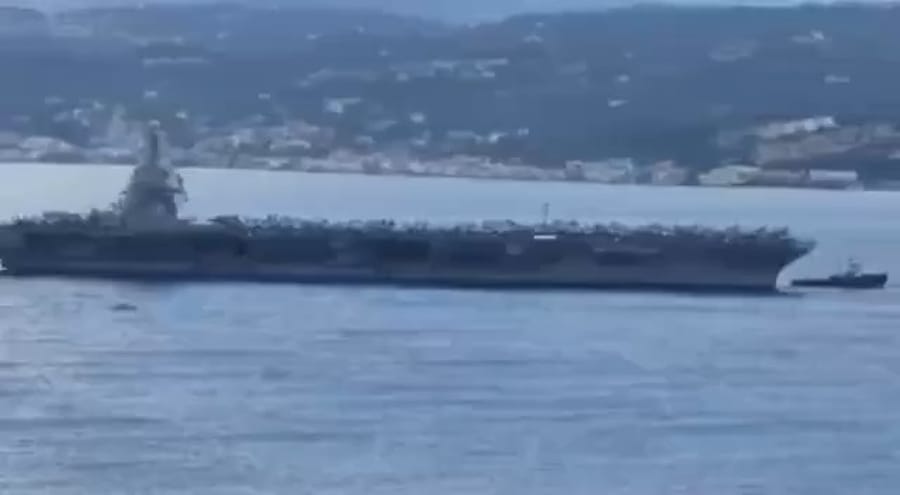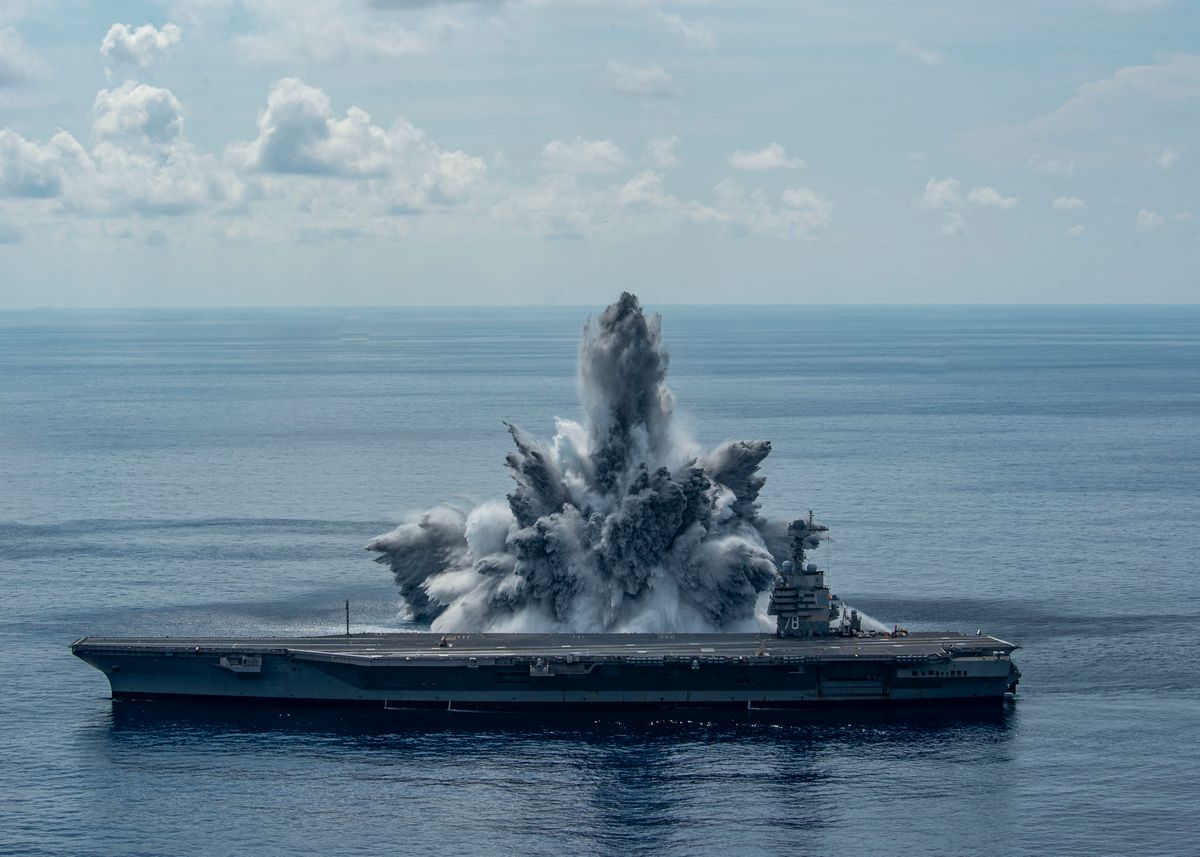
The USS Gerald R. Ford is specifically being positioned to serve as a dual-purpose asset: both as a launch platform for potential strikes and as a massive shield for Israel.
Here's why the Ford is heading to the Israeli coast rather than the Persian Gulf:
1. Protecting the "Holy Land" from Retaliation
Multiple reports, including from the New York Times, indicate that President Trump’s primary reason for placing the Ford in the Eastern Mediterranean (off the coast of Israel) rather than the Arabian Sea is to bolster Israel’s air defense.
Aegis Integration: The Ford’s carrier strike group includes destroyers equipped with the Aegis Combat System, which can track and intercept Iranian ballistic missiles long before they reach Israeli airspace.
Air Superiority: The carrier brings nearly 80 aircraft, including F-35C stealth fighters and EA-18G Growlers (electronic warfare jets). These can intercept incoming drones or missiles and jam Iranian radar systems if they attempt a counter-strike.
2. Deterring Hezbollah
By sitting off the coast of Haifa and Tel Aviv, the Ford sends a direct message to Hezbollah in Lebanon. The US intends to signal that if Hezbollah joins the war in retaliation for a strike on Iran, they will face the full weight of a US carrier strike group stationed just miles from their strongholds.
3. The "Two-Front" Pincer
The US is effectively "sandwiching" Iran:
- The USS Abraham Lincoln: Positioned in the Arabian Sea/Gulf of Oman, threatening Iran from the south.
- The USS Gerald R. Ford: Positioned in the Mediterranean, threatening Iran from the west (via Iraqi/Jordanian airspace) and protecting the "home front" in Israel.