Get our mobile app
Download on the App StoreGet it on Google Play

France braces again

France Sends Troops for Saturday Protests

French Interior Minister Laurent Nuñez announced that Operation Sentinelle troops will reinforce police for the October 24 demonstrations, as CRIF executive director Robert Ejnes said he does not yet trust the state to restore order and the Jewish community is raising its own defenses.

Protests in France

France's Jewish community is raising its own level of defense, and one of its leaders says he does not yet trust the state to restore order. The government is sending Operation Sentinelle soldiers to back police during the protests set for Saturday, October 24. "This week will be a very important week in order to know if the state takes back the power or not," Robert Ejnes, executive director of CRIF, the umbrella organization representing French-Jewish institutions, told JNS.

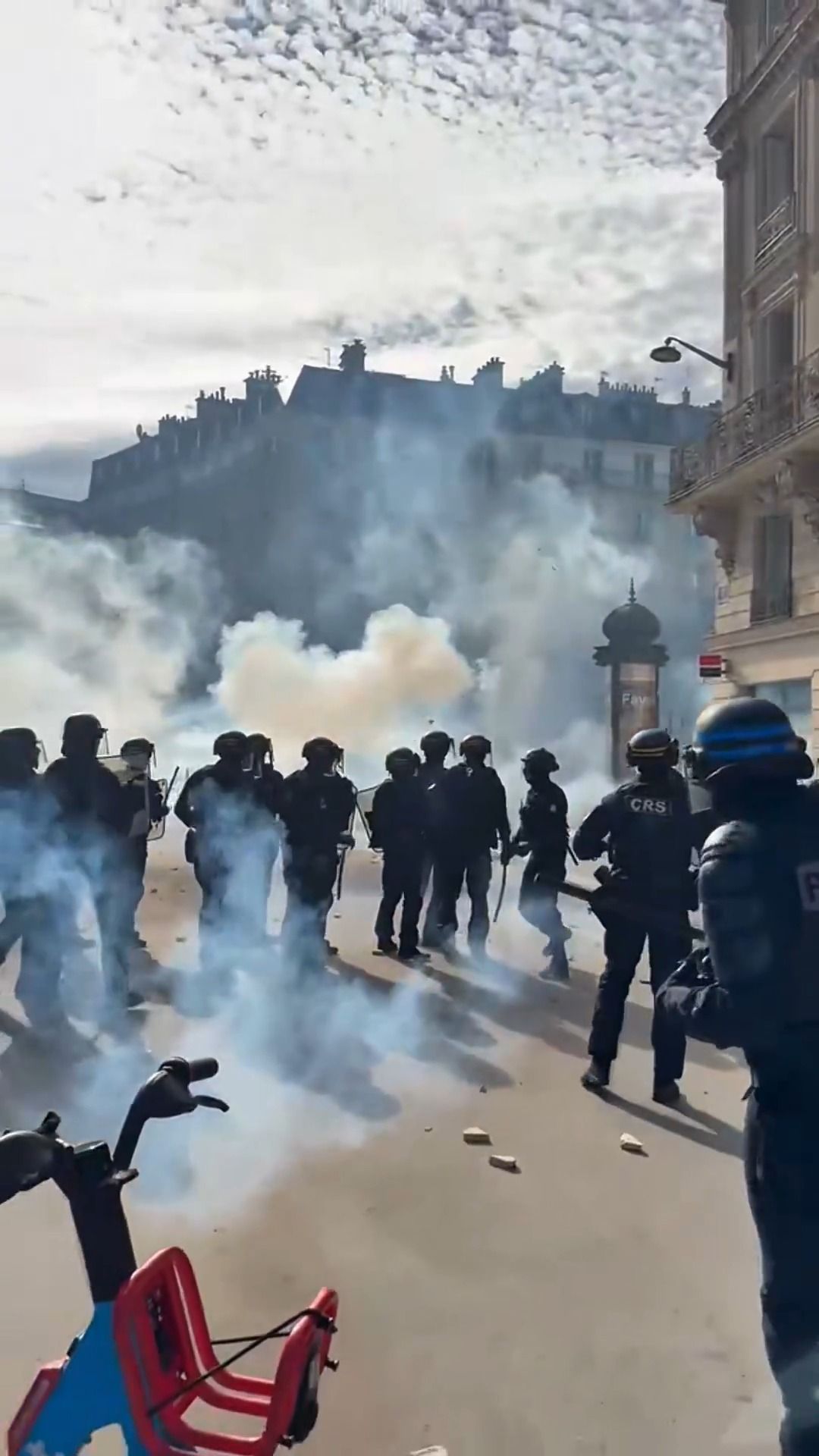
Interior Minister Laurent Nuñez announced the deployment on Tuesday before the National Assembly. The troops will mainly handle surveillance and static protection, replacing some internal security units. That frees police officers and gendarmes to intervene directly when violence breaks out.

Nuñez also said more officers and a wider range of tools are needed. He named the specialized BRI, GIGN and RAID units, along with helicopters, Centaure vehicles and water cannons. All of these were already used on October 17, but the government wants them deployed more heavily. The minister is also considering banning undeclared protests that pose a risk to public order. Declared rallies could be prohibited as well if organizers cannot keep them under control.

Prime Minister Sébastien Lecornu accused far-left groups of planning an uprising. He promised a "massive" police presence nationwide on Saturday and acknowledged that the previous strategy had been too static and not mobile enough.

Other restrictions are already in place. Paris police have banned carrying gasoline and gas canisters in the capital until Thursday. In Lyon, the governor of the Rhône department extended a curfew in the city center from 21:00 to 06:00.
On Monday, Lecornu ordered regional authorities to impose curfews on specific neighborhoods rather than entire cities. In the northern town of Denain, a nighttime curfew that first applied to all residents was later limited to minors. Curfews for minors were also introduced in Pointe-à-Pitre and Les Abymes in Guadeloupe, where three police officers were wounded by gunfire. In Lille, Mayor Arnaud Deslandes opposed a municipal curfew.

"The targeted curfews have contributed to the calm of last night," Lecornu wrote on X. He added that they could be extended where the situation requires. "There were things that went well, and things that were screwed up," he said. "My determination to restore order is absolute."

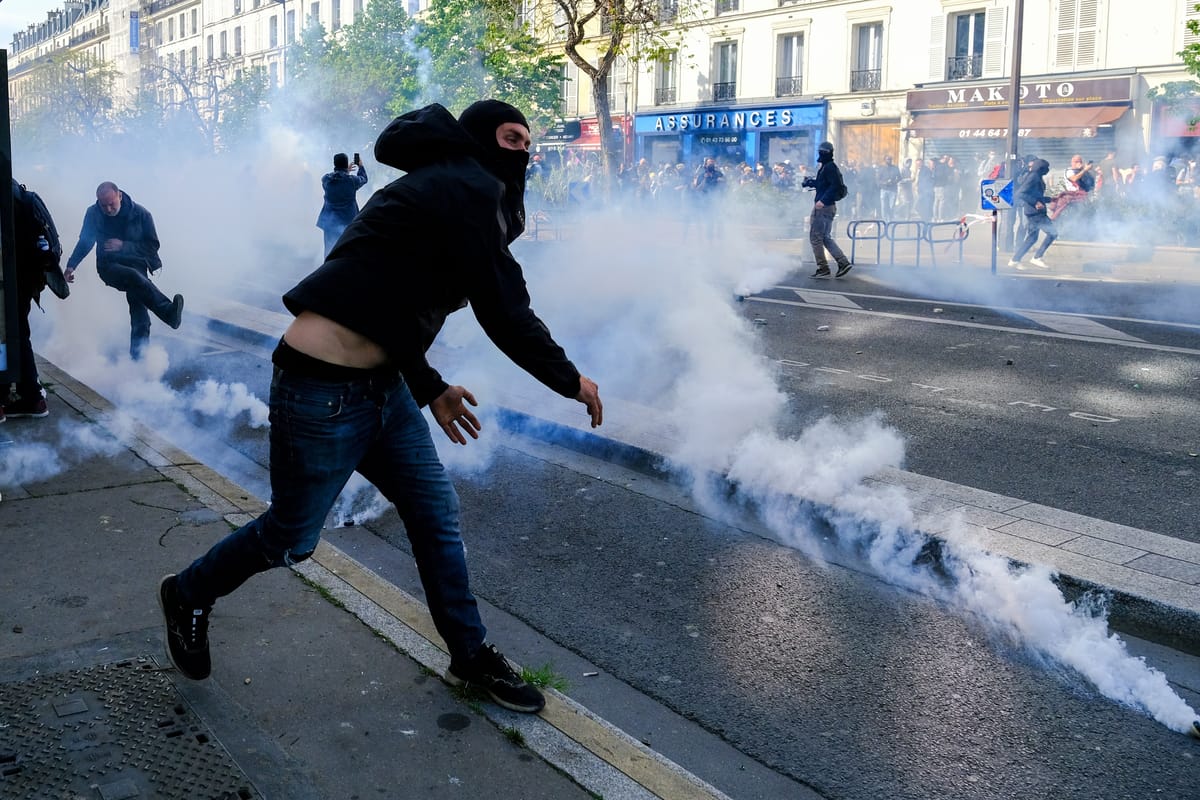
The violence broke out on October 17 during nationwide demonstrations over the cost of living, energy prices and the state of public schools. Hundreds of thousands marched, most of them peacefully. Violent groups clashed with police in Paris, Marseille, Lyon, Bordeaux and other cities. Officials estimate at least 3,000 businesses were damaged or looted, and Le Monde reported at least 150 police officers injured.

Arrest figures differ. Ynet reported more than 2,000 arrests and The Jerusalem Post some 2,400, while Ejnes cited about 1,800. Justice Minister Gerald Darmanin told CNews that 123 people were awaiting trial, and later said around 2,500 remained in custody for questioning. Nuñez offered his resignation over the security failures, but President Emmanuel Macron rejected it.

Asked whether he trusted the authorities to restore order, Ejnes answered: "Not yet. We need to wait." He described the courts' handling of those arrested as a key test, to see "if the rule of law will prevail in France or whether these same people will be out by the next riot." Lecornu appeared "determined," Ejnes said, but a partial curfew is only a temporary response.

Ejnes also pushed back on reports spreading in Israel and across Jewish social media that rioters were deliberately going after Jewish businesses. He acknowledged that several Jewish-owned stores were attacked, but said that does not by itself prove an antisemitic motive. A synagogue in Paris's 19th arrondissement was ransacked on Saturday night. Ejnes said nothing pointed to an antisemitic attack and that it appeared to be a robbery. SPCJ, the community's security organization, said it had no evidence that businesses were targeted because their owners were Jewish.

Bruno Benjamin, head of CRIF's Marseille-Provence branch, called a CNews report about a Marseille street where only Jewish-owned stores were hit "false." He urged Macron to declare a national state of emergency and accused the far-left France Unbowed party (LFI) of orchestrating the riots, with help from people "who live in France, but hate France."

Ejnes stressed that the SPCJ assessment offers no guarantee for the future. "We cannot be reassured that things will go well. We have to be realistic," he said. "We have to raise the level of defense of the Jewish community, which is what we're doing."

On Tuesday, French police arrested a 34-year-old far-left activist on the country's security watchlist over the arson that destroyed Limoges city hall.

Ready for more?

Join our newsletter to receive updates on new articles and exclusive content.

We respect your privacy and will never share your information.

Enjoyed this article?

Yes
No
Follow Us:

Unmissable content


Loading comments...

Also of Interest