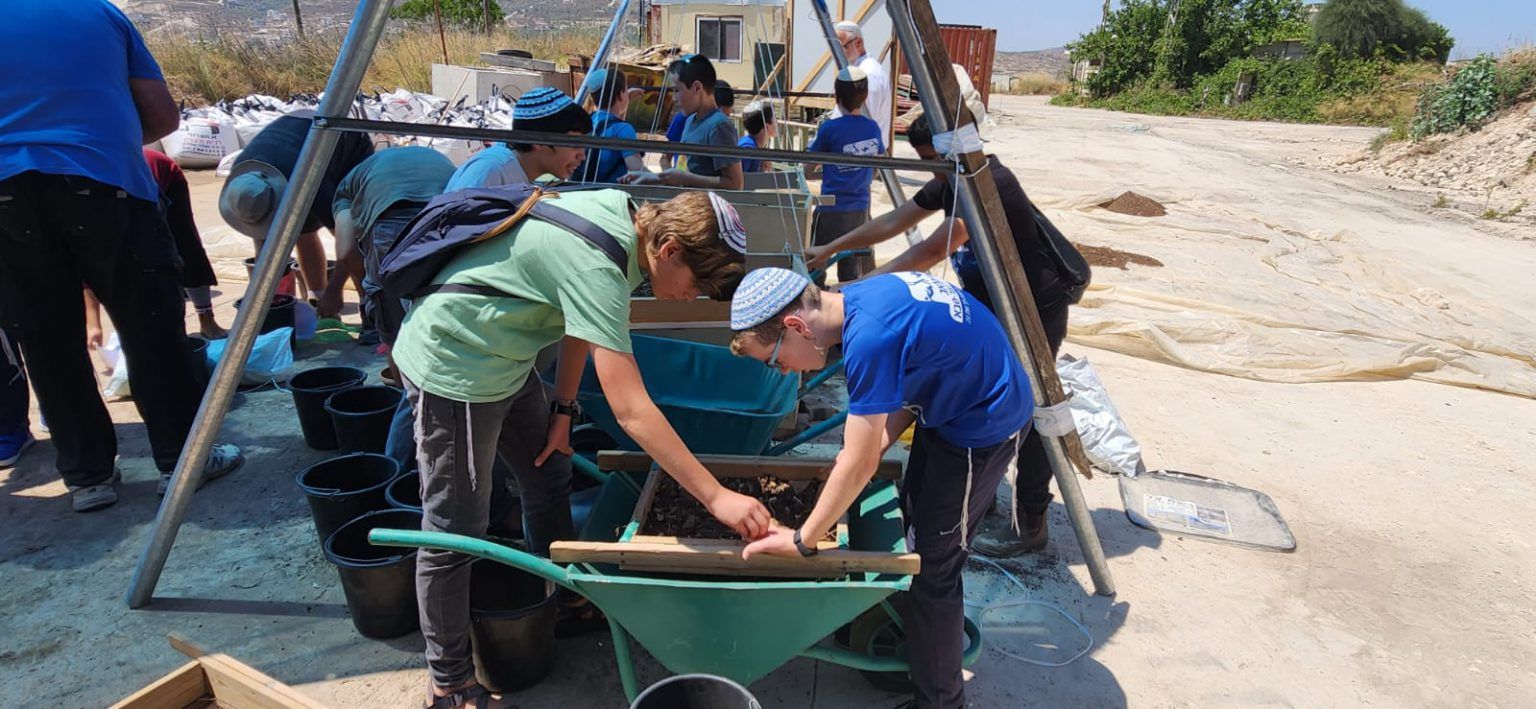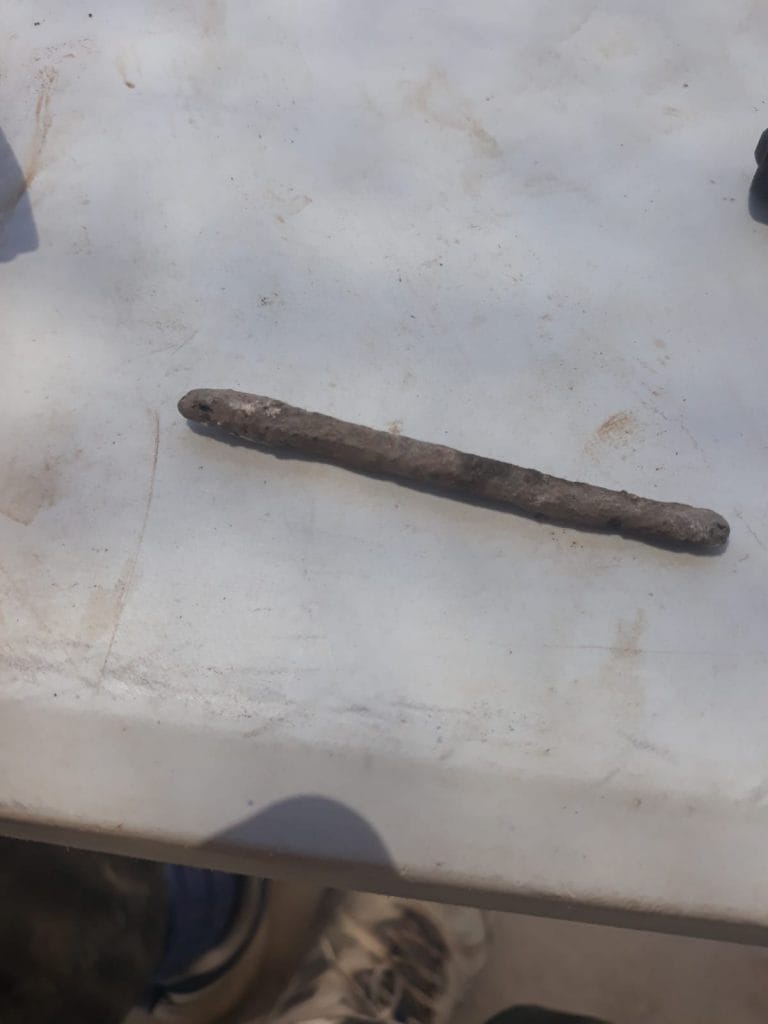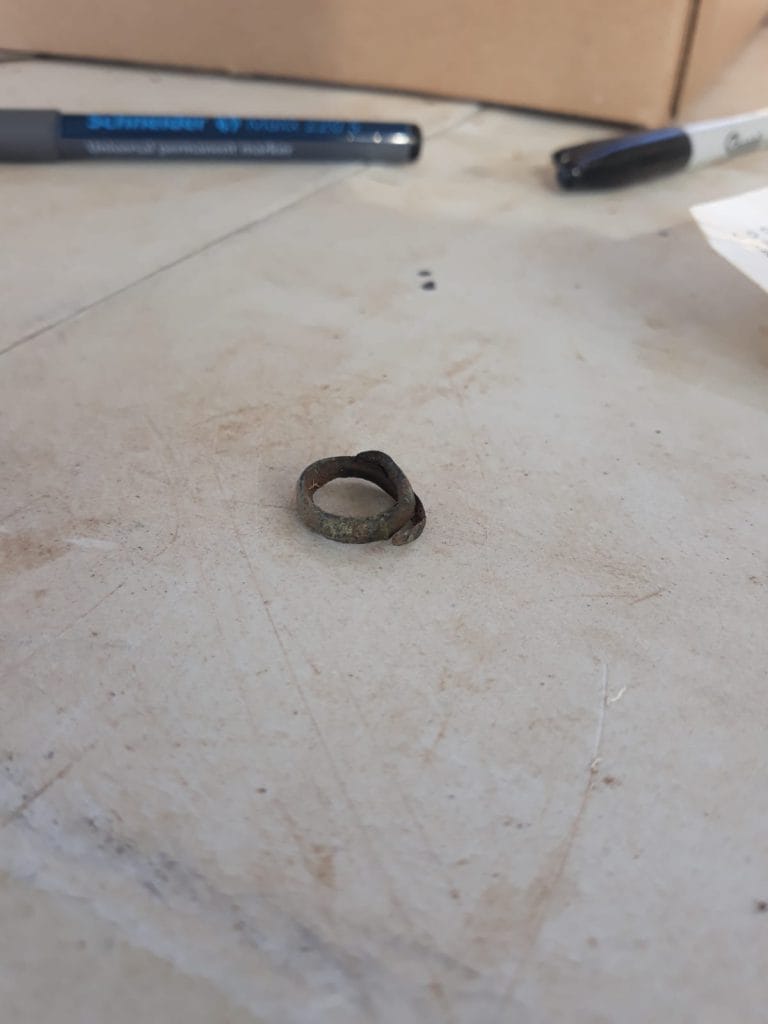
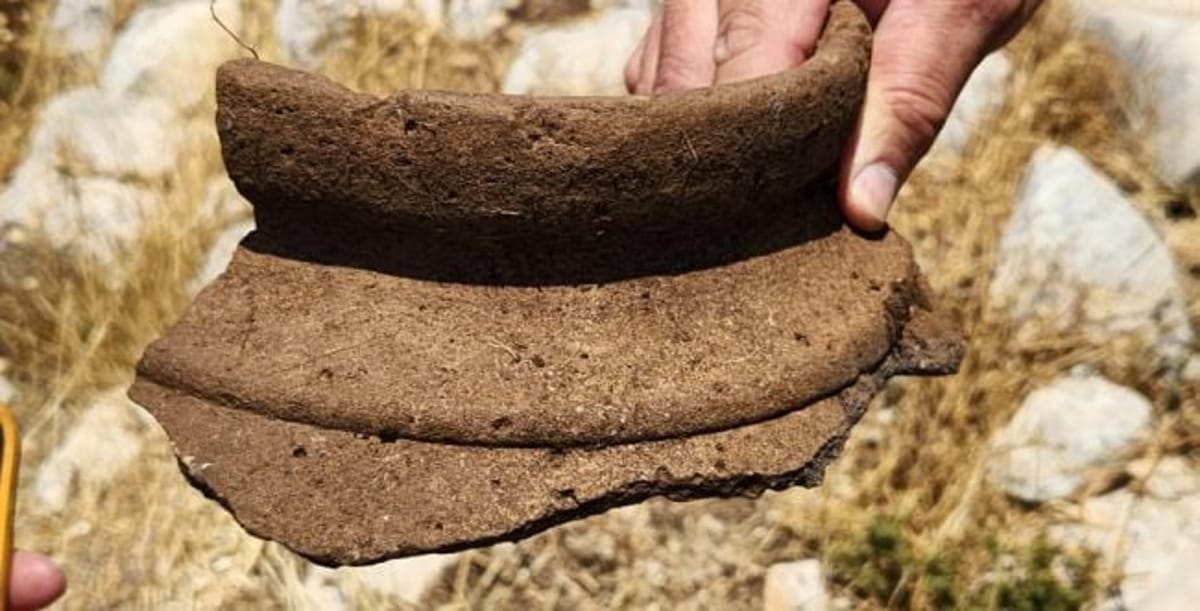
An ancient ring and beads that belonged to children or women's jewelry, the rim of a pottery jar typical of the days of Joshua (the settlement period), and plaster that may have originated from the 12 stones on which Joshua wrote the Torah, these are some of the findings that have been uncovered so far in the huge project of sifting the dirt from the altar of Joshua At the foot of Mount Ebal.
On Sukkot, the Samaria Council will hold the Samaria march to the place and the screening of the dirt from the altar will be open to the general public. Yossi Dagan, head of the Samaria Council: "Precisely in the face of the Palestinian Authority's attempt to destroy the Joshua Altar, the people of Israel will be there with the Israeli flag - right now we will connect to the roots and values"
The screening of the dirt began about a year ago, by the Samaria Regional Council in cooperation with the "Association for Biblical Research" and Dr. Scott Stripling from the United States and under the direction of the archaeologist Dr. Avi Solomon. Dr. Stripling's delegation and then in a community screening project in which high schools and families participated.
The Palestinian Authority's attempts to destroy the Joshua Altar
The screening project has so far found an object that the researchers, including the archaeologist Dr. Avi Solomon, director of the dirt screening project, speculate that it is an ancient ring from the settlement period, it may have belonged to one of the women who participated in the blessing and cursing ceremony 3200 years ago, beads that may have belonged to children or women's jewelry from that time A jug with a collar rim that characterizes the period of settlement from the days of the conquest of Joshua to the period of the monarchy, and pieces of plaster that there is a possibility that the origin of the 12 stones were plastered with lime and the Torah was written on them.