Despite Contradictory Statements

Trump: Iran Agreed to Inspections. Iran: No.

President declares Iran committed to "highest level" nuclear oversight forever • Strait of Hormuz to remain open, frozen assets for U.S. food purchases only | Tehran's foreign minister flatly contradicts every claim (World News)

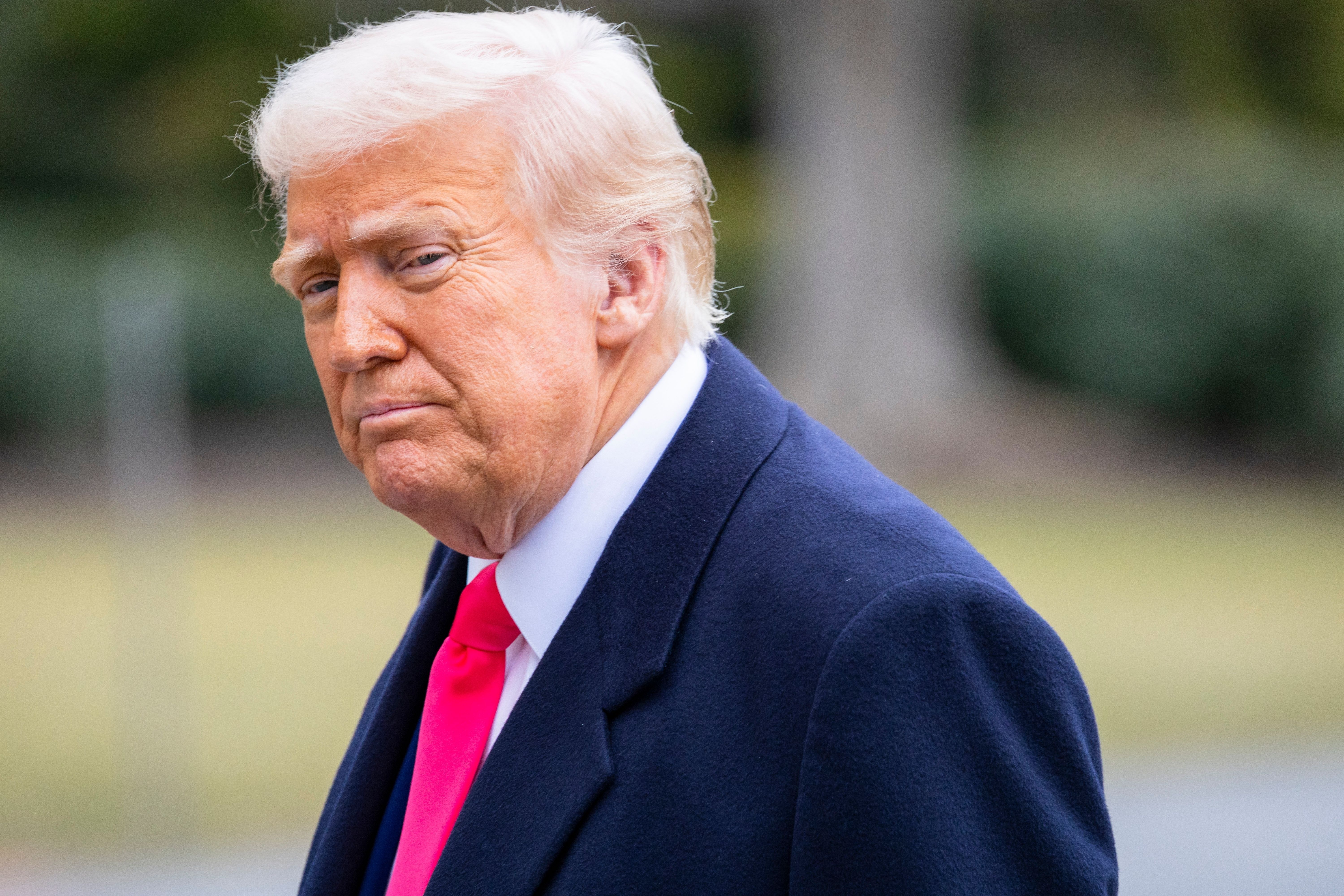
President Donald Trump

President Donald Trump issued a dramatic statement Tuesday declaring that Iran has committed to "the highest level" of nuclear inspections "forever," while simultaneously announcing that the Strait of Hormuz would remain open and frozen Iranian assets would be used exclusively to purchase American agricultural products. The problem: Tehran's foreign ministry says none of it is true.

"Despite their protests and false and contradictory statements, Iran has fully and absolutely agreed to the highest level of nuclear oversight both in the future, forever," Trump wrote in a statement posted to social media. The president warned that if Iran fails to comply, "there will be no further negotiations."

Hours earlier, Iranian Foreign Minister Esmaeil Baghaei told journalists in Tehran that no visit by International Atomic Energy Agency inspectors has been scheduled to examine nuclear sites struck during the recent U.S.-Iran conflict. The statement directly contradicted claims made by Vice President JD Vance, who called IAEA access "a major milestone" just 24 hours prior.
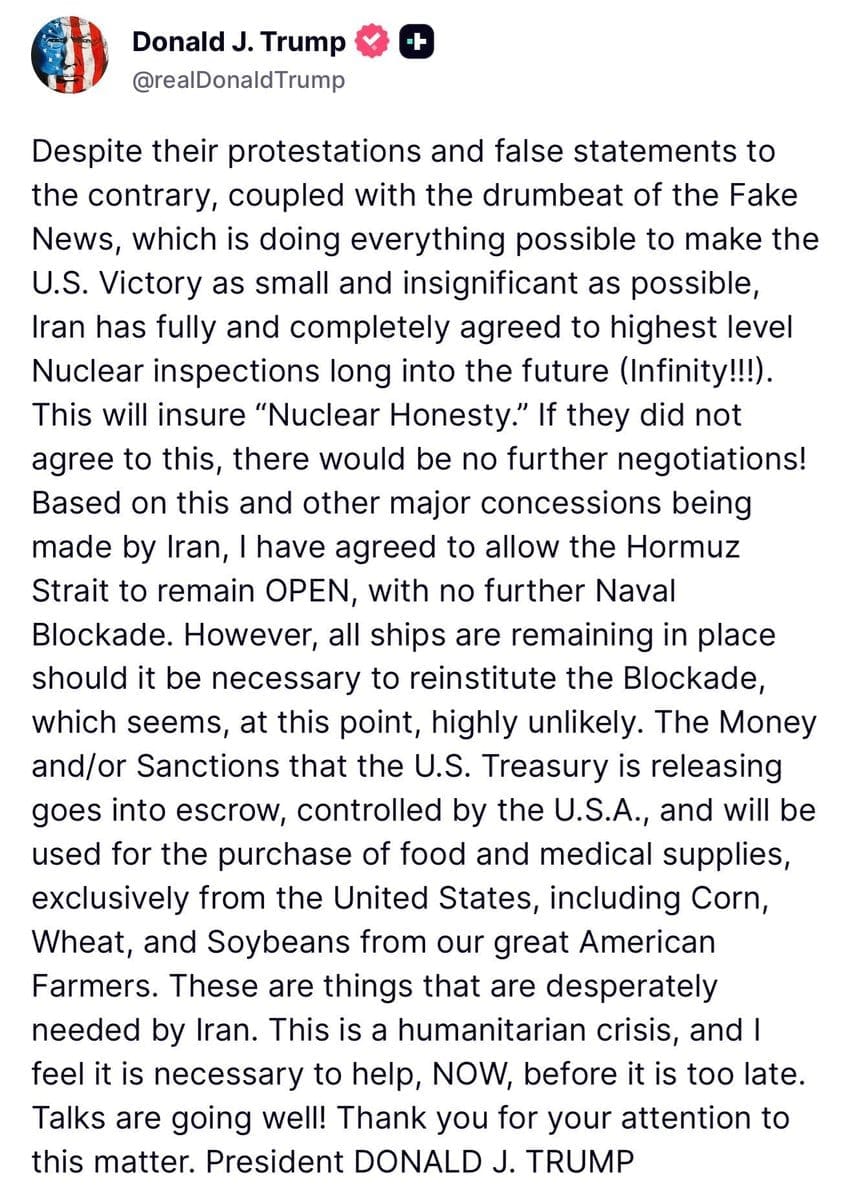
The contradictions extend beyond nuclear inspections. Trump announced that "based on other major concessions Iran is making, I have agreed to allow the Strait of Hormuz to remain open, without additional naval blockade." He added that all ships would remain in position should the blockade need to be reimposed, though he characterized that scenario as "very unlikely at this stage."

The Strait of Hormuz serves as a transit point for approximately 20 percent of global oil supplies, making its status a critical factor in world energy markets. Trump's announcement represents a significant easing of pressure on Tehran, though Iranian parliamentary speaker Mohammad Bagher Ghalibaf declared earlier this week that "the Strait of Hormuz will be managed by Iran and according to Iranian arrangements," adding that "management of the Strait of Hormuz will never return to the state it was before the war."

On the financial front, Trump outlined a mechanism designed to prevent Iranian funds from reaching terrorist organizations. "The money and/or sanctions that the U.S. Treasury is releasing goes into a trust account, controlled by the U.S., and will be used to purchase food and medical supplies, exclusively from the United States," the president stated.

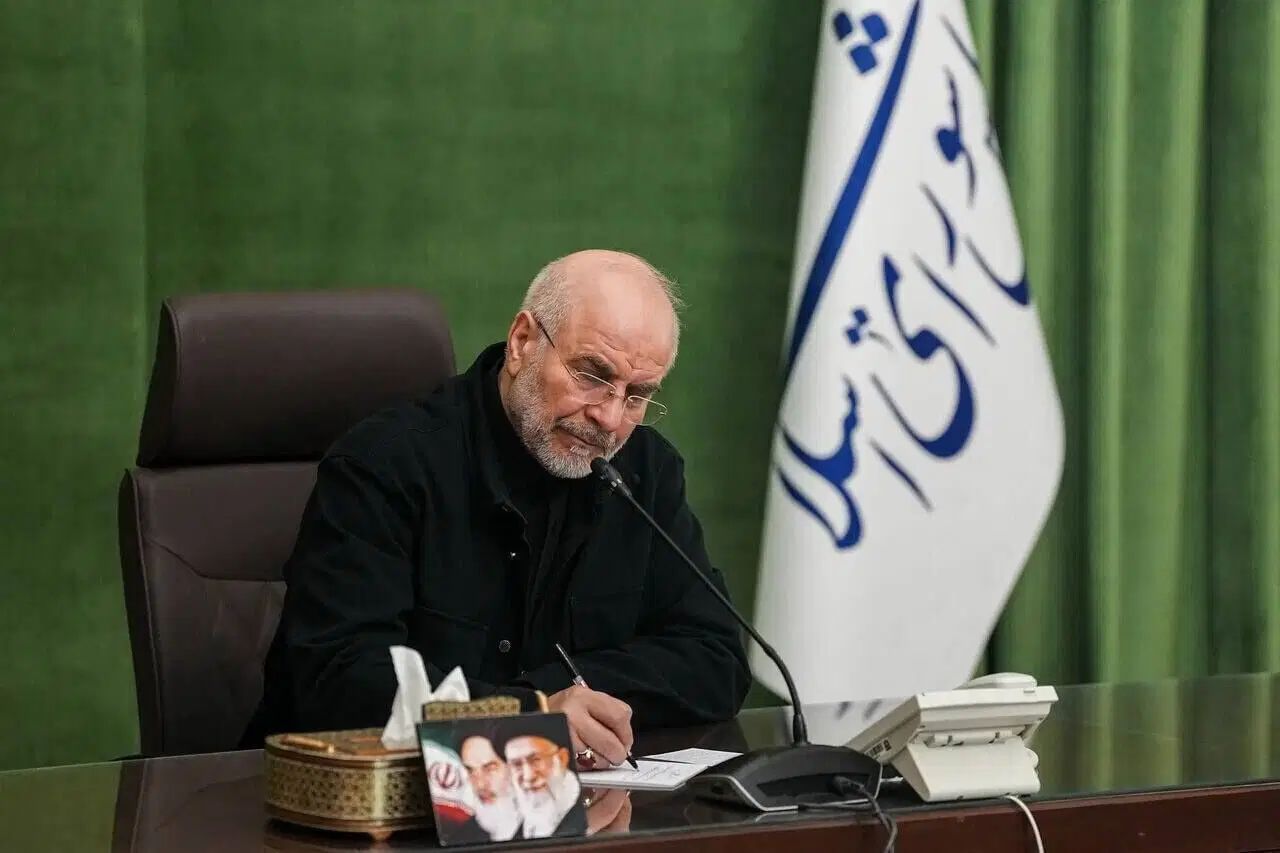
Ghalibaf
Ghalibaf (Photo: social media)

Trump specified that the funds would purchase "corn, wheat, and soybeans from our wonderful American farmers --- things Iran desperately needs." He justified the arrangement as addressing a humanitarian crisis, stating: "This is a humanitarian crisis, and I feel it is necessary to help, now, before it is too late."

Iranian officials dismissed the agricultural purchase requirement entirely. An Iranian spokesman stated that Tehran is under no obligation to buy American food products under existing agreements, while the foreign minister announced that sanctions on oil and petrochemicals were being lifted and assets unfrozen, without mentioning soybeans or any restrictions on how the money would be spent.

The discrepancies have triggered alarm in Jerusalem, where officials view the emerging framework as potentially leaving Israel exposed to Iran's nuclear program. Prime Minister Benjamin Netanyahu stated recently that "we need to free ourselves from dependence on the Americans and build our own independent armament system," reflecting growing concern that Washington is prioritizing narrow interests over mutual security commitments.

Vance had earlier emphasized that "if Iran funds Hezbollah, we will not allow asset flows," conditioning any economic relief on demonstrable changes in Iranian behavior. Yet Iran's foreign ministry has already declared that frozen assets are "free for use" however Tehran decides, directly contradicting American assurances about humanitarian restrictions.

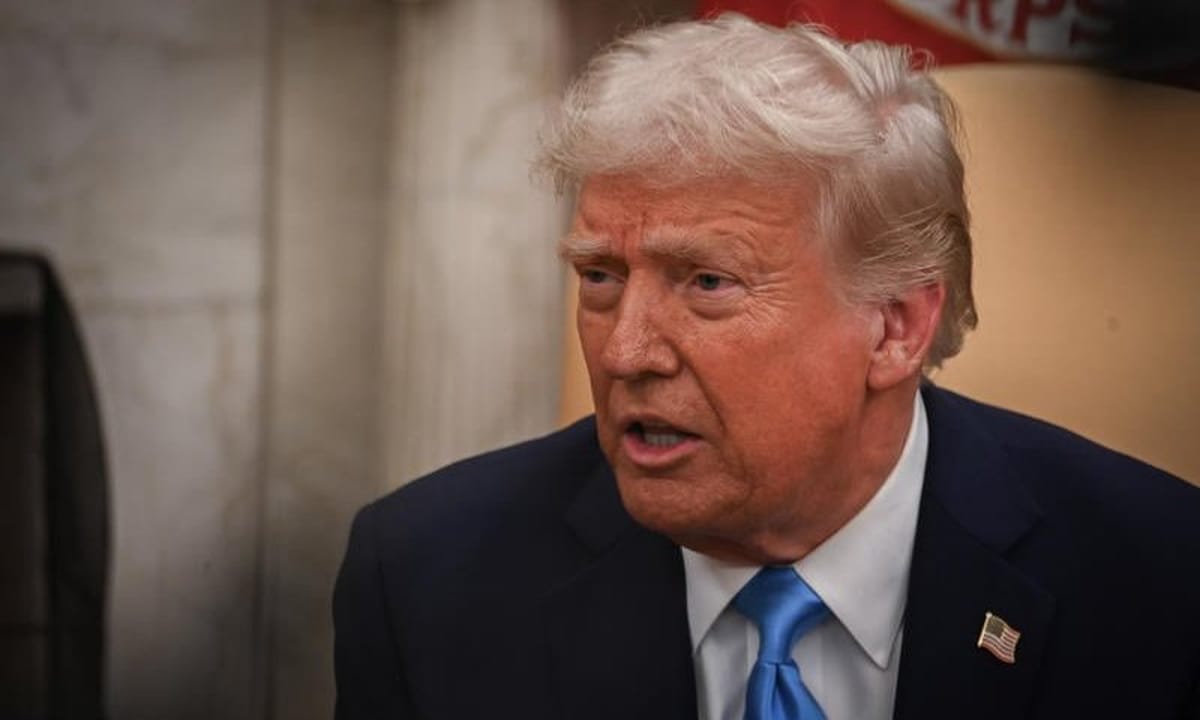
President Trump
President Trump (Photo: Shutterstock )

The contradictions expose fundamental questions about what, if anything, was actually agreed to during the intensive negotiations in Switzerland mediated by Qatar and Pakistan.

The regime that has spent five decades funding Hezbollah, arming Hamas, and chanting "Death to America" is not, it appears, about to become a grateful customer at the U.S. agricultural export window. Whether Trump's assurances reflect genuine Iranian commitments or wishful thinking remains an open question, with significant implications for regional security and Israel's strategic calculus.

Ready for more?

Join our newsletter to receive updates on new articles and exclusive content.

We respect your privacy and will never share your information.

Enjoyed this article?

Yes (37)
No (1)
Follow Us:

Unmissable content


Loading comments...

Also of Interest