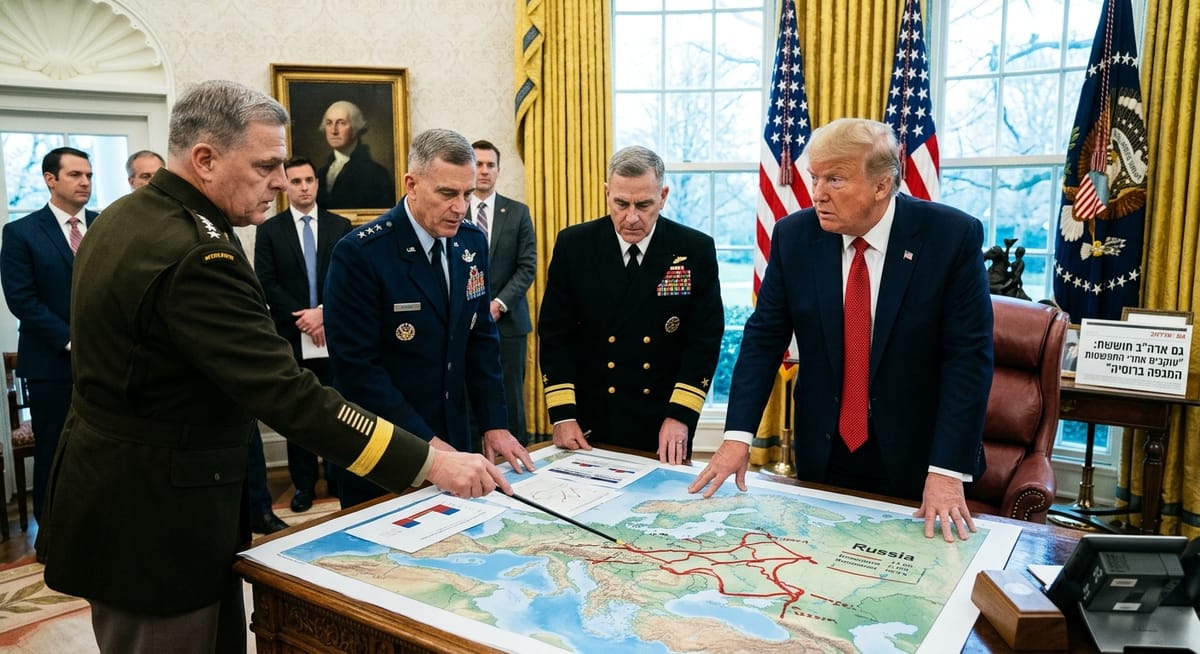
The US Treasury on Friday sanctioned the International Criminal Court as an institution and barred US entities from doing business with it. Washington's campaign against the tribunal is driven by its opposition to the court's arrest warrants for Prime Minister Benjamin Netanyahu and other Israeli officials.
Netanyahu thanked President Donald Trump and Marco Rubio for what he called a "critical decision." In a post on X, he wrote: "The ICC is not a court. It is a political body that poses a mortal threat to law-abiding democracies worldwide and to the very idea of national sovereignty. Thank you for your leadership."
Previous US measures targeted individual ICC judges and prosecutors. This time the court itself is the target, so companies supplying it with financial, technological and other essential services could face penalties.
Some exemptions came almost at once. The US Treasury issued four general licenses that allow certain transactions for ICC telecommunications, software and pension payments, and for matters involving ICC detainees.
A US sanctions designation normally prohibits American firms from any dealings with the listed body. Banks can then close accounts, insurers can pull coverage and software providers can end their services.
"President Trump will never allow the International Criminal Court to prosecute Americans," Rubio said in a statement. "That is why, today, the United States is sanctioning the International Criminal Court." He framed the transaction ban as a way to deprive the court of resources and leave it unable to operate, and he presented the measures as a defense of US sovereignty. Washington holds that the court has no jurisdiction over the United States because it never ratified the court's founding statute.
Rubio said the administration had postponed sanctioning the court in the hope that the ICC and the states party to the Rome Statute would resolve American concerns. That did not happen, he said. The action was built to give member states space to negotiate a solution, and Washington would "continue to adjust accordingly" if those efforts failed.
"Either the ICC will end its threats, or we will end the ICC. We expect our allies, many of whom are part of the ICC and that rely on American service members for their defense, to rein in the court," Rubio said.
The court called on its 125 member states to keep it operating. "It is an assault on the rule of law and on the very foundations of the international legal order," the ICC said. It accused Washington of trying to obstruct justice and to intimidate those who work with the court. The ICC said it "will not be deterred," but conceded it could not withstand the pressure without outside support. "The Court cannot stand alone. Its fate now rests also in the hands of the states that created it," the statement read.
ICC Deputy Prosecutor Nazhat Shameem Khan told Reuters the sanctions "must be condemned." "Our work will continue across all our situations, our investigations and our prosecutions," she said.
The European Commission called the decision "deeply regrettable" and said it would work closely with the court to keep it running. It noted that the measures do not take effect for six months. "As there is a six-month delay before the measures are applicable, there is room for dialogue," the Commission said. It added that the EU stood ready to take "any necessary measures" to safeguard the court's work.
Earlier this week, the court's registrar, Osvaldo Zavala Giler, called on the EU to have its so-called blocking mechanism ready. The tool is designed to protect European businesses from American sanctions that reach beyond US borders.
The announcement came hours after Navi Pillay, a South African jurist and former ICC judge, won the 2026 Nobel Peace Prize. Pillay served on the court's Appeals Chamber from 2003 to 2008. The Norwegian Nobel Committee said it wanted to "issue a reminder" at a time when "judges and institutions of international law are under political attack."
Since its creation in 2002, the ICC has been charged with trying cases of genocide, war crimes and crimes against humanity. Every EU country belongs to it, as does every NATO member except the United States and Turkey. Washington has also attacked the court over a past investigation into the conduct of US troops in Afghanistan.
Trump placed targeted sanctions on ICC officials during his first term, and President Joe Biden later lifted them. The administration began sanctioning court officials again soon after Trump's return to the White House in January 2025.
Ready for more?
Join our newsletter to receive updates on new articles and exclusive content.
We respect your privacy and will never share your information.