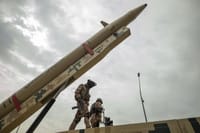
Early this morning (Thursday), Iran’s Islamic Revolutionary Guard Corps (IRGC) launched a barrage of 25-30 ballistic missiles targeting Israeli cities, including a direct hit on Soroka Medical Center in Be’er Sheva, Israel’s largest hospital in the south.
The Soroka Strike: A Deliberate Escalation
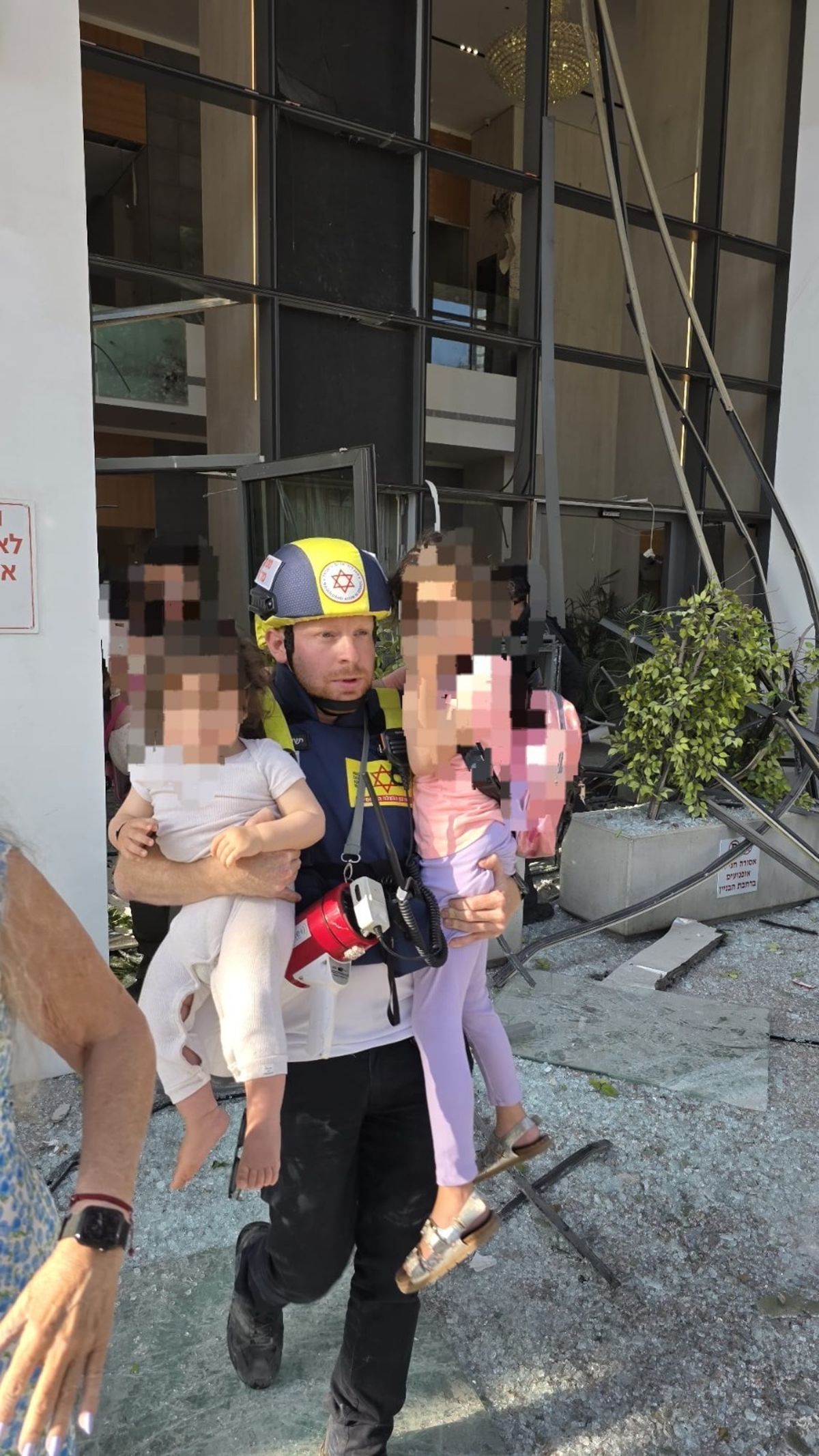
The missile strike on Soroka, a facility serving over one million residents, including Jewish and Bedouin communities, was unprecedented in the seven-day Israel-Iran conflict, which began with Israel’s Operation Rising Lion on June 13. Iran’s state media, via IRNA, claimed the attack targeted an Israeli military intelligence base in the nearby Gav-Yam Technology Park, but no such facility exists in close proximity to Soroka, with the IDF’s Southern Command base located over two kilometers away. The hospital’s old surgical ward, evacuated days earlier, took the brunt of the blast, averting a higher casualty toll. Still, the attack wounded dozens, with smoke-filled corridors and shattered glass underscoring its severity.
Israeli Prime Minister Benjamin Netanyahu, visiting Soroka hours after the strike, vowed to “exact the full price from the tyrants in Tehran,” while Katz labeled Khamenei a “modern Hitler” who “can no longer be allowed to exist.” The IDF’s simultaneous strikes on Iran’s nuclear infrastructure, including the Arak heavy water reactor and Natanz enrichment site, signal a campaign aimed not only at Iran’s nuclear ambitions but also at destabilizing its regime. Katz’s explicit call to “undermine the ayatollahs’ regime” marks a shift toward regime change as a stated goal, placing Khamenei directly in the crosshairs.
Khamenei’s Calculus: Defiance or Desperation?
At 84, Khamenei has navigated Iran through decades of internal dissent and external pressure, maintaining power through a blend of repression, proxy warfare, and pragmatic restraint. His decision to target Soroka, whether intentional or a result of poor intelligence, reflects a high-stakes gamble. Facing Israel’s relentless strikes on Iran’s nuclear sites, missile launchers, and top commanders, Khamenei may have sought to demonstrate resolve, signaling to both domestic and regional audiences that Iran remains unbowed. His social media post on June 18, declaring “the battle begins,” and his rejection of U.S. President Donald Trump’s demand for “unconditional surrender,” underscore this defiance.
Yet, the Soroka attack suggests desperation. Iran’s air defenses have proven ineffective against Israel’s precision strikes, and its “axis of resistance”, Hamas, Hezbollah, and other militias, has been severely weakened by Israeli operations. A Washington-based Iranian human rights group reports at least 639 deaths, including 263 civilians, in Iran over the past week, with over 1,300 wounded. Iran’s missile arsenal, while still potent, has been degraded, with the IDF estimating two-thirds of its launchers destroyed. By striking a hospital, Khamenei may have aimed to provoke international outrage or force Israel into a disproportionate response, hoping to rally global sympathy or deter further U.S. involvement.
Crossing a Red Line: Why Soroka Changes the Equation
Hospitals are protected under international humanitarian law, and deliberate attacks on medical facilities constitute war crimes. The Soroka strike, even if mistargeted, has galvanized Israel’s leadership and public. X posts from June 19 reflect a surge in calls for Khamenei’s elimination, with users like @DrEliDavid and @Ayei_Eloheichem asserting that the attack “sealed Khamenei’s fate.” The hospital’s evacuation, credited to Bar Siman-Tov’s foresight, averted a massacre, but the symbolic weight of targeting a civilian sanctuary has intensified Israel’s rhetoric and actions.
Katz’s comparison of Khamenei to Hitler, coupled with Netanyahu’s confirmation of strikes on Iran’s nuclear archive and top scientists, suggests Israel is now pursuing a maximalist strategy. Netanyahu’s cryptic remark that “all options are open” regarding Khamenei’s fate, combined with reports of Israeli special forces operating in western Iran via Iraqi airspace, hints at the possibility of targeted assassination. Former Defense Minister Yoav Gallant’s claim that only the U.S. can destroy the deeply buried Fordo facility underscores Israel’s reliance on ground operations or U.S. support for high-risk targets, potentially including Khamenei himself.
Risks to Khamenei’s Life
Khamenei’s personal security has long been a priority, with the IRGC providing layered protection and his public appearances carefully controlled. His low-resolution video on June 18, broadcast from an undisclosed location, reflects heightened caution amid Israel’s strikes. However, the Soroka attack has escalated the threat to his life in several ways:
- Israeli Resolve: Israel’s history of assassinating Iranian nuclear scientists and IRGC commanders, such as Qassem Soleimani in 2020, demonstrates its capacity for precision strikes. The Soroka attack, perceived as a war crime, may push Israel to target Khamenei directly, especially if regime change is now an explicit goal. Katz’s rhetoric likening Khamenei to Hitler suggests a moral and strategic imperative to eliminate him.
- U.S. Involvement: President Trump, while hesitant to commit U.S. forces, has increased military presence in the region and reportedly approved plans to strike Iran. His claim that Iran was “a few weeks” from a nuclear bomb, though disputed by his intelligence chief Tulsi Gabbard, aligns with Israel’s narrative, potentially greenlighting U.S. support for high-value targets. Khamenei’s warning of “irreparable damage” to the U.S. if it intervenes may deter direct action, but the Soroka strike could tip the scales.
- Domestic Instability: Iran’s internal unrest, fueled by economic woes and protests like those following Mahsa Amini’s death in 2022, could exploit the chaos of the conflict. Israel’s alleged hacking of Iranian state TV with calls for uprising, as reported on June 19, suggests efforts to incite rebellion. A weakened Khamenei, perceived as inviting devastation by provoking Israel, risks losing legitimacy among his base.
- Regional Backlash: Iran’s Persian Gulf neighbors, wary of a wider war, have been warned by Tehran that U.S. bases on their soil are targets. The Soroka strike, however, may alienate even sympathetic allies, as the Gulf Cooperation Council expressed concerns over nuclear site attacks risking radiation leaks. Khamenei’s isolation could embolden adversaries to tacitly support his removal.
Khamenei’s decision to escalate via the Soroka strike, whether deliberate or accidental, has backfired by unifying Israel’s leadership against him and amplifying calls for his elimination. The attack’s timing, coinciding with Israel’s strikes on Arak and Natanz, suggests a tit-for-tat cycle that risks spiraling into a broader conflict.
Diplomatic efforts, including an Iranian plane landing in Oman and planned nuclear talks with European foreign ministers, indicate Tehran’s awareness of its precarious position, but Khamenei’s defiance may preclude de-escalation.
Whether through Israeli precision, U.S. bunker-busters, or internal collapse, Khamenei’s gamble on Soroka may prove to be the fatal misstep of his 35-year reign.