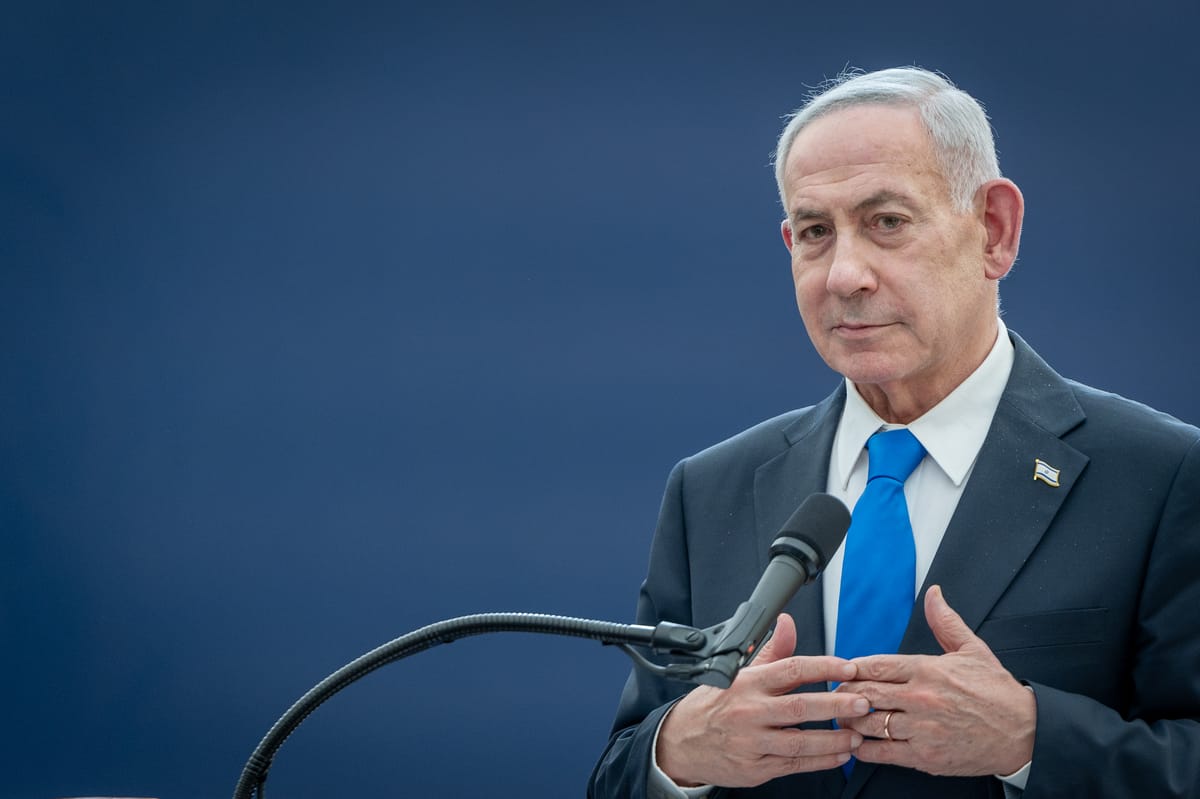
I will vote for Benjamin Netanyahu in the next election. I believe, even now, that no one else can do the job better than he can. And I say this with full knowledge that he has inflicted irreparable damage on Israel's strategic independence, damage that may take a generation to repair.
This is not a contradiction. It is the bitter mathematics of where we stand after October 7th.
The Positioning Failure
Netanyahu did not lose Israel's independence to American pressure. He surrendered it through his own negotiating failure.
The United States does not own Israel. Three billion dollars in annual military aid, while significant, does not justify ceding operational sovereignty over matters of existential security. Other nations with far less strategic importance to Washington manage to act without requesting permission. Netanyahu had leverage, demographic, technological, geopolitical weight, that he squandered through inadequate positioning and relying on Washington to protect Israel above anything else.
When Israel needed to respond to Hezbollah's provocations in Lebanon, we asked Washington first. When operations in Gaza demanded escalation, we waited for American approval. This was not inevitable. This was a choice made by a leadership that failed to establish the terms of the relationship before the crisis arrived.
A strategist of true caliber would have spent years building the case for Israeli autonomy. Netanyahu, instead, allowed himself to become dependent, not on American goodwill (which is ephemeral) but on American permission (which is humiliating).
What October 7th Revealed
The catastrophe of October 7th was not a natural disaster. It was a failure of intelligence, a failure of military readiness, and a failure of political judgment.
Netanyahu presided over an intelligence establishment that missed the signs. He oversaw a military command that was unprepared. And he made the political choice, whatever its reasoning at the time, to allow the security situation in the south to deteriorate into a state of managed crisis.
On October 6th, we were not merely vulnerable. We were asleep.
These are not abstract criticisms. They are the foundation of his irreparable damage: he led Israel into the worst security breach in its history, then found himself in a position where he could not respond with the full force of Israeli strategy because he had no margin for independent action.
The dependency on American approval was already there. October 7th exposed it as a fatal vulnerability.
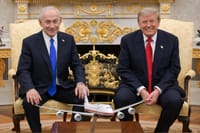
I believe that we would still be fighting Hamas in Gaza, with our hostages and soldiers dying, if Trump hadn't saved us. But that rescue came at a price that might well be too difficult to bear - the price of being the 51st U.S. state, which we have never been before. And that's on Netanyahu.
The Cost in Real Terms
In Gaza, Israel has been constrained in ways that have prolonged the conflict, increased Israeli casualties, and made victory, if it ever arrives, more costly than it needed to be.
In Lebanon, Israel faces an enemy rearming by the day, while American approval for decisive action arrives late, arrives conditionally, and arrives in ways that shape Israeli military doctrine around someone else's red lines.
This is not acceptable for a nation whose survival depends on the speed and totality of its response to threats.
Netanyahu should have spent years establishing the principle that Israel acts in Israel's interest, and that American support is conditioned on understanding this reality, not the reverse.
He did not. Now we all pay the price.
Why He Remains the Right Choice
And yet.
The opposition offers nothing. The left has no answer for security, it never has. The right has no credible alternative. Lapid? Gantz? Ben-Gvir? None of them possess the combination of toughness, experience, and international standing that this moment demands, however damaged that standing has become.
This is the cruelest aspect of Netanyahu's failure: because he has made himself indispensable, we cannot afford to remove him without risk.
We are trapped in a cage of his own making.
The Path Forward
Netanyahu's failures are permanent. The damage to Israeli independence is real. The constraints on Israeli strategy will outlast his tenure. A future government will inherit a relationship with Washington that has been conditioned on deference—and breaking that conditioning will be harder than preventing it would have been.
But that is the situation. A new leader would not reverse it; they would merely repeat the same dependency under a different name.
What we can demand—what we must demand—is that Netanyahu and his government recognize what has been lost and begin, now, the work of rebuilding Israeli strategic autonomy. That means:
- A clear assertion that Israel's military decisions are made in Jerusalem, not Washington
- The cultivation of alternative strategic partnerships that reduce American leverage
- A willingness to absorb international criticism in order to establish operating room
- An end to the habit of asking permission when the alternative is to act first and explain after
These are not suggestions for an ideal world. They are minimums for survival.
Netanyahu may still be the best person to begin this work, precisely because his authority with the security establishment remains intact and his toughness is unquestioned. But he must understand that his legacy is no longer in question: it is one of historic failure in the management of Israel's greatest strategic asset—the right to decide its own fate.
The question now is whether he can spend his remaining time in office beginning to repair what he has broken.
The clock is running.