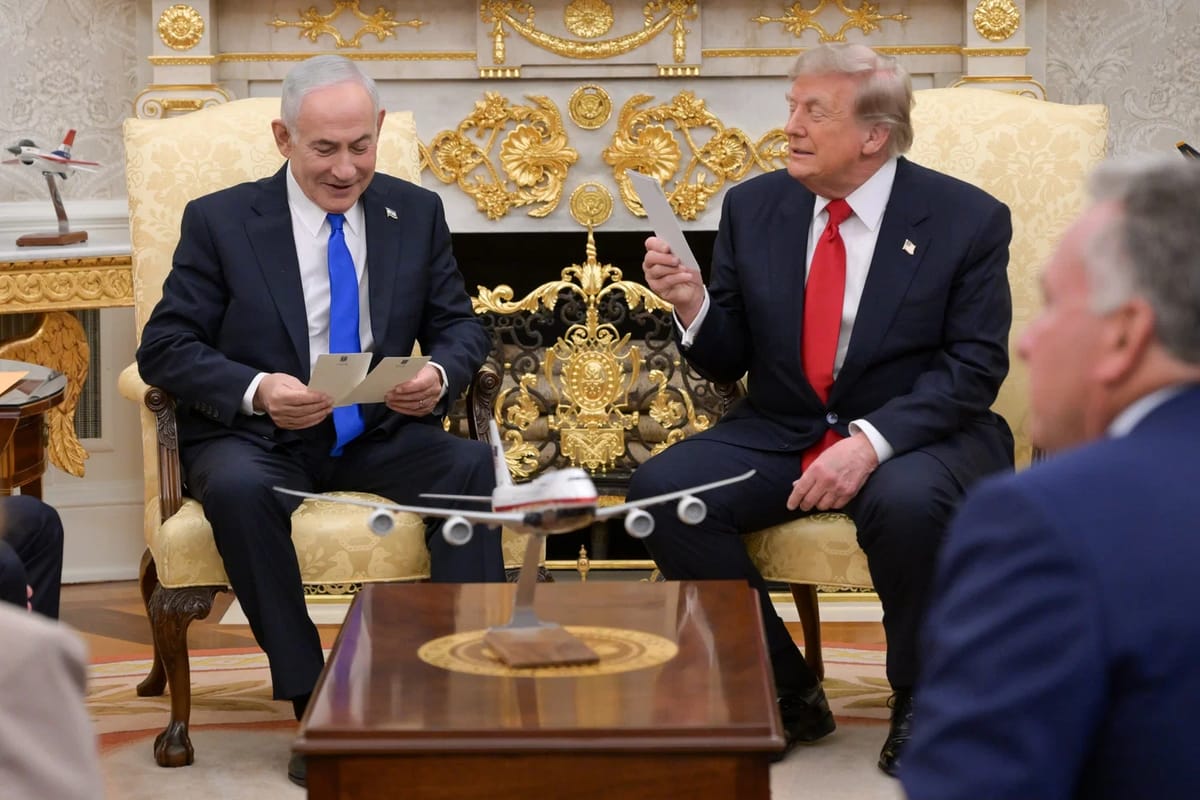
When Prime Minister Benjamin Netanyahu and President Donald Trump emerged from their White House sit-down, political observers expected major declarations regarding the shifting Middle Eastern landscape.
Instead, the public received a polished wall of silence. Neither leader offered a single concrete detail about the substance of their discussion, leaving analysts and citizens alike to read between the lines of a carefully choreographed display.
Both men limited their public remarks to broad, glowing generalizations, reassuring reporters that the meeting was "excellent" and highly productive. Yet, despite the warm optics, the total lack of specifics was impossible to ignore.
Behind the scenes, it was no secret that several key officials within the Trump administration were initially opposed to the meeting taking place at all, viewing it as a delicate risk, but Trump ultimately insisted on hosting the Israeli prime minister.
Conspicuous Silence
What makes the silence particularly striking is the overwhelming weight of the issues currently on the table.
Crucial regional developments, such as recent military actions involving Iran, the potential for renewed Israeli operational involvement, and the controversial U.S. proposal regarding fighter jet sales to Turkey, were noticeably absent from any public statements or post-meeting briefings.
Optics Over Substance
Ultimately, the lack of policy breakthroughs points to a simpler motivation: political utility.
The primary goal of the high-profile meeting appears to have been projecting a message of "business as usual" to the international community while delivering a timely political boost to Netanyahu on the domestic front as elections draw near.