There is a moment in every failed military enterprise when the rhetoric suddenly inverts. The objective wasn't what we said it was. The victory metrics shift. What was essential becomes negotiable. What was non-negotiable becomes a bargaining chip. In early March 2026, Trump administration officials were absolutely unambiguous: "obliterate Iran's ballistic missile arsenal and production capability, annihilate its navy, sever its support for terrorist proxies, and ensure the world's leading state sponsor of terrorism never acquires a nuclear weapon."
That was the mission. That was the reason Trump and Netanyahu launched Operation Epic Fury on February 28 with fanfare, apocalyptic rhetoric, and Netanyahu's promise to crush Iran once and for all.
Now, four months later, Trump has signed a deal that achieves none of these objectives.
The Objectives Trump Failed to Meet
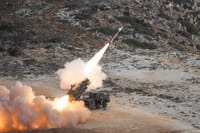
Trump stated Operation Epic Fury would be a four-to-six-week military operation to dismantle Iran's military threat, and the White House claimed in April that after 38 days, the objectives had been met. But even that triumphalism was false. Pentagon assessments show that 40% of Iran's pre-war drone arsenal and 60% of its missile launcher capabilities remained intact after the operation. Iran's regime remains in charge, and the country now exercises an unprecedented degree of control over the Strait of Hormuz, a vital lane for oil and other goods.
The New York Times estimates that some 60% of Iran's missile launcher capabilities are still intact after the war. Aaron David Miller, a former Middle East adviser to both Republican and Democratic secretaries of state, said: "If the war stopped tomorrow, this constitutes a historic strategic defeat for the U.S., especially when this was a war of choice."
On the nuclear question, ostensibly the driving imperative, Trump has ended up where he could have negotiated three months and $29 billion ago. Iran will dilute its enriched uranium stockpile in exchange for sweeping economic relief from the United States, a framework essentially resembling the Obama-era nuclear deal Trump spent years condemning. The deal Trump destroyed in 2018, the Joint Comprehensive Plan of Action, achieved the same limiting of Iran's nuclear program. Except now Iran gets it with less international pressure, a weakened regional balance of power, and a U.S. President who is actively hostile to the only regional power actually still fighting Iranian proxies: Israel.
What Iran Actually Won
This is where the real story emerges, because while Trump failed to achieve a single stated objective, Iran succeeded in achieving all of its own.
The agreement includes Iran diluting its enriched uranium stockpile, with the U.S. set to lift sanctions and release frozen funds and assets. The deal commits Washington and regional partners to developing a plan allocating at least $300 billion toward rebuilding the damaged Iranian economy. Let that sink in: Trump dropped roughly $29 billion of American firepower on Iran's infrastructure, and now is committing to help fund its reconstruction.
Iran now exercises control over the Strait of Hormuz, which handles nearly one-fifth of the world's oil and natural gas supply, with unclear arrangements regarding tolls or service fees. This is not a temporary imposition. This is permanent leverage. Iran learned something invaluable: Iran faced this war precisely because it didn't yet have a nuclear weapon. If it had, the attack almost certainly wouldn't have happened. This is a concrete incentive structure that every government calculating its own security options is now weighing.
Iran now knows what worked: defiance, asymmetric resistance, closing a chokepoint, and waiting out American fatigue. Trump proved it.
The Netanyahu Factor—Trump's Humiliation
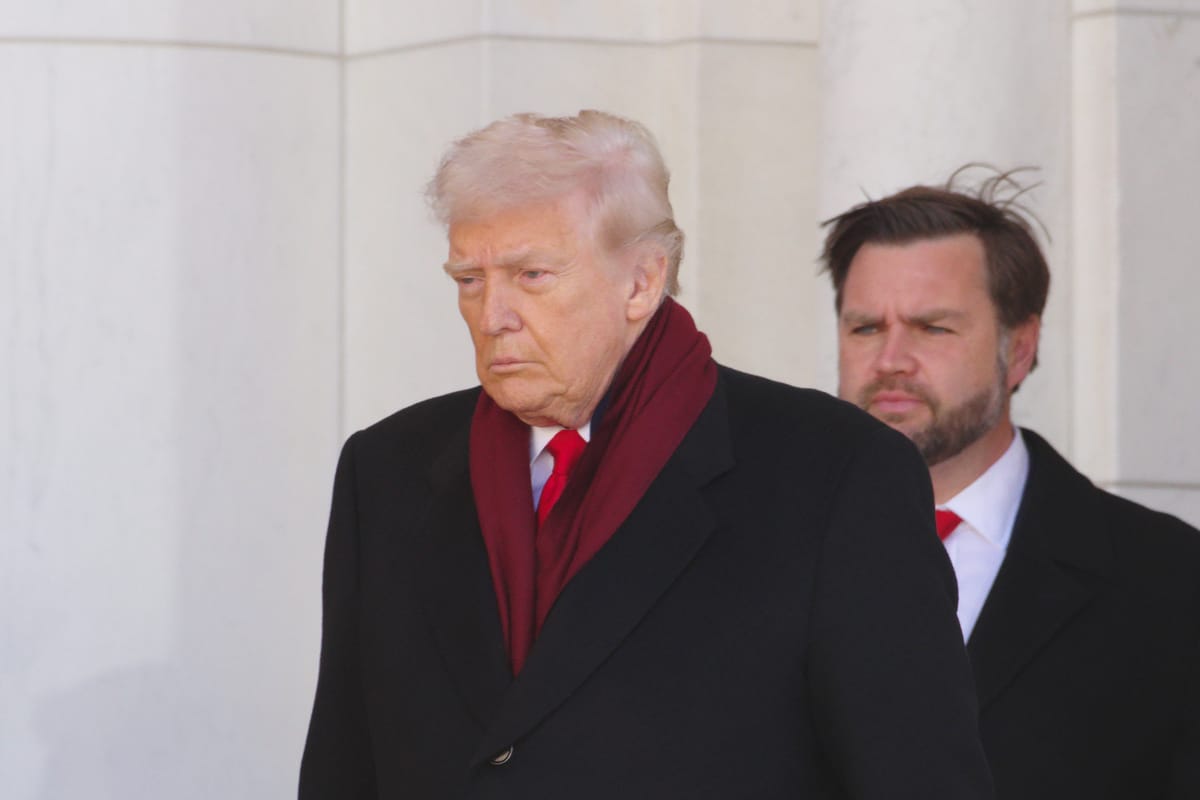
What makes this worse is the reason Trump folded. On June 1, Trump called Netanyahu "crazy" and accused him of ingratitude during an expletive-laden phone call over Israel's escalation in Lebanon. Netanyahu wanted to finish the job. Netanyahu understood that closing down now meant Iran would rebuild, that the proxies would reactivate, that nothing was actually solved.
Trump didn't care. Trump was concerned Israel had killed civilians in Lebanon and felt Netanyahu was escalating in a disproportionate way that threatened Trump's Iran negotiations. In other words, Trump cared more about signing a deal in time for his G7 appearance than about actually defeating an enemy that had just killed Americans and cost the U.S. military tens of billions of dollars.
This week at the G7, Trump said Netanyahu "has to be more responsible with respect to Lebanon" and described Israeli strikes as "vicious" and "too much," suggesting that Syria could handle Hezbollah better than Israel. This is the moment the Trump doctrine collapsed: not on the battlefield, but in Trump's own mind. He wanted the deal. Not the victory. The deal.
The Actual Cost of Trump's "Strength"
The war cost the U.S. military an estimated $29 billion, with the Pentagon requesting a further $200 billion for replenishment and rebuilding. Thirteen U.S. military personnel died in the conflict, and hundreds more were injured. A human rights group estimated 1,665 civilian casualties in Iran, including 248 children. American alliances fractured. Global markets seized up. The price of oil skyrocketed. Global supply chains broke.
And what did America get? A deal Iran would have taken months ago, before Trump fired the first shot.
The Lesson Iran Learned
There is one thing Trump's war accomplished, and it is exactly the opposite of what he intended: Iran now knows that if it had possessed nuclear weapons, Trump would never have attacked. This is a concrete incentive structure that every government is now weighing.
Trump has just taught the world that the path to security against American military power is to get nuclear weapons fast. To defy, to resist, to close waterways, to attack regional allies, and to wait. Because eventually, an American president will decide he wants a deal more than he wants to win.
Netanyahu understood this. That's why he kept fighting. That's why he's now ignoring Trump's deal and vowing to maintain Israeli forces in southern Lebanon. Because Netanyahu knows something Trump apparently forgot: you don't negotiate victory. You achieve it. And if you don't achieve it, you don't call it a victory.
Iran won this war. Not militarily, militarily it was devastated. But strategically, it won completely. It survived. It emerged from the war with a deal, with funds, with leverage over global oil, and with proof that defiance works.
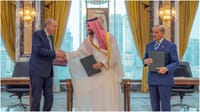
Trump, by contrast, got a signing ceremony at Versailles and a talking point.
No wonder we are all shocked and heartbroken.