Will Apple Leave Israel?

Future of Apple in Israel Under Scrutiny as Senior Executive Johny Srouji Considers Exit

Senior VP Johny Srouji's potential departure from Apple raises questions about the future of the company's extensive R&D operations in Israel, which employ 2,500 people across three centers.

Apple
Apple (Photo: shutterstock/Skorzewiak)

Apple’s sprawling development operations in Israel face a shadow of uncertainty following reports that Johny Srouji, the company's highest-ranking Israeli and Senior Vice President of Hardware Technologies, is contemplating his departure amid a broader executive shakeup.

According to a Bloomberg report, Srouji, a central figure in establishing and expanding Apple’s R&D presence in Israel, "has told people he’s exploring his future, though no decisions have been made.”

Executive Exodus Raises Questions

The speculation surrounding Srouji’s future comes at a time of significant transition at the tech giant. COO Jeff Williams already stepped down in July, with several other long-serving executives expected to follow suit.

Srouji, a Haifa native from a Christian Arab family, joined Apple in 2008 and quickly became an indispensable figure, personally leading the development of Apple's custom silicon, including the powerful M-series chips used in Mac computers.

Crucially, Srouji was the key driver behind the establishment and massive expansion of Apple's three Israeli development centers in Herzliya, Haifa, and Jerusalem, which collectively employ around 2,500 people.

Loading...
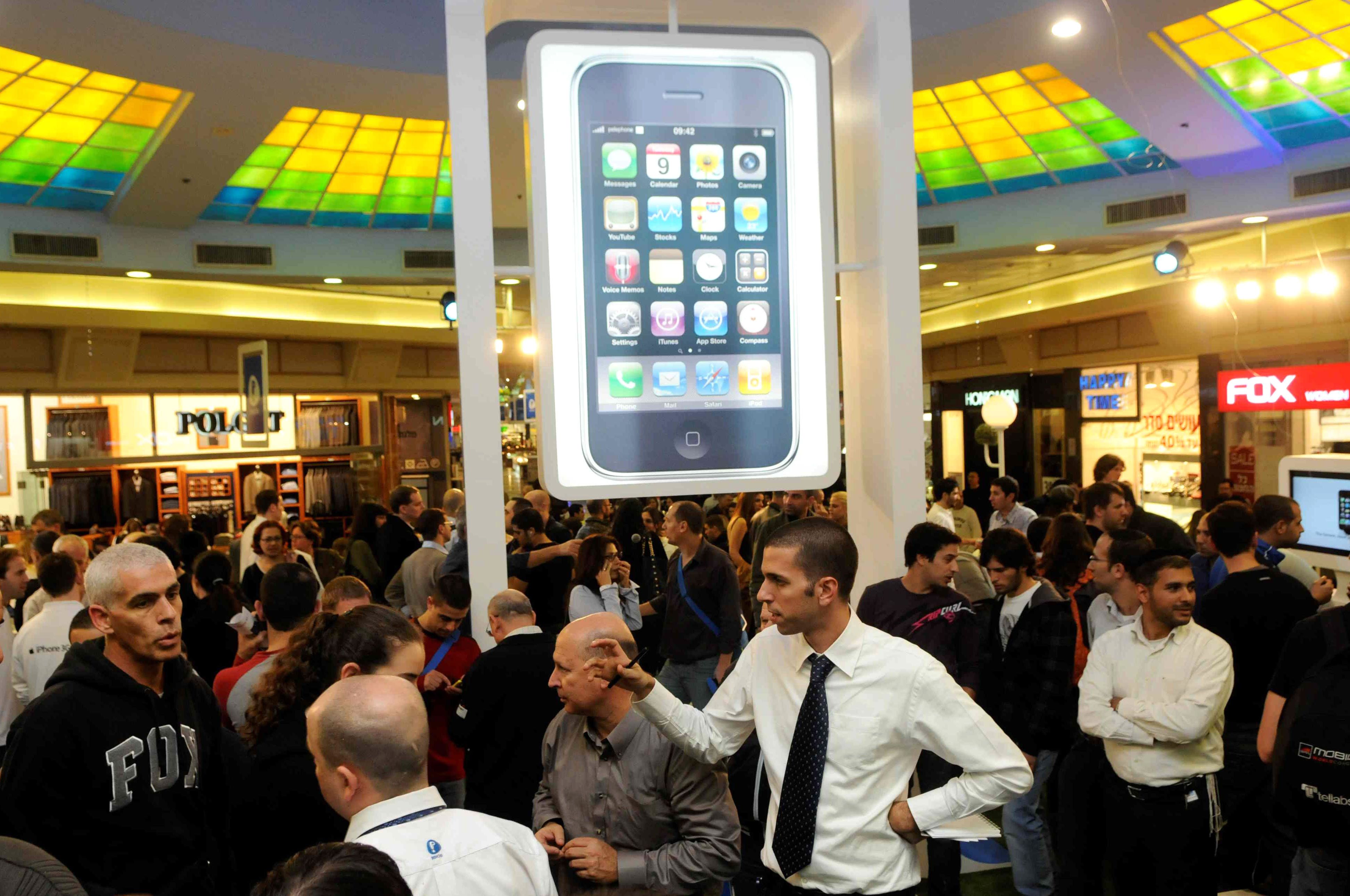
Israeli people wait to purchase the new iPhone 3G at an Apple store in Tel Aviv on December 9, 2009. (Photo: Yossi Zeliger/FLASH90)

Israel: An Essential R&D Core

The Israeli centers are far from a technological periphery; they are core to Apple’s product strategy. Speaking to Israel’s The Central Edition in 2023 during the launch of the Vision Pro mixed-reality headset, Srouji emphasized the strategic importance of the local teams:

"The experience of spatial computing that gives you the ability to combine the digital world in your physical space, when you look at the hand tracking, the eye tracking, some of the cameras, the depth sensors, some of this, part of the overall effort was also developed and designed in Israel."

Beyond the Vision Pro, Israeli teams have engineered critical components, including the M-chip family, compact flash memory for various devices, Apple Watch chips, and the essential depth camera required for FaceID facial recognition.

In that same interview, Srouji was clear about the enduring commitment to the country:

Ready for more?
"We have great talent here. We love what we build. We love the talent we have here and we have a long-term strategy that requires selective recruitment. Haifa is a key part of that, Herzliya is a key part of that, and now [also] Jerusalem."

The Long-Term Commitment at Risk

Apple's commitment extends beyond words; the company has recently invested heavily in its local footprint, including:

Leasing an additional floor for its Jerusalem complex for student recruitment, particularly from Hebrew University and constructing a new 32-story, 45,000-square-meter tower in Herzliya Pituach.

The concern among local observers is that if Srouji, the chief Israeli advocate within the top executive ranks, were to leave, his replacement would be unlikely to dedicate the same level of personal attention and strategic commitment to the Israeli sites.

While short-term operational changes are improbable given Apple's rigorous organizational culture, the long-term question remains: will a new leadership team maintain the deep investment and integration that Srouji secured for Apple's critical Israeli R&D engine?

Ready for more?

Join our newsletter to receive updates on new articles and exclusive content.

We respect your privacy and will never share your information.

Enjoyed this article?

Yes (276)
No (15)
Follow Us:

Loading comments...