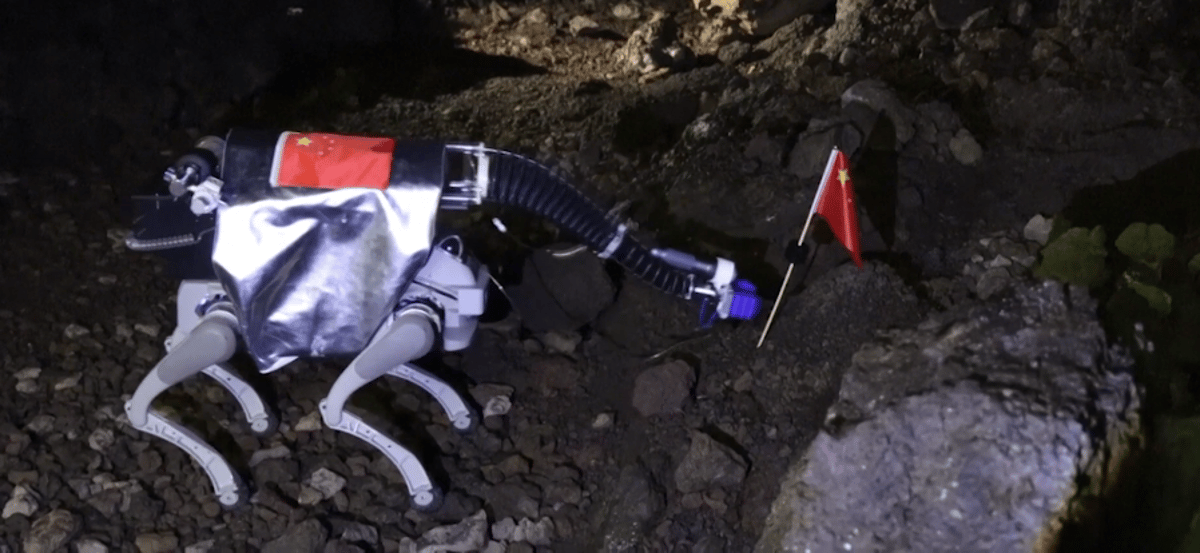
China is exploring the use of robotic dogs as part of the infrastructure for a future lunar base, within a broader vision that combines human astronauts with autonomous systems. The robots are expected to conduct routine patrols, identify hazards in the terrain, assist in collecting rock samples, and support scientific activities around the planned research station.
According to a framework published by researchers involved in China's lunar program, a crew of three astronauts could operate an array of intelligent robots simultaneously. One crew member would direct two robotic dogs across the surface, another astronaut would focus on sample collection and scientific research, while the third team member would remain inside a pressurized rover—roughly the size of a van—serving as a command and coordination center.
The model relies on a clear division of labor: humans would make complex decisions in real time, while robots would carry out the physical, repetitive, and dangerous tasks. This approach would reduce astronauts' exposure to the Moon's extreme environmental conditions and expand the scope of missions that can be accomplished during each excursion from the base.
But the robotic dogs' role extends beyond patrolling. According to the plan, the machines could participate in extracting local resources, including searching for water ice and minerals, mining, and preparing terrain for long-term human settlement. Among the concepts being examined: adapting natural lava tubes for underground habitation and constructing infrastructure from raw materials found on the lunar surface.
The robots are also expected to perform daily maintenance work at the base: checking systems, monitoring air quality and temperature, cleaning living quarters, tending to plants, and possibly even assisting with food preparation. The researchers also raised the possibility of using robots as interactive companions that could converse with crew members and help reduce feelings of isolation during extended stays away from Earth.
The initiative fits into China's plan to establish the International Lunar Research Station, which is scheduled to be built in the south polar region in partnership with Russia and other nations. China has set a goal of landing astronauts on the Moon before 2030, while an initial version of the research station is expected to support scientific experiments around 2035.
At the same time, China is advancing the Chang'e-7 mission, designed to explore the south polar region and locate water ice—a resource that could prove critical for supplying drinking water, oxygen, and fuel for future missions.
At this stage, this is a research plan and engineering vision, not robots that have already been sent to the Moon. Nevertheless, the plan offers a glimpse into how China envisions the next generation of space exploration: astronauts managing the mission, and robots executing the work in the field.