
Population replacement under the banner of equality is not merely a demographic process. It is not openly anti-national, but it works to subvert nationalism from within by manufacturing a post democratic judiciary that invokes Western concepts such as liberalism and human rights while using a transformed demographic reality to rewrite the rules of the post liberal West for generations to come.
For the NGO revolutionary, there is no longer a need to labor over the cultivation of class consciousness. District attorneys, judges, and advocacy institutions can instead prescribe a glocal, post colonial redemption, designed to replace traditional ethno cultural nationalism without ever openly declaring war upon it.
Following the emancipation of the American South and the decolonization of the Global South, the West created a new dependent legal class: politically weak populations imported and administered through the language of equality, rights, and color. Originally coming in for labor, the discourse surrounding the new migrants became far removed from any class worker vernacular...
Courts and the machinery of moral language surrounding these populations as passive objects of redemption. Like the socialists that preceded this generation of redeemers, these seek to cultivate ongoing disparities in order to destroy two competing principles of social organization among the 'old regime':
1. Chauvinistic nationalism as an alternative political idea.
2. The middle class as an alternative way of life.
Socialism sought to dismantle these forces through labor, class, and consciousness, culminating in the vanguard and the Party. Seventeenth century English nationalism was inseparable from the formation of the English middle class; the same was true of French nationalism in the eighteenth century and German nationalism in the nineteenth.
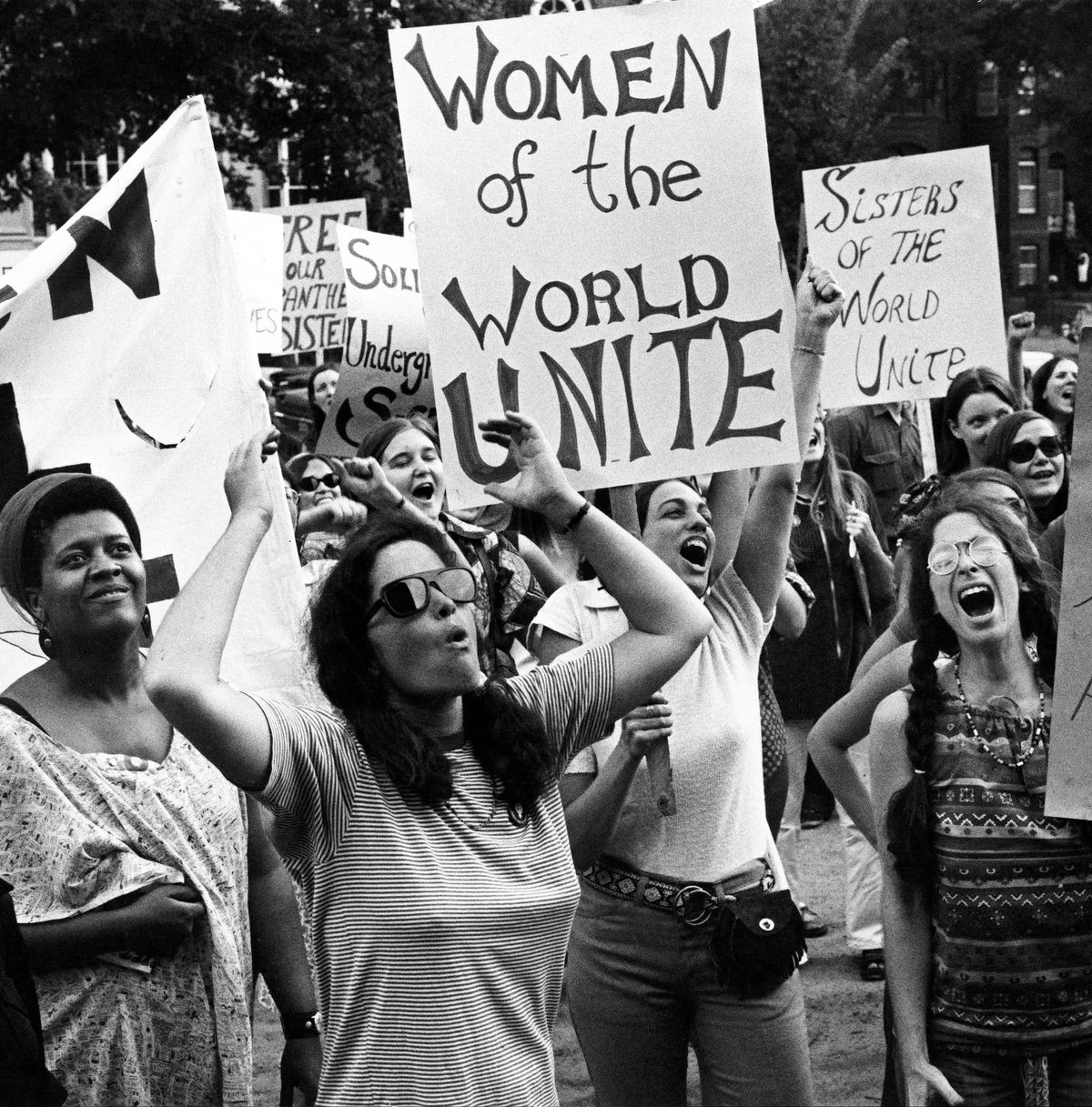
Today, the new socialism, a triage of feminism , migrantism, and hyper-democracy, no longer requires even a party. It operates through the discourse of rights, the authority of the judiciary, and the policing of speech by a corporate financial elite overwhelmingly sympathetic to the idea of a more inclusive and layered democracy, which is to say, post patriarchal.
The movement from labor to rights, from the party to the judge, and from capital to equity marks a new stage in the discourse of equality. Its central object is no longer production, but being itself: humanity translated into identity, identity into grievance, and grievance synthesized into political meaning.
This is socialism approaching its higher form, not through uniformity, but through entropy. It is synthetic because it no longer arises organically from class struggle, political philosophy or material conditions. Instead it is assembled from legal doctrine, moral language, demographic engineering, and intersectional coordination. It is constructed rather than grown and maintained through interpretation rather than participation.
It is no longer bound to the blood of a particular class, but to the abstract blood of humanity. It presents itself as universal, inclusive, emancipatory, and post liberal. Yet why must this order return to socialism at all? And by what mechanism does it do so?
This goes beyond the riddle of religion.
After all, courts, individual rights, and representative democracy are fundamentally Anglo American constructions used here.
A further contradiction immediately appears: why would these actors consciously undermine their own revolution by ensuring that anti feminist and patriarchal forces become a central component of the migrant population?
Before answering that question, one must recognize that population replacement is the ultimate post Marxist project. The old socialists claimed to lift people from poverty while repeatedly producing poverty. The new order sanctifies migrants who often retain deeply patriarchal assumptions in the name of a society supposedly advancing beyond patriarchy.
The incorporation of sex, culture, and demographic reproduction into a capitalist framework makes the contradiction easier to administer. Patriarchal men may be tolerated, even celebrated, because their presence justifies an expanding apparatus of supervision, and control. The contradiction furnishes the system with permanent emergency.
The source is structural. Just as the capitalist is necessary to socialism, the patriarch is necessary to feminism. Both are sustaining adversaries: figures from whom the revolutionary order derives its legitimacy, its resources, and its reason for continued existence.
Socialism remains peripheral to genuine creative action because its categories are never autonomous. They exist only in relation to an accused other: worker and capitalist, oppressed and oppressor, victim and beneficiary, protected class and privileged class. Nationalism, by contrast, is more abstract. It does not require the constant mapping and regulation of social functions through economic, bureaucratic, or legal standardization. It can inhabit the higher superstructure of myth, memory, inheritance, folklore, and historical belonging.
For this reason, the socialist can cooperate with the capitalist financier in order to accumulate and consolidate power, just as the feminist can cooperate with the patriarch. The alleged enemy becomes the practical sponsor. Each ideology draws capital, authority, and justification from the force it publicly condemns.
Given its irrational and contrarian structure, it is difficult to avoid the conclusion that both the new synthetic socialism, democratic, feminized, corporate, and migrant centered, and the older economic socialism of class and labor are animated by a fixation upon oppression. Each defines itself through an endless relation between internal categories and external enemies.
Why, then, does the intersection of radical feminism, Third Worldism, and what might be called musical style democracy, a politics of mood, rhythm, image, and moral performance, produce socialism?
Because socialism begins with marginalized differentiation and ends in enforced uniformity. Differences identified through inequality, injustice, abuse, historical privilege, or cultural exclusion are not permitted to remain merely different. They must be reorganized into a moral hierarchy and then reconciled through institutional management.
The desired result is not necessarily female uniformity, but a uniformity redeemed by feminine inclusivity. Judges, corporations, foundations, and administrative institutions assume the role once occupied by the Party. The judge is the new party, and the judiciary as a whole functions as the party apparatus. Their purpose is to elevate the allegedly worse off while presenting their own authority as compassion rather than rule.
In this system, the Western woman becomes the enlightened Marxist of the superstructure: the figure who rescues institutions, cultures, migrants, and the historically downtrodden. Yet she does so less through elaborate economic programs than through culture, sexuality, language, representation, and moral administration.
There is, however, a key distinction between the old socialism and the new. The old socialism attempted to expose the Anglo American order as falsely national and fundamentally bourgeois. The new order does not simply negate nationalism. It expands nationalism until the category becomes meaningless.
It does not defeat the nation by abolishing it, but by stretching national membership beyond historical memory, cultural continuity, political loyalty, or inherited obligation. Nationalism is not prohibited. It is emptied out, universalized, and made absurd.
The process begins with the conclusion that class revolution inside a relatively homogeneous European society is no longer possible. Rather than waiting for the powerless to rise from within, elites import new populations and administer their dependency through legal, financial, and moral authority.
This is the point at which Marxism meets aristocracy.
The destruction of the old hierarchy does not abolish hierarchy. It merely clears the ground for a new one. Marxist anti patriarchal deconstruction weakened the legitimacy of inherited authority without resolving the permanent question of power. The resulting vacuum was filled by judges, bureaucrats, corporations, foundations, and moral institutions.
If man cannot be engineered into ceasing to be greedy, or as Frank Zappa put it, into no longer liking stuff, perhaps he can instead be engineered into accepting rule by a post national democracy carried forward through women, migrants, and universal civil rights extended even to non citizens.
The central question is whether a feminist oligarchy can sustain itself while continuing to describe itself as democratic. The contradiction is no less severe than the old formula of the dictatorship of the proletariat. Every political order ultimately rests not merely upon rights and moral language, but upon authority, coercion, discipline, and force.
Feminism is revolutionary to its core. Yet revolutions are rarely governed indefinitely by those who morally inaugurated them.
Once the revolution has exhausted the old order, women may not remain in power for long. Indeed, the system itself may already be preparing their displacement by importing populations formed within far more traditional patriarchal structures.
These new allies may, on average, possess less formal education than the liberal Western woman. But education should not be confused with power, nor refinement with the will to dominate. They may be less credentialed, but they are not necessarily less forceful, less possessive, or less jealous.
The feminist oligarchy therefore approaches its final contradiction: it dismantles the patriarchal civilization that made its own ascent possible, only to invite stronger and less apologetic forms of patriarchy into the space it has emptied.