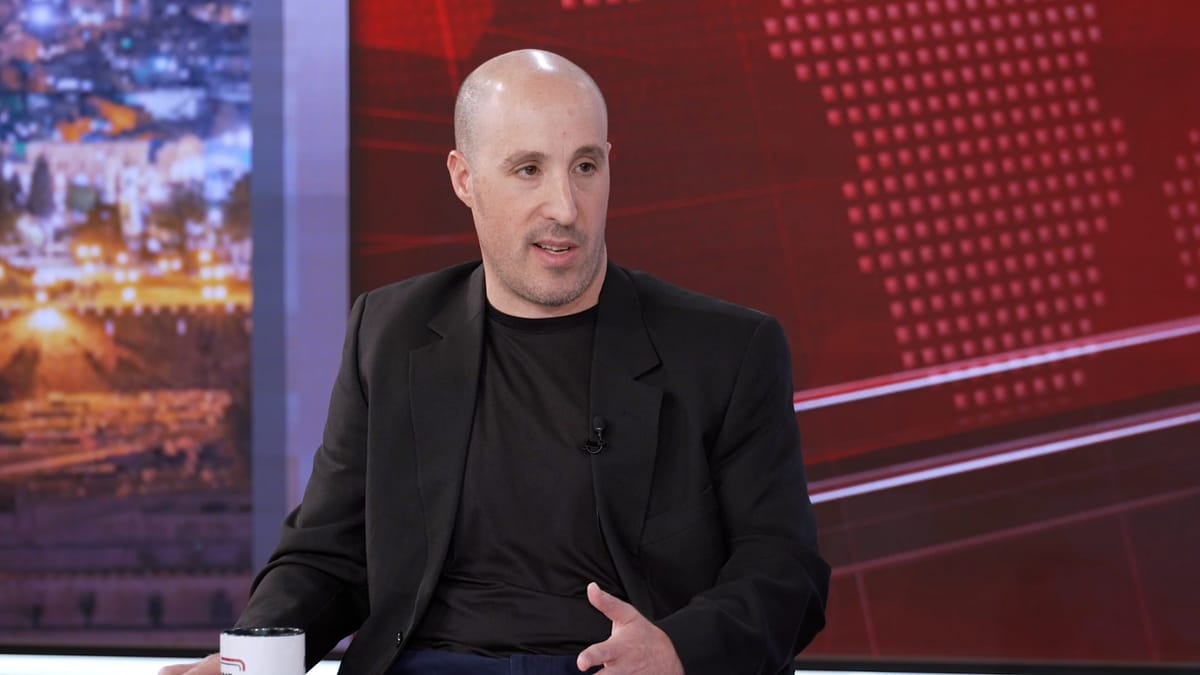
With Israel's election days away and the country facing mounting security and diplomatic challenges, Dr. Avner Golub, vice president of the MIND Israel think tank, warned that the gravest threat to the state may come from within.
Speaking with Yishai Cohen in the Kikar HaShabbat studio, Golub presented the institute's National Challenges Research Framework, a study of the threats and opportunities facing Israel over the next four years, drawing on more than 100 experts from across the public and professional spectrum.
The study's central warning, he said, is that Israel's most serious existential danger does not come only from Iran and its regional allies, but from processes tearing at Israeli society itself.
"When you look at the claim that the State of Israel is facing collapse and you go to the research, you see that societies and states are not destroyed from outside. They commit suicide. They collapse from within," Golub said. "And what's the recipe for that? A society that isn't cohesive and a lack of trust in state institutions."
The combination of internal division, eroding trust in government and Israel's troubled standing abroad, he argued, leaves the country deeply exposed. "When your standing in the world is this problematic, and you could face a wave of sanctions and enormous economic damage, you need a cohesive society and the best people in state institutions," he said. "When that doesn't exist, society falls apart."
Golub painted a bleak picture of Israel's efforts in the United States, saying the problem is not that Israel is losing the battle for American support, but that it isn't fighting it. "We're not losing the struggle over the United States. We're not even showing up on the field," he said. "Israel was once a bipartisan consensus. Today it's exactly the opposite, and it's not because we're losing to propaganda. We're simply not working on it."
To counter Iran and the Muslim Brotherhood, the institute proposes building a new strategic axis. "We call it 'from India to Greece and Cyprus,' with Israel and the United Arab Emirates in the middle," Golub said. "That's how you create a regional camp that Israel leads, with routes that connect Europe and Asia through Israel."