
Get our mobile app
Download on the App StoreGet it on Google Play

5 days to the election

Bennett hits 14 in final pre-election poll

Yachad surges to 14 mandates, its highest since August, while Liberman drops to seven-seat low • Netanyahu bloc stuck at 50, eleven short of a majority • Shas reaches series high of eight seats

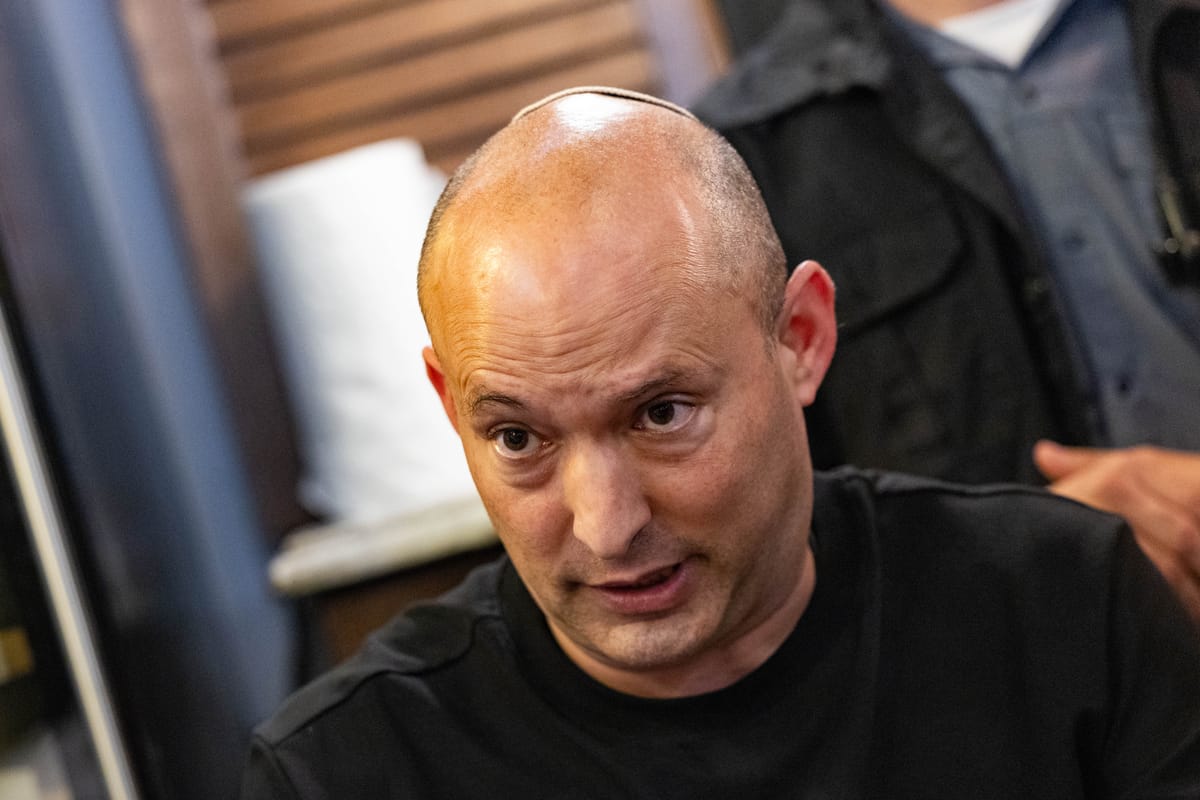
Naftali Bennett

With five days until polls open, the final Israel Hayom survey conducted by Kantar shows Naftali Bennett's Yachad reaching a new high of 14 mandates while Avigdor Liberman's Yisrael Beiteinu falls to its lowest point in the series. Gadi Eisenkot's Yashar remains the largest party at 23 seats, and the Netanyahu bloc stays frozen at 50 mandates, eleven short of the 61 needed to form a government.

The poll, conducted October 21–22 on a double-sized sample of 1,110 respondents, shows the Zionist opposition reaching 56 seats, the Netanyahu bloc at 50, and the Arab parties at 14. Ofer Winter's Amcha Yisrael falls below the threshold with 2.7 percent of the vote.


Bennett surges, Liberman sinks

Eisenkot's Yashar takes 23 mandates, down one from the previous Israel Hayom–Kantar poll. The Likud under Netanyahu holds steady at 21 for the third consecutive week. Bennett's Beyachad jumps to 14 mandates from 12 last week, its strongest showing since August.

In the chareidi sector, Shas under Aryeh Deri reaches a series high of eight seats, and United Torah Judaism under Yaakov Asher takes seven. Itamar Ben-Gvir's Otzma Yehudit drops to eight mandates from nine in the previous survey, and Bezalel Smotrich's Religious Zionism–Zehut holds at six.

Yair Golan's Democrats remain stable at eight mandates. Liberman's Yisrael Beiteinu falls to seven seats, its lowest in the series and down from ten in August. Ra'am under Mansour Abbas takes five mandates, Hadash-Ta'al and Balad under Yosef Jabarin win nine, and the Reservists' Party under Yoaz Hendel and Yaron Zelekha takes four.

The bloc map is clear: the Netanyahu coalition remains at 50 mandates, far from the 61 required and down from the 64 it won in 2022. The Zionist opposition reaches 56 seats, and the Arab parties 14.

Turnout motivation is high: 70 percent of respondents say they are certain to vote on Tuesday, with another 19 percent estimating they will. Among coalition voters, 80 percent are certain to vote, compared with 82 percent among opposition voters.

Low party loyalty, high movement within blocs

The survey reveals significant movement between parties: only 30 percent of all respondents will vote for the same party they chose in 2022, while 37 percent have moved to a different party within the same bloc. Among coalition voters, 62 percent remain loyal to their previous party, compared with just 11 percent of opposition voters, where 60 percent have switched to another party within the bloc.

Nine percent of all respondents crossed blocs, 15 percent of opposition voters versus six percent of coalition voters, and seven percent are still undecided. The poll was conducted on a sample of 1,110 men and women aged 18 and over, double the usual size, representing the adult population of Israel including the Arab sector. The maximum sampling error is ±3.0 percent.

Other recent surveys, including those by Channels 12 and 13, have shown similar results with an advantage for the opposition bloc. A Channel 13 poll from several days ago showed 52 mandates for the opposition bloc versus 49 for the coalition.

Ready for more?

Join our newsletter to receive updates on new articles and exclusive content.

We respect your privacy and will never share your information.

Enjoyed this article?

Yes (100%)
No (0%)
Follow Us:

Unmissable content


Loading comments...

Also of Interest