Get our mobile app
Download on the App StoreGet it on Google Play

Analysis

Azerbaijan: Israel's unlikely Mideast bridge

President Herzog's meeting with Bahrain's foreign minister in Baku highlights Azerbaijan's growing role as a diplomatic hub: close partner of Israel, ally of Turkey, and neutral ground for sensitive talks between governments with conflicting interests

The Muslim-Majority Country Quietly Bridging Israel, Turkey and the Arab World

Amid the tensions gripping the Middle East, Azerbaijan, a Muslim-majority nation that maintains close relations with Israel alongside deep ties with Turkey and Arab states, is emerging as a meeting place for governments that do not always find it easy to speak with one another.

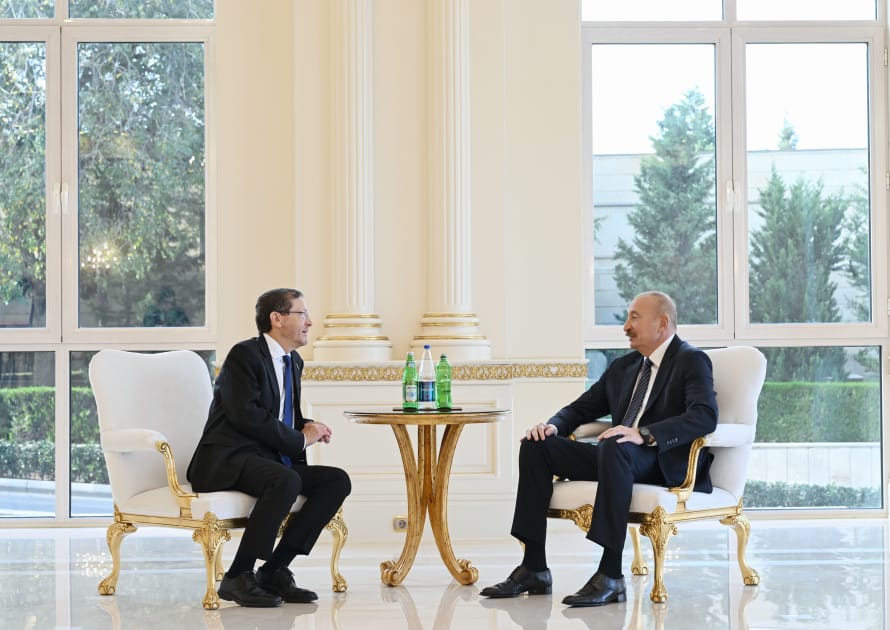
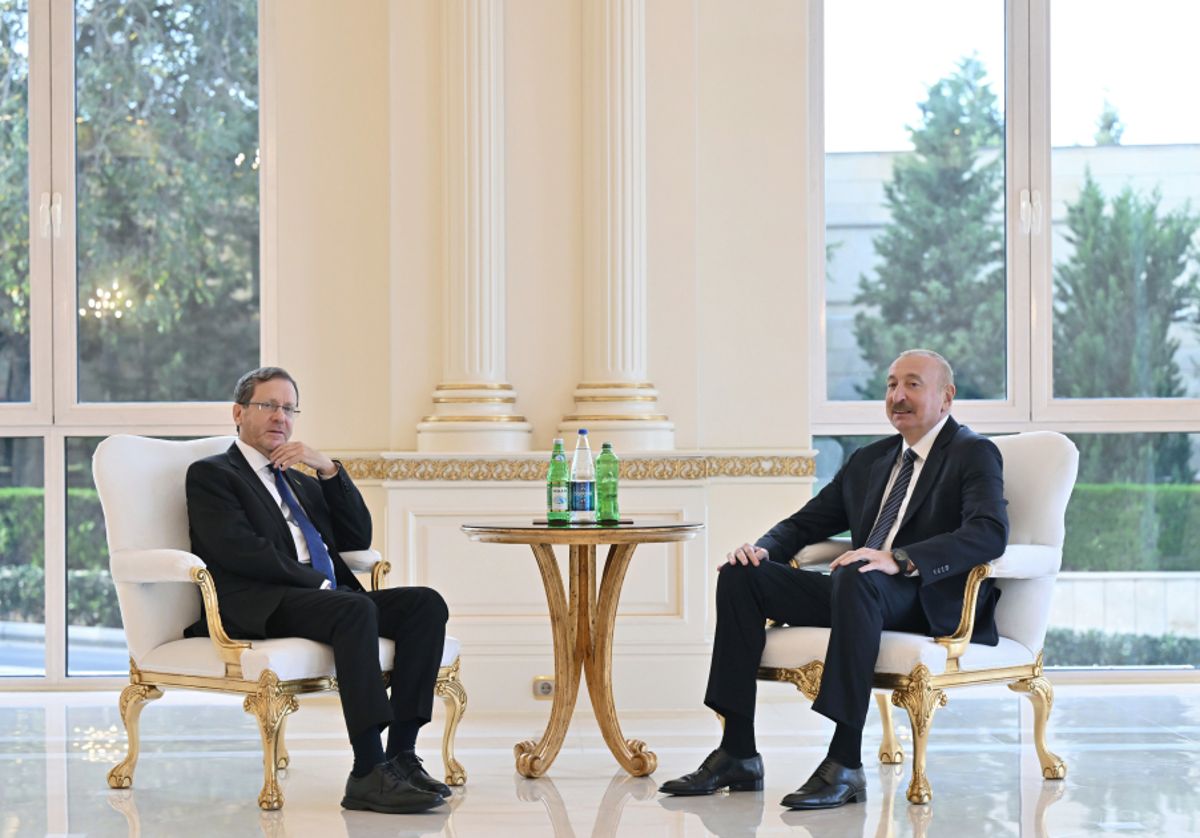
President Isaac Herzog's meeting with Bahrain's Foreign Minister Abdullatif bin Rashid Al Zayani on Wednesday in Baku illustrated Azerbaijan's growing importance in the diplomatic arena.

The meeting took place on the sidelines of the Conference on Interaction and Confidence Building Measures in Asia (CICA) summit, hosted by Azerbaijan. According to a statement from the President's Office, the two discussed strengthening the Abraham Accords and expanding regional cooperation. Herzog also met with Azerbaijani President Ilham Aliyev, discussing bilateral relations and regional security.

For Azerbaijan, which is consolidating its position as a middle power, the meetings reflect a diplomatic role that has developed over years. The country maintains close relations with Israel alongside deep ties with Turkey, Bahrain, the United Arab Emirates and other Muslim states. Its ability to engage with governments holding conflicting interests has made it a convenient arena for sensitive conversations.

Friend of Israel, ally of Turkey

Joseph Epstein, director of the Turan Research Center and senior fellow at the Yorktown Institute, describes this approach as "reconciliation without a public stage."
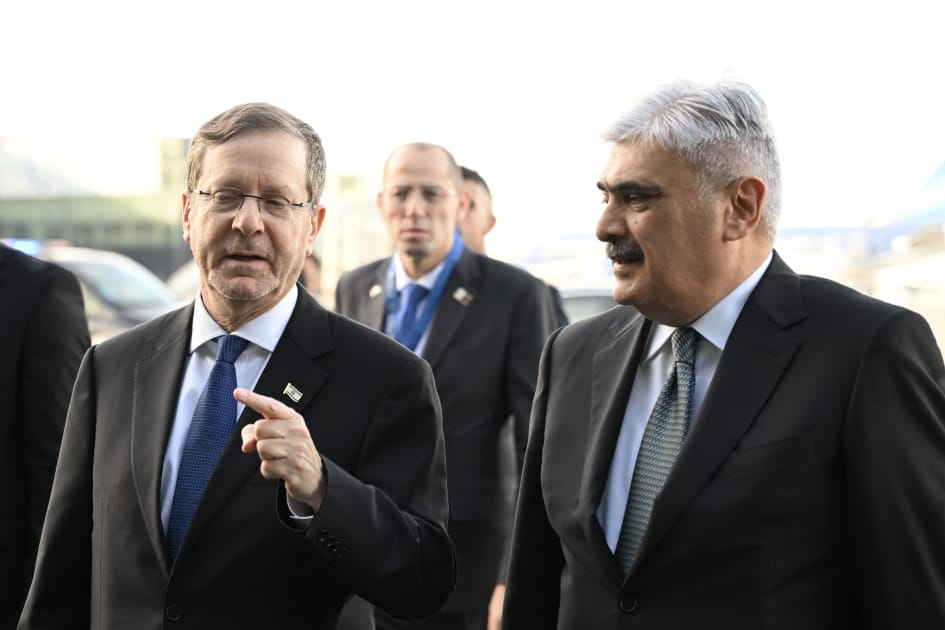
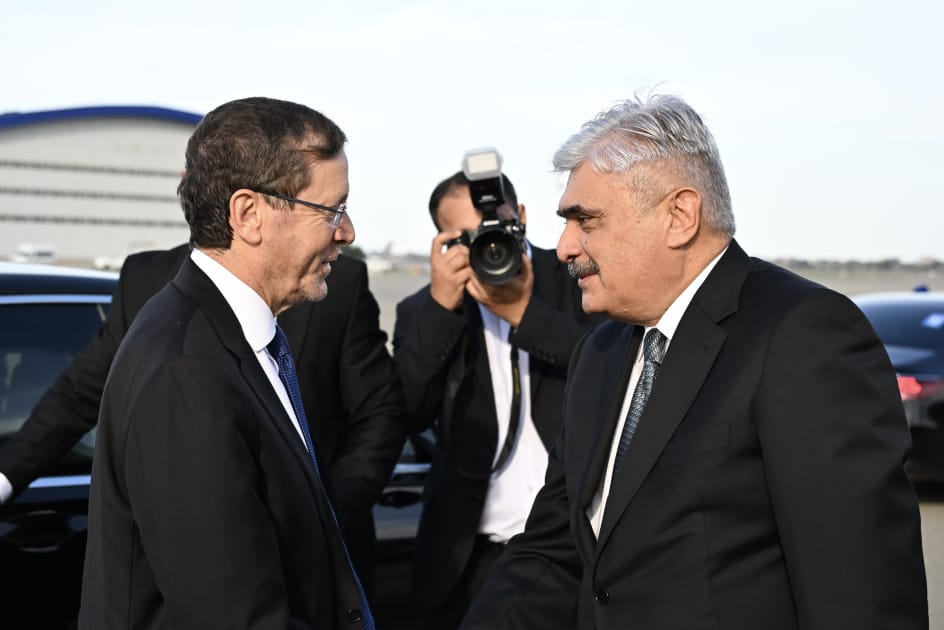
Photo: Official website of the Government of Azerbaijan

"Azerbaijan established relations with Israel in 1992 and has maintained them through two Karabakh wars, the Gaza war and years of pressure from Tehran and Ankara," Epstein said. "The partnership includes security, trade, technology and energy, and Baku built it without severing a single connection with the Arab and Muslim world."

According to Epstein, these relationships gave Azerbaijan a diplomatic role even before the Abraham Accords were signed in 2020.

"Israeli and Arab officials could meet there years earlier, because no one saw Azerbaijan as an enemy of Israel or its client state. All sides trusted the host," he said.

Where Israel and Turkey can talk

These connections have also helped manage tensions between Israel and Turkey. In April 2025, security delegations from both countries met in Azerbaijan for talks aimed at establishing a mechanism to prevent military incidents in Syria, where both have strategic interests.

The Israeli Prime Minister's Office publicly thanked Azerbaijan and President Aliyev for hosting the talks.

The talks did not resolve the disputes between Jerusalem and Ankara, but they demonstrated the importance of maintaining a direct communication channel even during periods of political tension.

"The same logic now applies to Turkey and Israel," Epstein said. "Baku is Ankara's closest ally and one of Jerusalem's closest partners, and it uses that trust to prevent the two from sliding into confrontation."

Photo: Official website of the Government of Azerbaijan

From war in Karabakh to promoting peace agreements

Following its victory in Karabakh, Azerbaijan shifted from military success to promoting normalization with Armenia. Negotiations on a peace agreement, border demarcation and opening transport routes reflect Baku's stated goal of consolidating its achievements through a new regional framework, not by military force alone.

The process has also created opportunities for normalization between Armenia and Turkey, which would have been far more difficult without reduced tensions between Baku and Yerevan.

Professor Ze'ev Khanin, head of the Post-Soviet Conflicts Studies Program at the Begin-Sadat Center for Strategic Studies, sees Azerbaijan's development as a middle power as a different model from the formal framework of the Abraham Accords.

Baku continues to develop its relations with Israel despite the escalation in the Israeli-Palestinian conflict and pressure from Iran and Turkey. For Israel, Khanin argues, this makes Azerbaijan not only a partner but also a rare example of a stable bridge between the Jewish state and the Muslim world.

Herzog's visit also underscores Azerbaijan's growing importance in the eyes of the United States and the West. American recognition of its role in regional stability was expressed in the strategic partnership agreement signed by the two governments in February 2026, which emphasized their shared interest in peace and security in the South Caucasus.

For Baku, this is an opportunity to establish its position as a mediating actor. For Israel, Turkey, Armenia and Arab states, it provides an arena for dialogue even during periods of regional tension.

Diplomacy without declarations and without preconditions

Azerbaijani sources involved in shaping foreign policy present Baku's diplomatic approach as pragmatic rather than ideological.

According to them, Azerbaijan does not demand that governments adopt its political model or offer public concessions as a condition for dialogue, nor does it seek to turn diplomatic contacts into propaganda campaigns.

This allows Israel, Turkey, Gulf states and Armenia to maintain relations with it despite their conflicting interests, without the contacts necessarily becoming a focus of internal political controversy.

This role has particular importance given the tensions surrounding Gaza and Iran and the crisis of trust between regional governments. The Abraham Accords proved that normalization is possible, but its durability depends not only on formal agreements but also on the willingness to preserve relationships when political rhetoric intensifies.

Azerbaijan does this by maintaining its partnership with Israel alongside its ties in the Arab and Muslim world.

Photo: Official website of the Government of Azerbaijan

Herzog's meeting with the Bahraini foreign minister in Baku had significance that went beyond diplomatic protocol.

Israel and Bahrain established relations under the Abraham Accords in 2020, but relations became strained following the outbreak of the Gaza war in October 2023.

The meeting demonstrated that despite the cooling, Jerusalem and Manama are still able to conduct direct dialogue, with Baku providing them a place to meet.

For Israel, this was an opportunity to preserve and strengthen the Abraham Accords; for Washington, a reminder of the importance of regional diplomatic channels; and for Azerbaijan, a reinforcement of its position as a middle power and an independent center of influence.

As Professor Khanin explains: "Baku can provide an arena for dialogue between governments that have reasons to maintain contact despite their disagreements. As regional tensions continue, Azerbaijan's experience teaches that diplomatic influence does not always depend on achieving a significant peace agreement. Sometimes, the very ability to preserve relationships and provide a place where difficult conversations can continue is an achievement in itself."

Ready for more?

Join our newsletter to receive updates on new articles and exclusive content.

We respect your privacy and will never share your information.

Enjoyed this article?

Yes
No
Follow Us:

Unmissable content


Loading comments...

Also of Interest