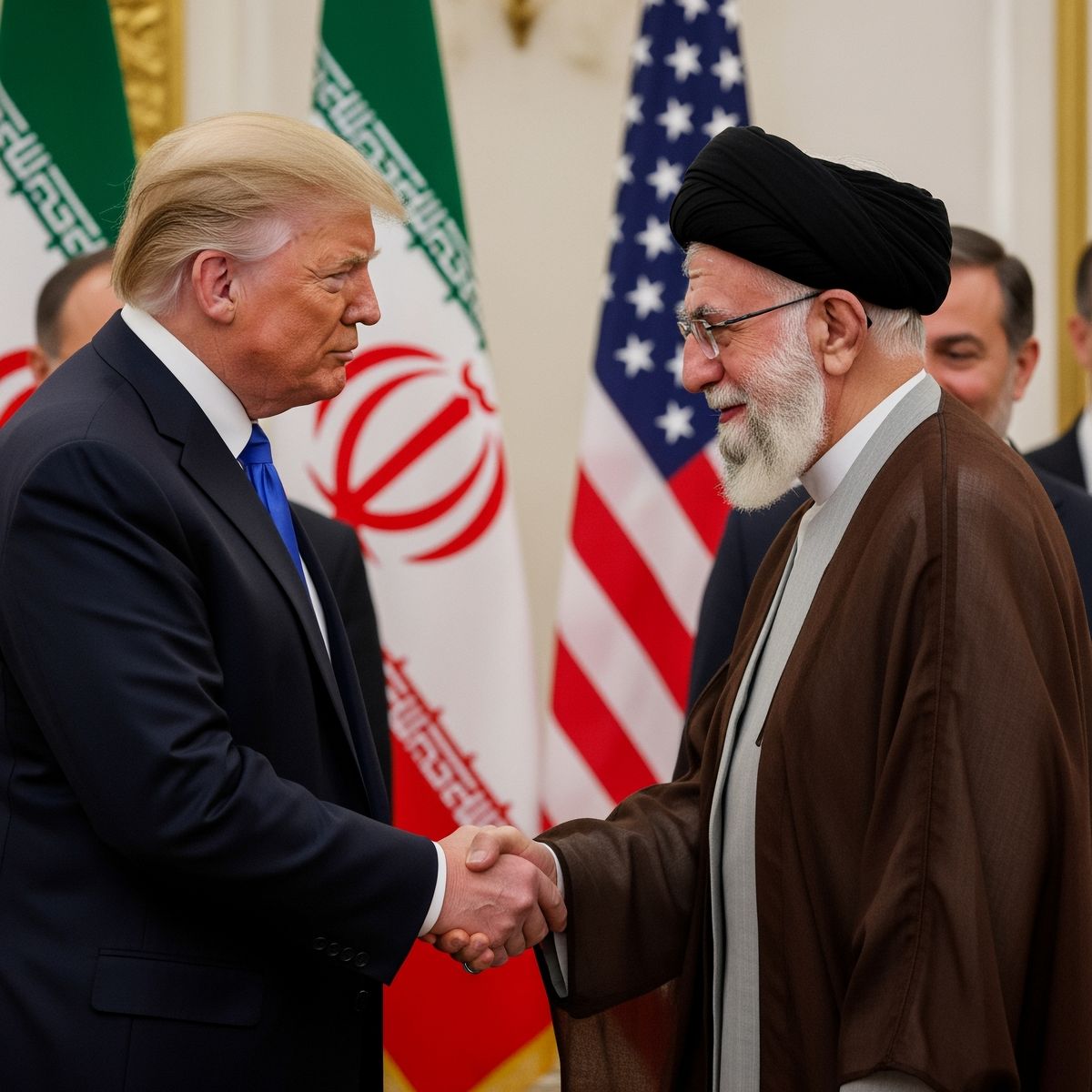
As the ink dries on the U.S.-Iran memorandum of understanding, a chorus of critics across the political spectrum is reaching for the same historical comparison: Neville Chamberlain's 1938 Munich Agreement with Adolf Hitler.
The analogy, once considered hyperbolic in diplomatic discourse, has gained traction with unusual speed, driven by the specific contours of a deal that many analysts say mirrors the original appeasement framework with uncomfortable precision.
The core of the comparison rests on what critics describe as the fundamental dynamic of Munich: a Western power with military leverage choosing to legitimize and enrich a dangerous regime in exchange for promises of peace, while abandoning the ally most directly threatened.
Trump entered negotiations with Iran following Operation Epic Fury, a sustained military campaign that genuinely degraded Iranian nuclear infrastructure and killed Supreme Leader Ali Khamenei. That leverage, critics argue, was the most significant strategic asset the United States had accumulated in the Middle East in a generation. Under the terms of the memorandum of understanding, it was traded for a framework that leaves Iran's enrichment program active on Iranian soil, defers the nuclear question to 60 days of future negotiations, releases $25 billion in frozen assets immediately, and establishes a $300 billion reconstruction fund, with no reference to Iran's ballistic missile program or its regional proxy network.
The parallel to Munich is structural, not merely rhetorical. Chamberlain arrived in 1938 with options. He chose accommodation. Trump arrived at the negotiating table having bombed Iran's nuclear sites and killed its supreme leader. He also chose accommodation.
Iran's own military did not discourage the comparison. Following the deal's announcement, the IRGC issued a statement declaring it had "humiliated" the United States and Israel, the kind of triumphalist declaration that echoed Hitler's assessment of Munich as a complete capitulation by the Western powers.
The Chamberlain parallel has also been sharpened by what the deal omits. The Iranian people, who rose in mass protest in January 2026 and were killed by the thousands in one of the most brutal government crackdowns in modern Iranian history, received no mention in the agreement. Iran's exiled opposition called any deal signed by "the criminal regime occupying the country" illegitimate, noting that the people it massacred were not represented at the table. Critics draw a direct line to Czechoslovakia, whose fate was decided in Munich without a Czechoslovak in the room.
Where the Chamberlain comparison becomes sharper still, analysts say, is in what Trump knew going in. Chamberlain negotiated without the benefit of hindsight. Trump signed an agreement with a regime whose 47-year record of exporting terrorism, executing its own citizens, and systematically violating diplomatic commitments is exhaustively documented.
He also signed it over the explicit objections of his own Secretary of State and Secretary of War, and against the publicly stated assessments of a senior Israeli official who told IDF Radio Monday that the deal is "horrible for Israel," a judgment he said was shared by Netanyahu and the IDF Chief of Staff.
Chamberlain returned from Munich to cheering crowds and declared "peace for our time." The phrase became the most mocked in modern diplomatic history within twelve months.
Trump declared on Truth Social: "This great deal will bring peace and security to the whole region."
The deal has not yet been formally signed.