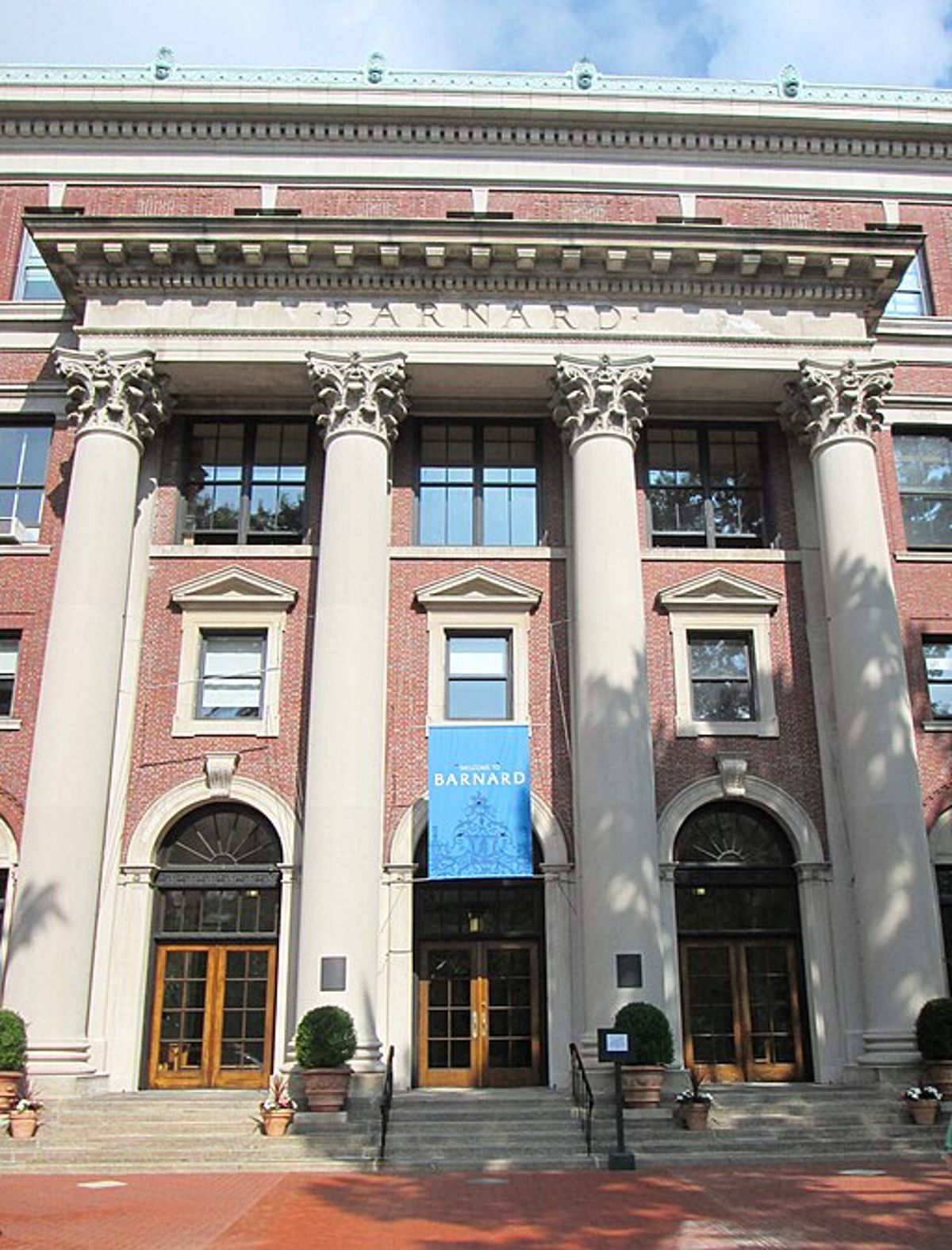
Orr is no stranger to controversy. A sociologist and Associate Professor Emeritus from Syracuse University, she joined Barnard after retiring, bringing with her a reputation for provocative scholarship and activism. Her academic work, including the 2006 book Panic Diaries, delves into the intersections of psychiatry, technology, and power, often with a critical feminist lens. Yet, it’s her actions outside the classroom that have drawn scrutiny.
Posts on X and anecdotal accounts tie her to pro-Palestinian encampments at Syracuse and Columbia, where she allegedly supported student activists, including those engaging in disruptive protests. At Barnard, her presence during the Milbank Hall takeover—and her apparent reluctance to denounce violence—is not surprising, but that doesn't mean it's not highly concerning.
The incident itself was a flashpoint. Protesters, demanding the reinstatement of two students expelled for disrupting a “History of Modern Israel” class in January, forced their way into the building, clashing with security. The assault on the safety officer was a stark escalation from previous campus demonstrations, which had already tested the patience of administrators and the broader community.
Barnard’s leadership condemned the act, noting the protesters’ “blatant disregard for the safety of our community,” yet Orr’s response suggested a different stance. Rather than addressing the violence, she reportedly framed the protesters’ actions as a form of resistance, leaving critics to wonder whether she prioritizes ideology over basic standards of civility and safety.
This isn’t Orr’s first brush with contention. Posts on X recall past incidents at Syracuse, where Jewish students allegedly sought her dismissal for praising Leila Khaled—a Palestinian militant known for hijacking planes—in class.
Another account claims she once devoted an entire lecture to a performative dance “for Fallujah,” a gesture that baffled students and underscored her unconventional approach. While these stories lack official corroboration, they paint a picture of an educator whose methods and beliefs push boundaries, often at the expense of those who disagree with her worldview.
So how does someone like Jackie Orr become a fixture in elite institutions like Barnard? The answer lies partly in the shifting priorities of academia. Universities, once bastions of rigorous debate and intellectual integrity, have increasingly become battlegrounds for ideological agendas. Orr’s hiring reflects a broader trend: the elevation of faculty who blend scholarship with activism, often prioritizing narrative over nuance. Her work, while lauded in some circles for its creativity and critique of power structures, is also steeped in a radicalism that can alienate students seeking education rather than indoctrination. Her presence at protests—and her apparent defense of violent tactics—suggests a willingness to blur the line between teacher and agitator, a role that clashes with the traditional mission of fostering critical thinking.
The implications are alarming. Educators like Orr wield significant influence over young minds, yet their selection often seems divorced from accountability. Barnard’s administration, bound by federal privacy laws, cannot comment on her disciplinary status, but their silence only amplifies the perception of leniency. Meanwhile, students like Elisha Baker, a Columbia junior and pro-Israel advocate, argue that such faculty enable a culture of intimidation, undermining the safety and learning environment for all. Brian Cohen, director of Columbia/Barnard Hillel, echoed this sentiment, calling the Milbank incident an “infringement” on students’ right to education without fear.
This isn’t just about Jackie Orr—it’s about who we entrust with the future. The romanticized image of the rebellious professor challenging the status quo loses its charm when that rebellion excuses violence or stifles dissent. Universities must ask: Are we hiring educators who inspire inquiry, or ones who inflame division? But when confrontation spills into chaos—and when a faculty member can’t unequivocally condemn an assault on a colleague—the cost to academic integrity becomes too high.
As campuses like Barnard and Columbia grapple with rising tensions, the spotlight on figures like Orr should prompt a reckoning. Parents, students, and taxpayers deserve educators who model reason and responsibility, not recklessness. Until institutions prioritize those qualities over ideological zeal, incidents like the one at Milbank Hall will remain not just possible, but predictable. Jackie Orr may be a symptom, not the disease—but she’s a glaring one, and her role in shaping tomorrow’s leaders demands scrutiny.