As Super Bowl LX approaches on February 8, 2026, in Santa Clara, California, a $15 million campaign by New England Patriots owner Robert Kraft's Blue Square Alliance Against Hate is set to spotlight antisemitism with a 30-second ad titled "Sticky Note." The commercial, part of Kraft's ongoing multimillion-dollar effort to combat hate since founding the organization in 2019, depicts a young Jewish student facing school bullying when classmates affix a degrading note reading "dirty Jew" to his backpack. In a gesture of solidarity, a non-Jewish peer covers it with a blue square sticky note, the campaign's symbol, saying, "Do not listen to that."
The ad concludes with a statistic: "Two in three Jewish teens have experienced antisemitism," urging viewers to "share the blue square and show you care."
Kraft, in interviews, has emphasized that hate is learned, not innate, positioning the ad as a call to action against rising incidents amid a surge in antisemitic attacks in the U.S.
This marks the third consecutive Super Bowl appearance for Kraft's initiative, following 2024's "Silence" ad featuring Clarence B. Jones, a speechwriter for Martin Luther King Jr., and 2025's "No Reason to Hate" spot with Tom Brady and Snoop Dogg exchanging vague insults to highlight baseless prejudice.
However, the campaign has faced ongoing scrutiny. Many people argue that "Sticky Note" feels generic and dated, focusing on individual acts of bullying without delving into broader societal or systemic drivers of antisemitism. Some Jewish commentators have called it a missed opportunity, noting that previous ads avoided explicitly mentioning "antisemitism" or "Jews," opting for broad anti-hate messaging that dilutes the issue.
Online discussions, such as on Reddit, have dismissed the ad as "laughable," questioning its single statistic and lack of depth in addressing root causes. On the other hand, defenders praise its directness in portraying real-world experiences and its potential to reach over 100 million viewers, fostering allyship through simple, relatable narratives.
Amid the debate, a viral alternative video promoted by the X account @MOSSADil.
The account, which boasts a bio defending Western civilization, shared the 2-minute animated clip with the caption: " THIS SHOULD BE THE SUPER BOWL AD AGAINST ANTISEMITISM While the Super Bowl spot against antisemitism is being debated, A NEW VIDEO against antisemitism just dropped. And it actually lands. Hitting the core...A bullseye. What do you think?"
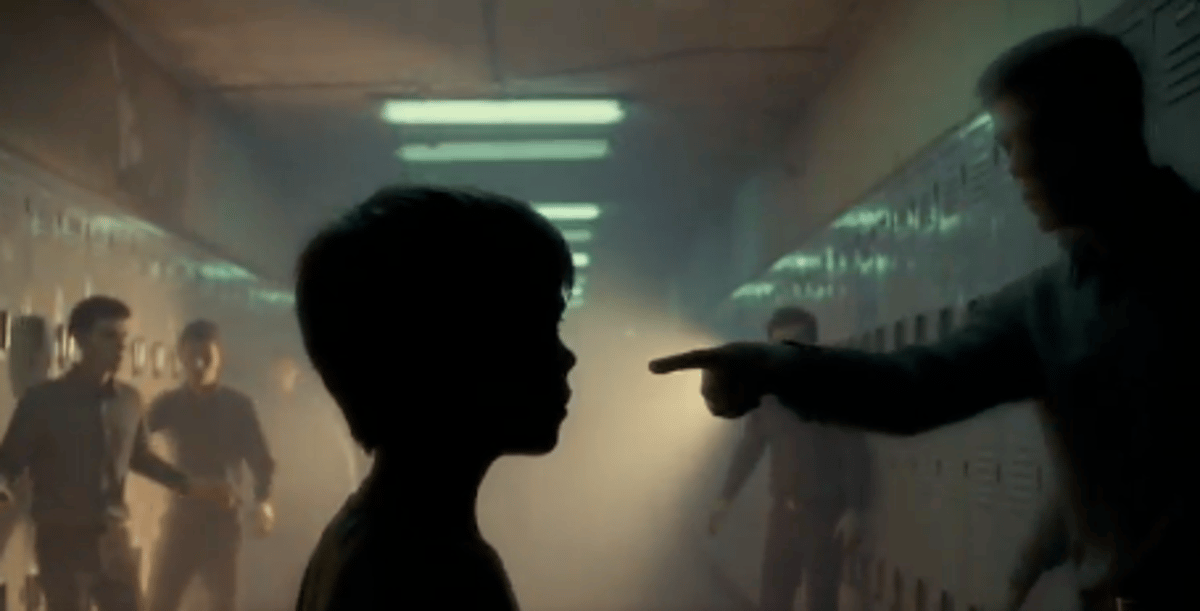
The video, styled as a rap narration over eerie, green-tinted animations, begins with silhouettes of children bullying a peer in a foggy school hallway, then "zooms out" to expose larger influences fueling hate.It critiques media personalities—depicting figures resembling podcasters like Candace Owens and Tucker Carlson—spreading "hot takes" that normalize venom under the guise of intellectual discourse. Social media algorithms are shown amplifying extreme views for profit, with counters ticking to "100,000,000 views." Foreign funding is highlighted through visuals of Qatari flags and cash flowing into institutions like Harvard, portraying it as "soft power" manipulating narratives. Protests feature Palestinian flags and chants rebranded as "moral resistance," with lyrics accusing state sponsors of dressing "extremism as virtue" and flipping scripts to label calls for scrutiny as paranoia. The rap builds to a climax: "Hate doesn't start with the kid getting stared at / Starts where we clap for the ones who prepare that," ending with a bold on-screen message: "IT DIDN'T JUST HAPPEN. IT'S COORDINATED. PAY ATTENTION."