Get our mobile app
Download on the App StoreGet it on Google Play

Storm at the Gray Lady

NYT sued over Israel coverage bias

Florida state pension board and conservative group demand internal documents on fact-checking and editorial standards • Lawsuit cites factual errors, slow corrections and claims newsroom rules became a tool for editors' agendas • Times: baseless lawsuit filed for an improper purpose

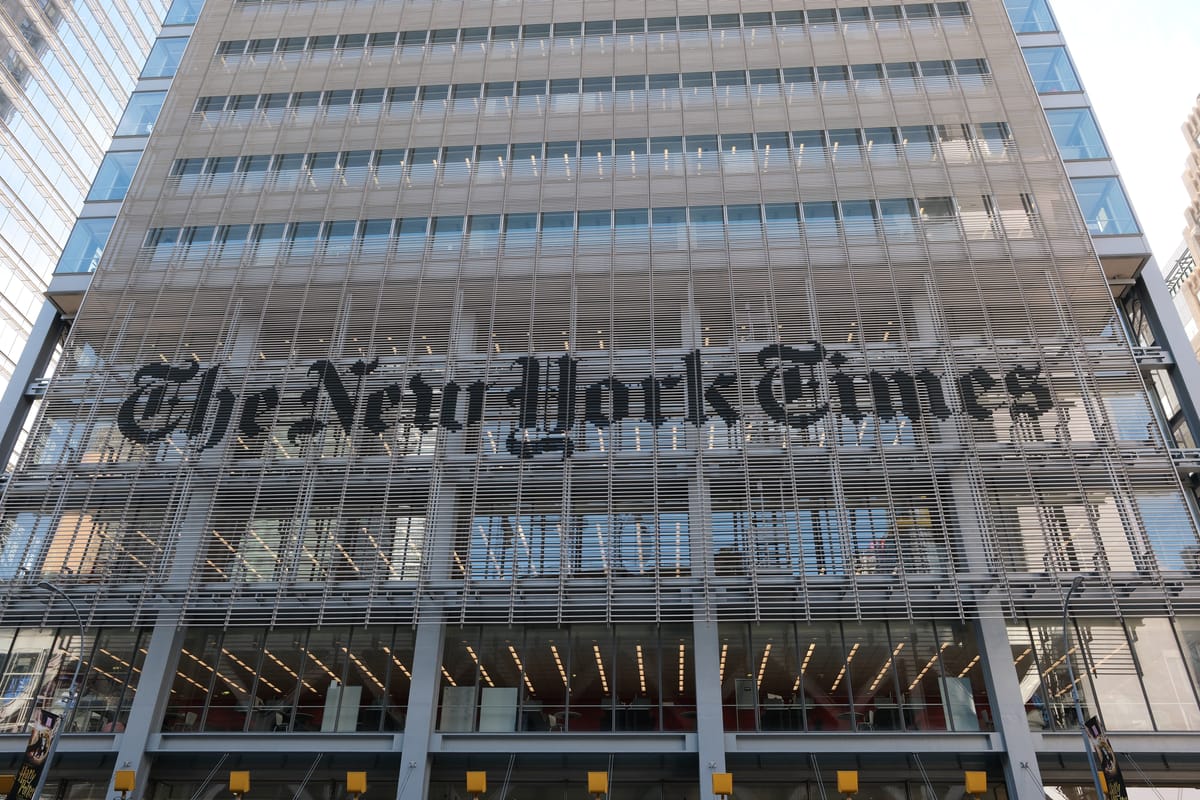
The New York Times building

Shareholders of the New York Times Company have filed suit in New York State Supreme Court demanding access to internal documents relating to the paper's editorial oversight and journalistic standards. Most of the documents in dispute, the plaintiffs say, concern the Times's coverage of the war between Israel and Hamas.

The suit was filed by Florida's State Board of Administration (SBA), which manages the state's public pension assets, together with the National Center for Public Policy Research, a conservative policy organization. The two are asking the court to compel the Times to hand over documents they say have been withheld for some four months.

The shareholders say their aim is not to review any particular article or dictate how reporters cover the war, but to examine whether the board of directors is properly overseeing the fact-checking mechanisms, corrections procedures and editorial standards the company claims to enforce.


The lawsuit alleges that throughout the war coverage, the Times published "materially false or unsupported claims," and that in some cases corrections were not issued with sufficient speed. The plaintiffs further claim that editorial standards at the company "became a tool" serving the personal agendas of editors.

A central figure in the suit is a former employee in the Times's video department who, according to the complaint, worked at the paper for nearly a decade and left this past March. She says she raised concerns at least 15 times since 2019 about what she described as antisemitism and anti-Israel bias, through managers, the standards desk and human resources.

The employee prepared a 26-slide presentation documenting incidents she said raised concerns about how newsroom rules were being applied. Among other things, she raised questions about the selection of video material, training on antisemitism and the vetting of freelancers' statements. In one case, she says, an HR representative told her: "If you don't like our values here, maybe you should find a place whose values align with yours."

"Life is ending in Gaza," a Times headline against Israel
"Life is ending in Gaza," a Times headline against Israel (Photo: Shutterstock)

The lawsuit also references several well-known episodes from the war coverage. Among them is the October 2023 report on the explosion at al-Ahli Hospital in Gaza, which the plaintiffs say initially relied on claims from the Hamas-run health ministry.

Another case cited is the rehiring of a freelance Gaza photographer, Soliman Haji, after October 7. According to the complaint, his social media accounts had previously featured posts expressing admiration for Adolf Hitler. The suit claims a Times official acknowledged the material but believed it did not necessarily conflict with the paper's standards.

The lawsuit also addresses a May 2024 column by Nicholas Kristof on allegations of sexual abuse of Palestinians. The shareholders say questions arose after publication about the verification of sources and the fact-checking process. The Times has said the column underwent thorough fact-checking.

The shareholders also point to a figure showing the New York Times acknowledged 72 errors in its war coverage between October 2023 and June 2024.

Mark Goldfeder, the attorney representing the shareholders, told the Washington Examiner that the demand does not ask the court to review the journalistic content itself. "We're asking who, if anyone, at the top of the New York Times Company is checking whether the rules it publishes are actually being enforced," he said.

A Times spokesman, Charlie Stadtlander, rejected the claims. "This lawsuit has no merit and was filed for an improper purpose," he said. He called it an attempt to apply ideological pressure on an independent news organization, to raise false claims of bias and to create a chilling effect on constitutionally protected journalism. The company, he said, "will vigorously defend itself" in court.

Ready for more?

Join our newsletter to receive updates on new articles and exclusive content.

We respect your privacy and will never share your information.

Enjoyed this article?

Yes
No
Follow Us:

Unmissable content


Loading comments...

Also of Interest