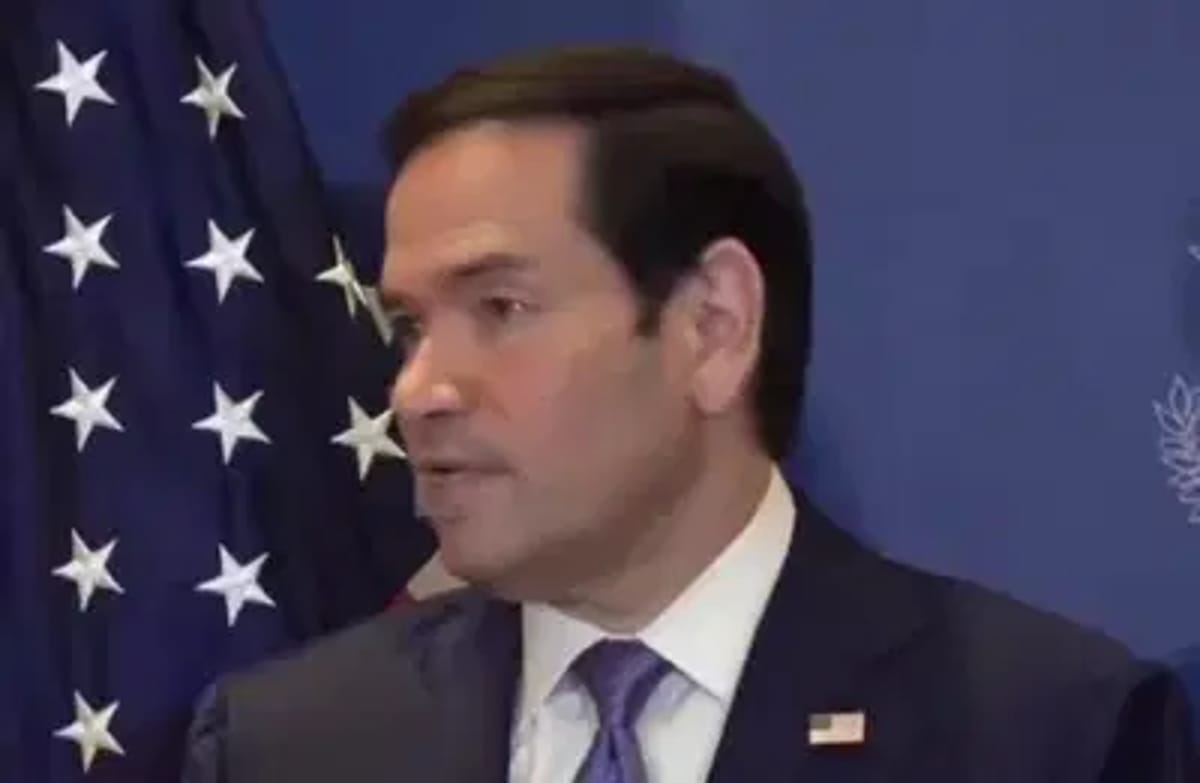
Secretary of State Marco Rubio drew a sharp line between himself and President Trump on Iran during a three-day Gulf tour this week, openly contradicting the president's recent praise of Tehran's new leadership by calling them what he said was simply a fact: "crazy Islamists."
Asked during his trip whether he saw a change in Iran's current leadership, or whether he still considered them "crazy Islamists," as Trump had conspicuously declined to, Rubio did not hesitate. "That's not what I think," he said. "That's a fact."
The remark came as Rubio was wrapping up a Gulf swing through the UAE, Kuwait, and Bahrain, where he sought to reassure American allies who absorbed heavy Iranian missile and drone fire during the more than 100 days of war that began February 28. The UAE alone was struck by approximately 2,800 missiles and drones; Kuwait's airport, commercial ports, and desalination plants were hit; and Qatar's Ras Laffan gas facility suffered significant damage.
Against that backdrop, Rubio delivered some of the toughest American rhetoric on Iran heard since the MOU was signed, even as the Trump administration simultaneously issued sanctions waivers allowing Tehran to sell oil on the open market.
On the Strait of Hormuz, Rubio was unequivocal. The MOU states that Iran may not charge transit fees during a 60-day negotiation period, but Rubio went further, stating flatly that Washington would not accept any Iranian attempt to impose tolls on vessels passing through what he described as an international waterway subject to international law, full stop. "This is the situation in international waterways around the world," he said, "and that is what we expect here as well."
On Iranian proxies, Rubio warned that a real end to regional hostilities was impossible while Iranian-linked militia groups continued launching missiles and drones from Iraqi soil. He said the issue was included in the MOU's framework and would be addressed in continuing negotiations.
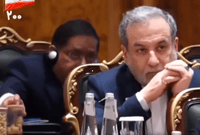
When Iran's leadership publicly denied aspects of the Switzerland talks, Rubio dismissed the contradiction without alarm. "We know what they agreed to," he said. "I don't know why they have to say the things they say." He acknowledged Tehran had its own domestic politics to manage, but said the only test that mattered was whether Iran actually honored its commitments.
Rubio also flatly ruled out American funds financing any Iranian reconstruction, saying that if Iran chose integration into the regional economy, investment would have to come from other foreign sources. He did leave a door open, framing the choice in stark terms: if Iran's leadership decided to become a state rather than a revolutionary movement that exports terrorism, he said, remarkable opportunities awaited them.
Rubio's comments come after the US and Iran signed an MOU last week to extend a fragile ceasefire and work toward a permanent end to the conflict, with talks continuing over 60 days to address thorny issues including Iran's nuclear program. Shipping through Hormuz has remained patchy despite the ceasefire, with most vessels still crossing dark, meaning their tracking systems are switched off, a pattern resembling late-blockade conditions rather than a functioning open strait.
The gap between Rubio's posture and Trump's was unmistakable. While the president has spoken warmly of Tehran's new leadership in recent days, his own secretary of state used a press conference in the Gulf to make clear he sees no such transformation, and that the burden of proof remains entirely on Iran.