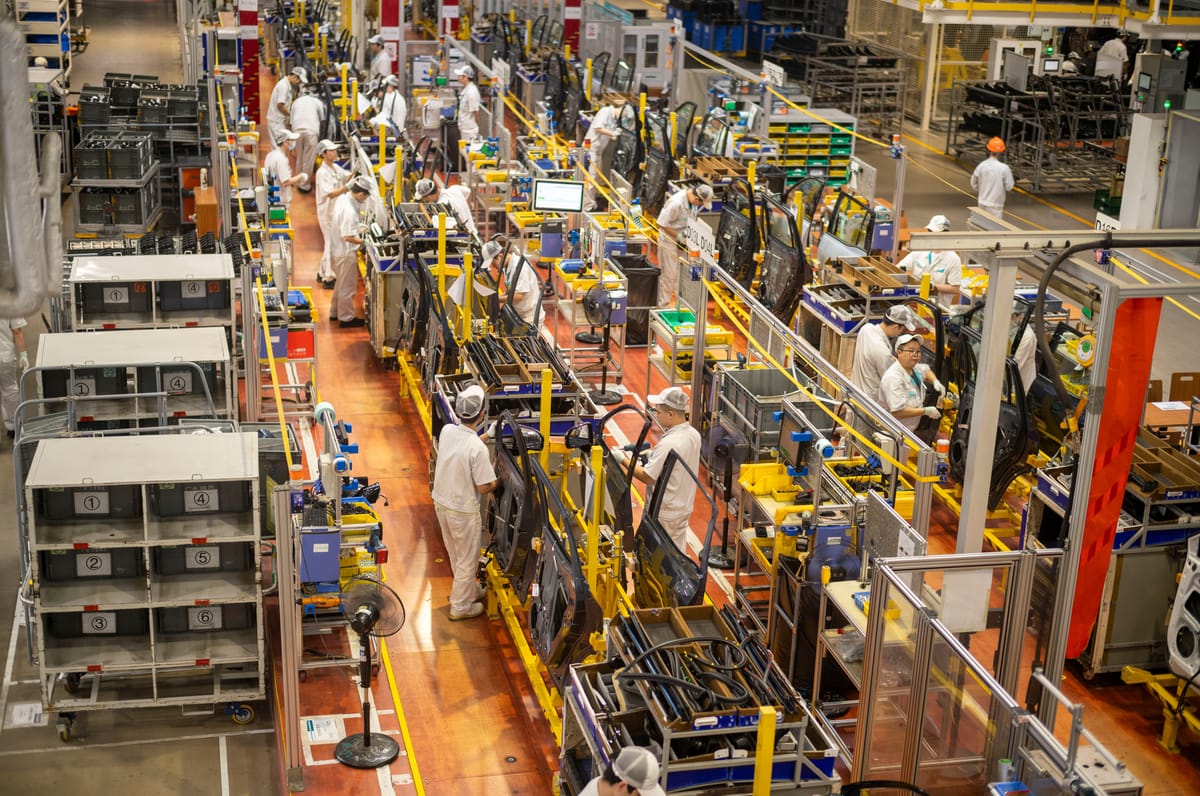
China's economy delivered a split verdict in August, with factory output accelerating faster than expected while consumption and investment continued to signal significant weakness across the domestic market.
According to data released by China's National Bureau of Statistics, industrial production climbed 5.2% in August compared to the same month last year. The figure represents a notable acceleration from July's 4.5% increase and exceeded analyst expectations. A Reuters survey of 42 economists had projected growth of just 4.8%.
But the robust manufacturing numbers stand in sharp contrast to the behavior of Chinese consumers. Retail sales, considered one of the key indicators of private consumption strength, rose only 0.4% in August year-over-year. That marked a slowdown from July's 0.6% gain and fell well short of analyst forecasts for 0.8% growth.
Investment data also continued to reflect underlying difficulties. Real estate investment dropped 7.2% in the first eight months of the year, compared to a 6.7% decline in the January-July period. While the figure matched forecasts, it points to the ongoing deterioration in investment across the Chinese economy.
The gap between production and consumption has emerged as one of the central challenges facing China's economy. The country's factories continue to benefit from strong demand for export-oriented products, particularly in technology sectors and industries tied to artificial intelligence. Earlier this month, reports showed Chinese exports surged in August, driven in part by international demand for advanced technology products.
Meanwhile, Chinese consumers remain cautious. The prolonged real estate crisis, falling home prices, and concerns about income and employment continue to weigh on household economic confidence. The result is an economy where factories are producing at an accelerating pace, but the domestic public is not increasing its spending at the same rate.
The new data may intensify pressure on Beijing to introduce additional measures to stimulate domestic consumption and investment. While the recovery in manufacturing provides the Chinese economy with some breathing room, the weakness in consumption and real estate continues to raise questions about the country's ability to maintain a high growth rate over the long term.