No surprise
Eizenkot Hints at Government with Arab Support
Former Chief of Staff, MK, Yashar! chairman Gadi Eizenkot said on "Meet the Press" Saturday night that the Opposition would "Know how to form a Government with 58 mandates," hinting at relying on Arab parties. Comments have drawn criticism across the spectrum, from Gantz to Smotrich.
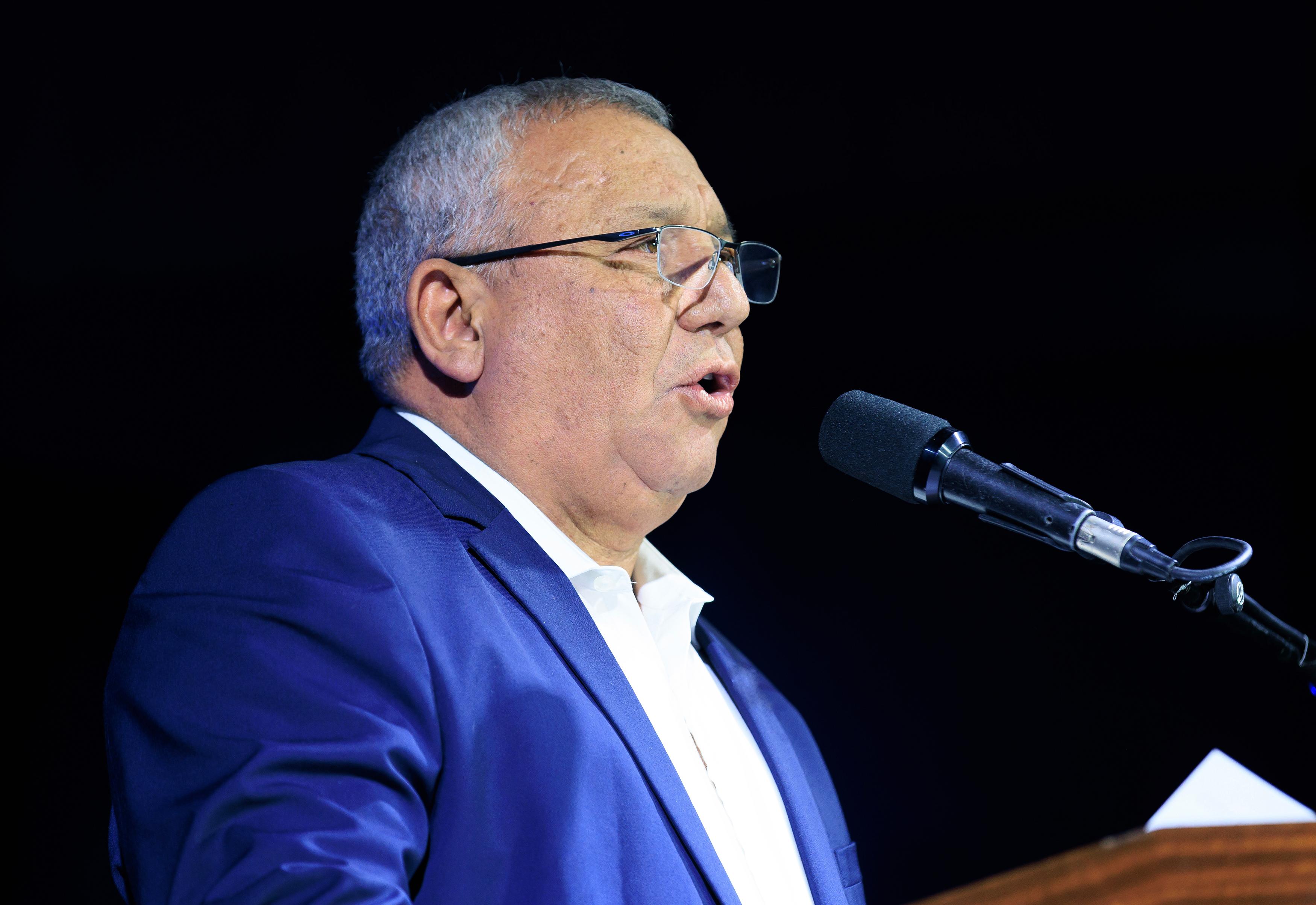
Yashar party chairman and former IDF chief of staff Gadi Eisenkot drew criticism from across the political spectrum on Saturday after comments that appeared to leave open the possibility of cooperation with Arab parties to form a future government.
Speaking on Channel 12’s Meet the Press, Eisenkot suggested that the Zionist opposition bloc could still form a government even if it wins only 58 seats in the next Knesset election, short of a governing majority. Asked whether this could mean relying on external support from Arab-majority parties such as Ra’am or Hadash-Ta’al, Eisenkot said he would not seek deals with Arab parties and would not ask anything of them, but did not explicitly rule out outside support.
The remarks sparked an immediate response from opposition figures and coalition leaders alike. National Unity chairman Benny Gantz, whose party Eisenkot left earlier this year, said that forming a minority government with Arab backing was unrealistic in the post–October 7 political climate. Gantz said Israel needs a broad Zionist government with a clear majority, warning that reliance on Arab parties could destabilize the political system and strengthen far-right forces.
Coalition figures were sharper in their criticism. Finance Minister Bezalel Smotrich accused Eisenkot and the opposition of revisiting what he called a dangerous political model, arguing that Israel cannot be governed with the backing of parties he claims fail to adequately oppose terrorism. Likud also condemned the remarks, saying they revealed an opposition strategy that would depend on Arab anti-Zionist parties and undermine the foundations of the state.
Eisenkot responded later with a lengthy statement accusing Prime Minister Benjamin Netanyahu of political hypocrisy and strategic failure. He said there was no secret plan to form a government reliant on Arab parties, insisting instead that his goal was to establish a clear Zionist majority government that would restore Israel’s security, unity, and democratic character. Eisenkot blamed the current government for deepening internal divisions and for policies he said contributed to the failures surrounding October 7.
Recent polling has consistently shown both the coalition and opposition blocs falling short of a clear majority ahead of elections scheduled for October 2026, raising questions about future coalition arithmetic. Eisenkot reiterated that his stated goal remains a governing coalition of at least 63 Zionist Knesset members.
The controversy underscored ongoing political sensitivity surrounding Arab party involvement in national governance, particularly in the aftermath of the Hamas-led October 7 attacks and the continuing war.