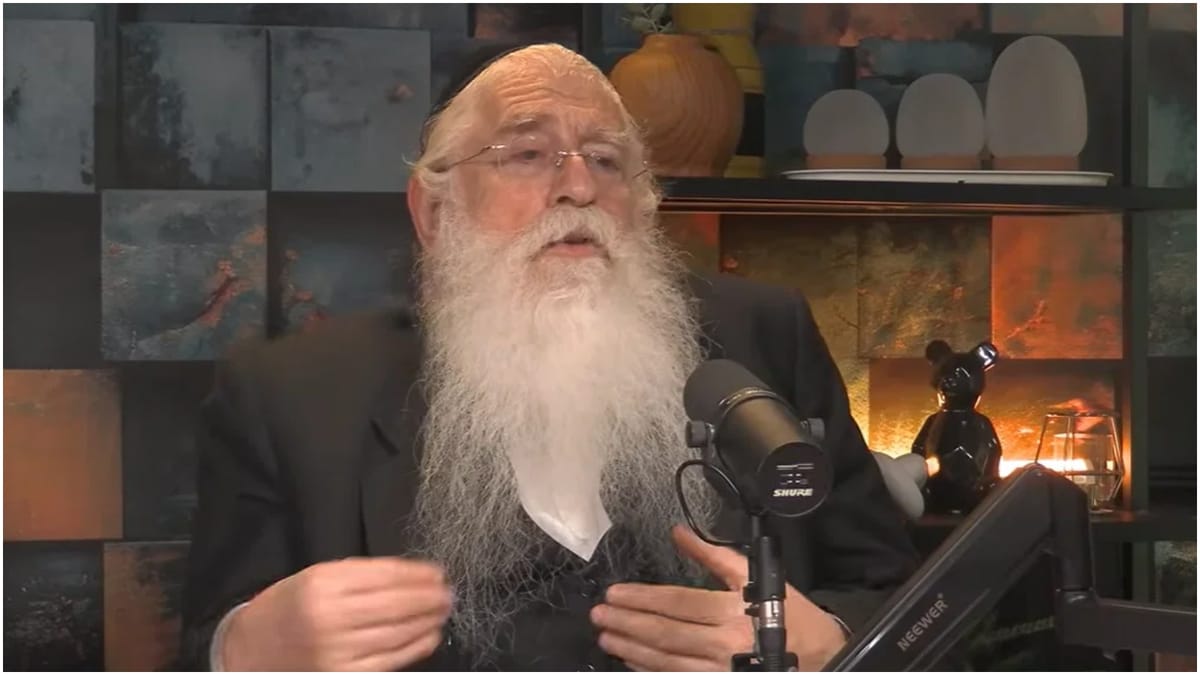
"The fact that you're committed to the kehillah is our test as public representatives," Goldberg added. "There are kehillos of 20-30 people and they have a shul? Yes, and the wisdom is to manage the web of everyone's interests like a puzzle, without one coming at the expense of another."
Goldberg and Porush continued discussing other political issues, but Goldberg returned to ask during the podcast: "Many people ask themselves, why if the primary system that succeeded very much in Beit Shemesh, for example, in the end I was elected and we are elected by the kehillos, primaries, why don't they hold primaries at the national level?"
Porush replied: "I have to tell you that I was inside the constitution committee of Agudas Yisrael. In 5754 [1994] there was the Parties Law, they had to make a constitution, so there was an innovation then... but in any case, in the constitution of Agudas Yisrael it's written that Knesset members can be elected either by the national centre or the national council, or the directorate can be authorized to act with the power of a national convention, or through primaries."
"And I once led a campaign, certainly not for your age, but I led a campaign once with ads in the weekly press. 'HaModia' wouldn't run such ads, but in the weeklies I would run ads about primaries. I think it's the best and most important thing."
Porush elaborated on the merit of the internal election system: "When you're elected in primaries, you feel much more committed to those who vote for you, yes? You never know, everyone tells you 'I voted for you, I helped you.' I think that in the end, if we want to continue to exist and be a vibrant and fresh movement, we'll need to move to this system. You can't be in this situation, where 50 years ago there were internal elections and I accept this or that or that."
He then moved to attack Gur: "Take the example from five years ago, I raised this question: why should the central faction receive both the first place and also the fifth place? Why? They certainly don't have, even by their own system, more than one mandate. And even if they have more than one mandate, then it's clear they have capable public representatives who also know how to deliver the goods and receive... why can't you give the feeling to another kehillah? So it came nicely, so it was Sanz."
The conversation takes place against the backdrop of ongoing political tension in Agudas Yisrael. Several weeks ago, Porush addressed at length the split move in Agudas Yisrael, when he together with Belz broke away and established a separate faction, 'Chomat Toras Yisroel'. "What happened with the funds is an act that must not be done," Porush said then. "Even if I wanted to be silent about it, and I don't, the outcry of our representatives in the field obligated me to take action."
In recent weeks the political drama has expanded as Vizhnitz Centre signed on to a joint axis with Shomrei Emunim and Belz against Gur, a significant step disrupting the internal balance of power in the party.