
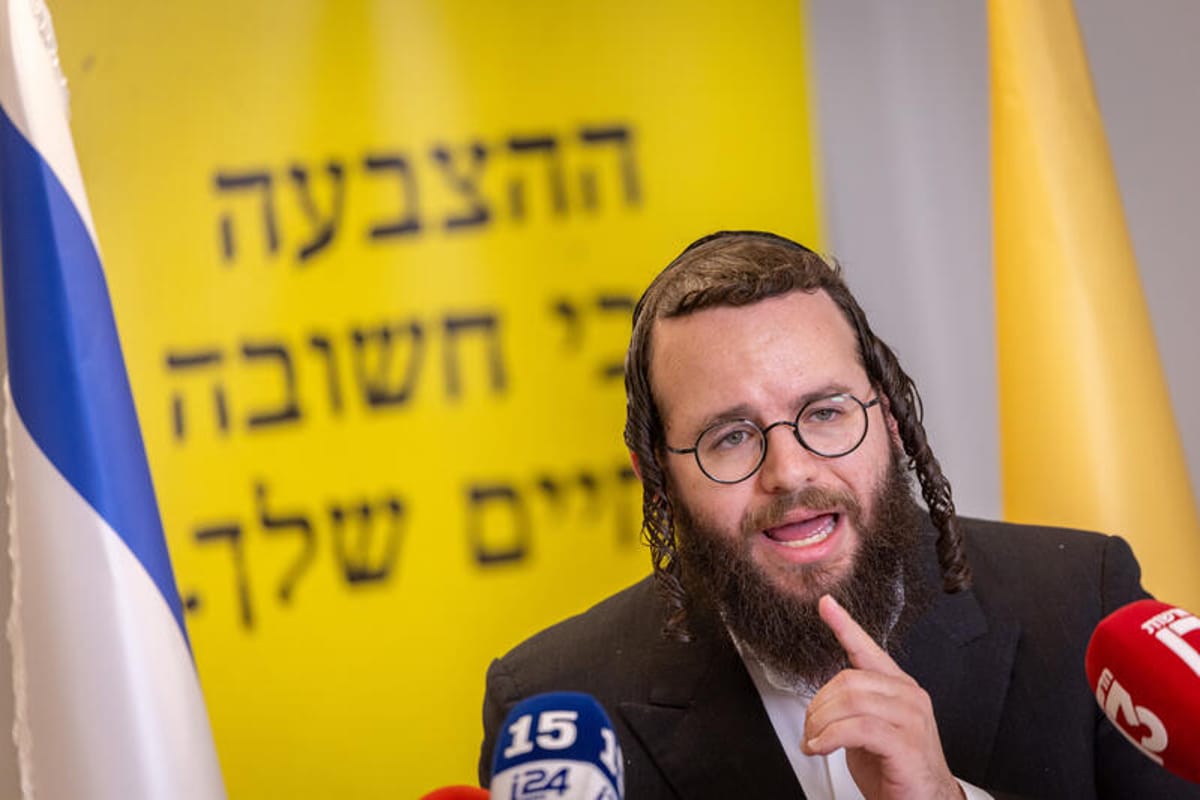
Moti Leitner, chairman of the Chareidi Public party, sent an open letter this morning (Thursday) to party activists summing up the Knesset race. In it, Leitner tries to balance taking full responsibility for the failure at the polls with laying the groundwork for continuing his political path.
Though the party won only around 9,500 votes and did not pass the electoral threshold, Leitner chooses to frame the result as part of a long-term process. "We failed the test of results," Leitner wrote, adding a personal apology, but alongside it he made clear that in his view there is a much broader public that supported the party's ideas but held back from voting for it: "I failed to win the trust of tens of thousands of chareidim who identify with our path and message, and did not find in us an address on election day."
A frame of "mission" instead of withdrawal
Instead of announcing personal conclusions or withdrawal from public life, a standard step after an electoral defeat in a campaign, the text makes it clear that Leitner sees these elections as only the starting point.
Throughout the letter, the party chairman weaves value-based arguments and quotations from traditional sources for continuing the work, such as "It is not upon you to finish the work, nor are you free to desist from it." These formulations present the Knesset run not only as a passing political contest, but as an ongoing ideological duty that does not depend on the analytical result of a single round.
Leitner also addressed tactical mistakes made during the campaign, and noted that the party will conduct a lessons-learned process going forward:
"There are things that could have been done differently. There are messages we should have refined, sweetened and distilled... We will conduct a real internal review, understand in depth the full range of mistakes... and draw the lessons. We will do everything to be worthy of your trust next time."
The dominant tone in the argumentative and closing section of the letter is not one of summary or closing ranks, but rather discourse characteristic of building a mechanism for the next elections.