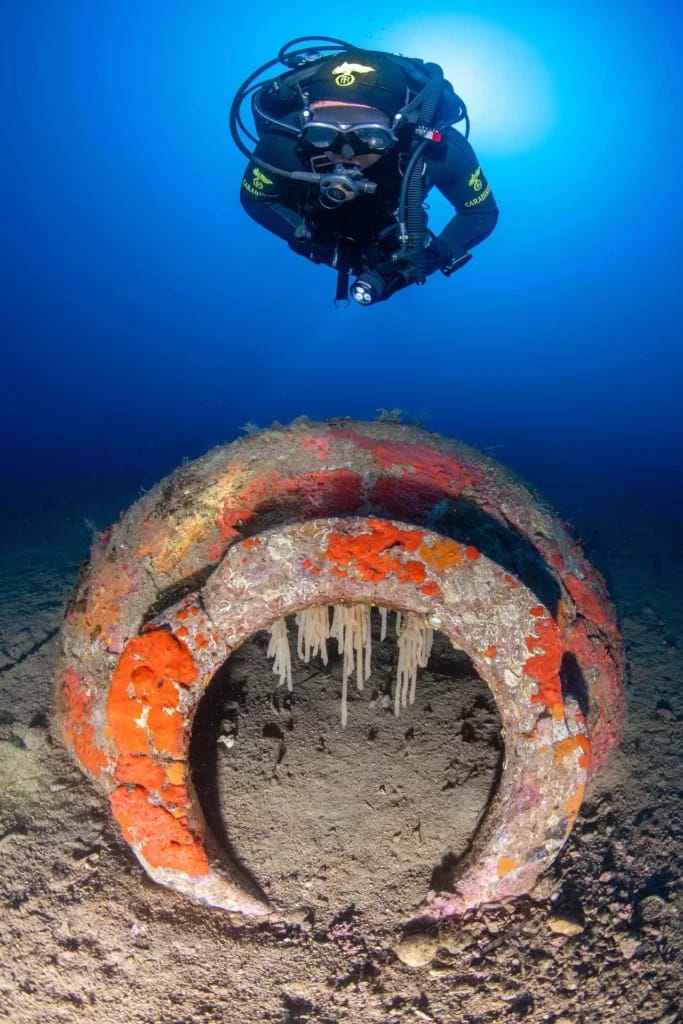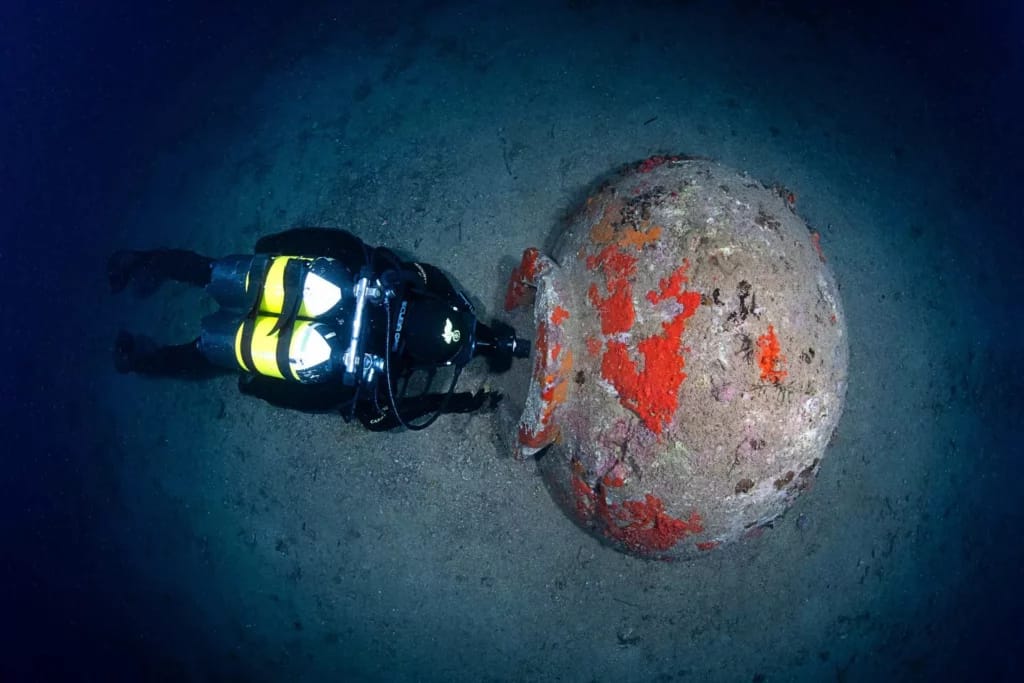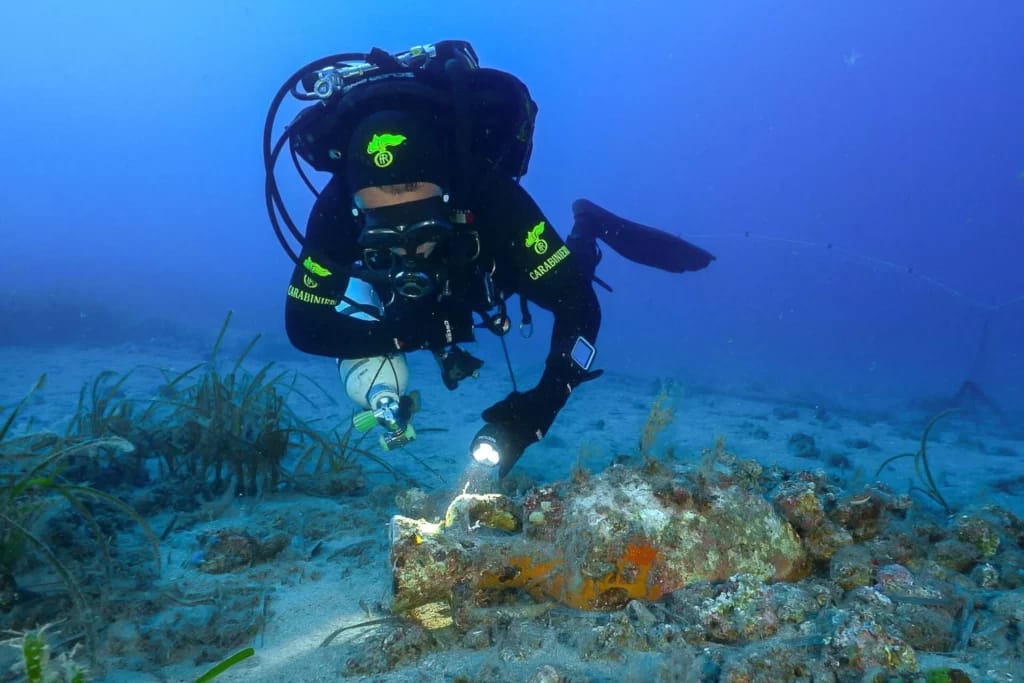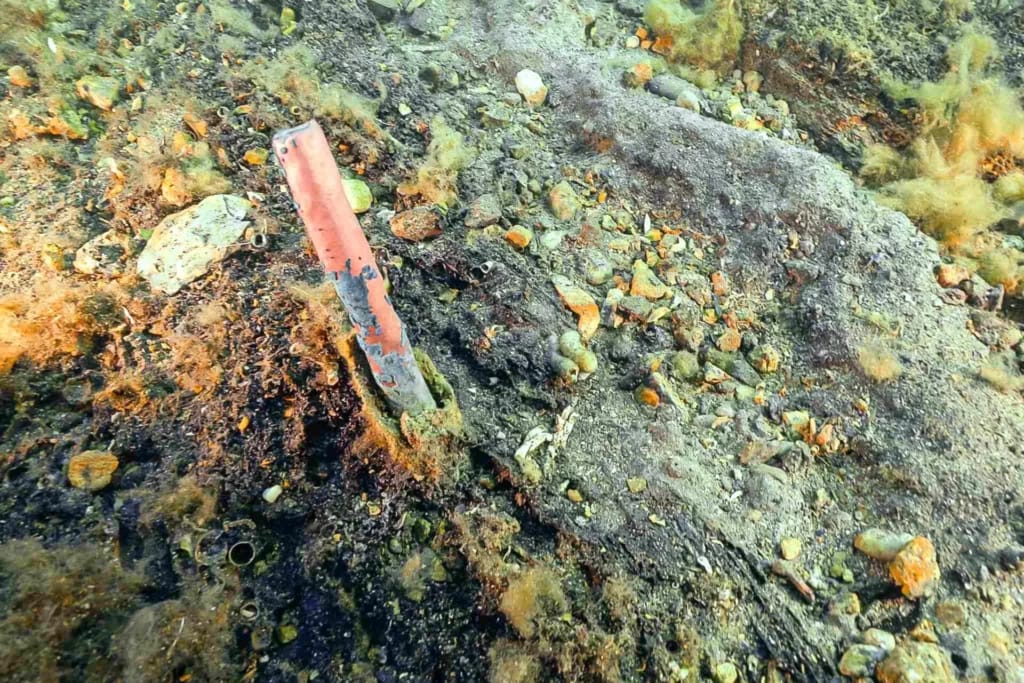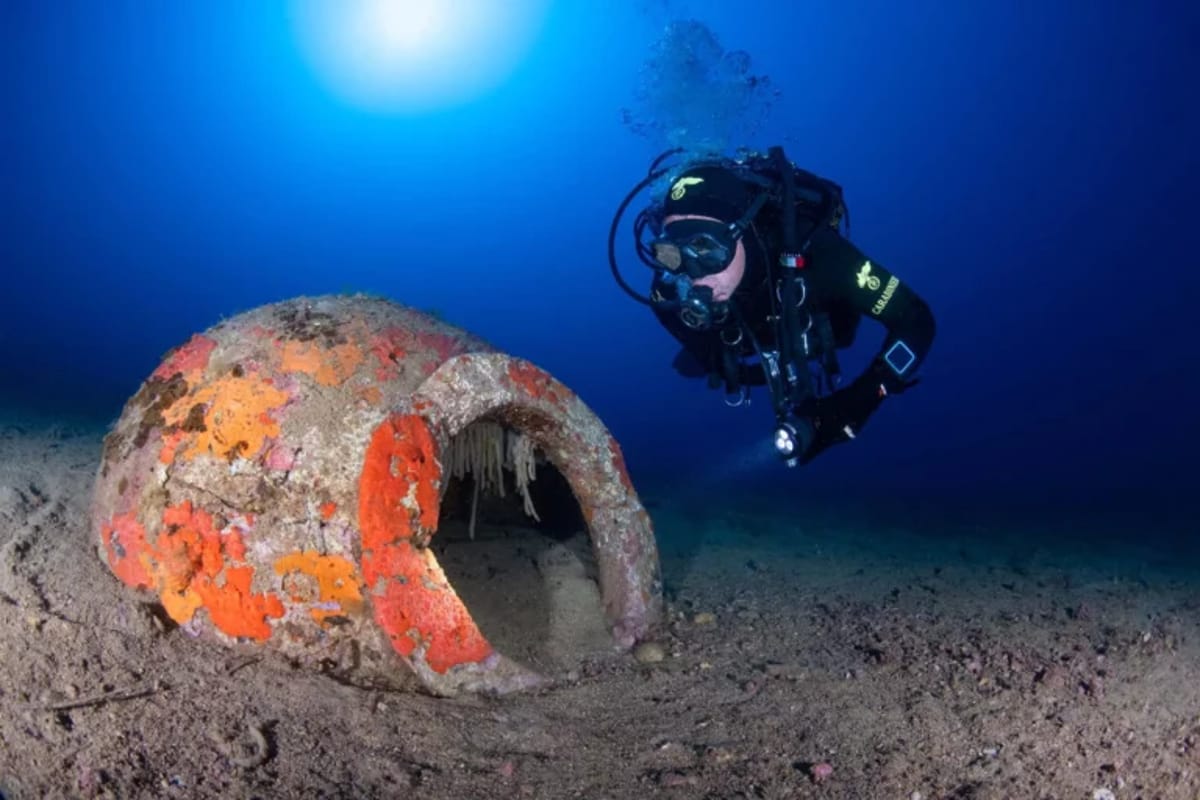
The waters surrounding Italy's Elba Island continue to yield glimpses into the ancient world. An underwater archaeological survey in the area has uncovered a nearly intact large Roman ceramic vessel known as a dolium, while a separate site revealed wooden remnants that may prove to be parts of an ancient shipwreck.
The finds emerged during a monitoring operation that began in May 2026 in the waters between the Piombino Strait and the islands forming the Tuscan Archipelago. The Archaeological, Fine Arts and Landscape Authority of Pisa and Livorno is leading the effort, working alongside Carabinieri units specializing in cultural heritage protection and underwater operations.
The most striking discovery is the dolium, a large ceramic container used during the Roman period for storing and transporting commodities such as wine, oil and grain. Unlike the more familiar amphorae, which were relatively small and carried in large numbers, dolia could be enormous vessels, some holding up to 2,000 liters.
On certain Roman merchant ships, such containers were installed almost permanently within the hull to enable the transport of goods in massive quantities. The shape of the discovered vessel and its archaeological context suggest it may have belonged to one of these "dolium ships," commercial vessels that operated primarily between the first century BCE and the first century CE.