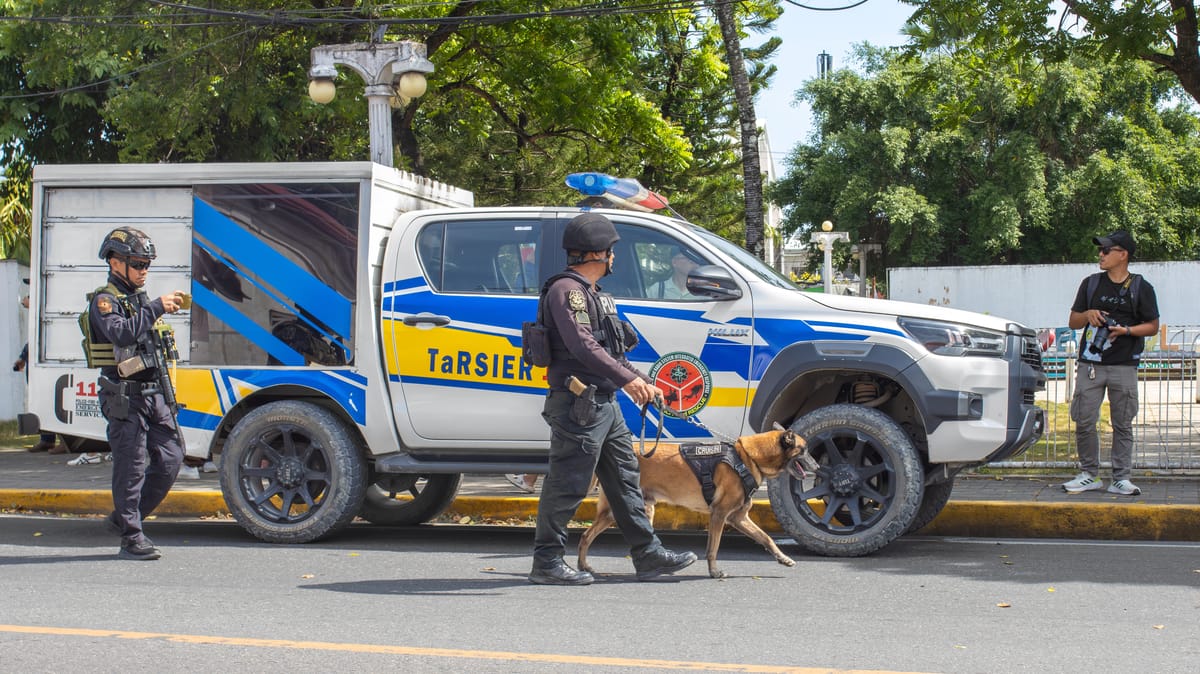
Philippine police and immigration authorities raided the Chabad center on the southeastern island of Siargao on Friday night, arresting several Israelis in what officials described as the first wave of a broader operation targeting foreign nationals staying in the country illegally.
Authorities said the foreign nationals were being held temporarily at the police station pending their transfer to a detention facility in the capital, while the Bureau of Immigration prepared charges and continued deportation proceedings. The Siargao center is one of seven Chabad houses operating across the Philippines.
The raid took place as dozens of Israelis had gathered at the center for Friday night kiddush and a Shabbat meal. An Israeli mother traveling with her family described the moment armed officers entered, saying that just before kiddush, a very large number of police and soldiers suddenly entered with weapons drawn while families sat with their children. She said it felt as though they were raiding a terrorist target, with the area sealed off and officers carrying machine guns, telling everyone to sit quietly and not move or speak.
She said immigration investigators entered a few minutes later, and only then did those present understand that authorities were searching for people whose visas had expired. Several such individuals were found and taken away. The woman said she was separated from her husband and left alone with her children for the duration of the incident, though she said she managed to reassure them and that the ordeal ended safely after about an hour.
Her husband said he believed Israelis were being treated with particular suspicion on the island, saying it was reasonable to assume the operation would not have been carried out so aggressively had the location not been identified with Israelis. He added that some of this may be self-inflicted, since some Israelis on the island have not respected local laws or represented the country well. The couple urged Israeli travelers to respect local laws, extend visas before they expire, and remember that they are guests and informal ambassadors of the State of Israel wherever they go.
Immigration officials published images of each detainee holding a sign listing the reason for their detention, including labels such as undesirable foreign national, overstaying and blacklisted, and expired employment visa and work permit.
Melody Gonzales, deputy head of the Bureau of Immigration's intelligence division for the nearby island of Mindanao, said the detainees included Israeli citizens Ben Yeshaya Menachem Mendel Rafael and Aharon Eida, both 22, who allegedly overstayed and were working without proper visas and permits. The two reportedly worked at an Israeli restaurant and also operated a Jewish center despite lacking the required immigration documents, and were unable to present their passports during the operation. A third Israeli, 23-year-old Ababa Twabel, was arrested on suspicion of working without proper documentation and had previously been designated an undesirable foreign national following an earlier arrest. A fourth Israeli, 51-year-old Itai Harari, was arrested for allegedly working as a DJ without a required work permit.
Other detainees included two Chinese nationals, an Australian hotel employee suspected of remaining in the Philippines for nine years, and citizens of Lithuania, Morocco and Nigeria, with some reportedly carrying criminal records or already on the country's blacklist.
Siargao, known as the surfing capital of the Philippines, has in recent years become a major destination for Israeli travelers, particularly young people after military service, backpackers, surfers and digital nomads, with a relatively permanent Israeli community having developed on the island, including Israeli-run restaurants, guesthouses and surfing schools.
Over the past year, the island has seen growing tension between some local residents and Israeli visitors following several publicized incidents involving allegations of inappropriate conduct and confrontations with local businesses. Philippine authorities described these as isolated incidents, but said they prompted increased immigration enforcement, reflected in the current operation. Some online reaction to the raid carried anti-Israel and pro-Palestinian sentiment, though officials stressed the operation was strictly an immigration enforcement action based on intelligence and resident complaints, and had nothing to do with religion or politics.
Immigration Commissioner Joel Anthony Viado said the Philippines remains a welcoming destination for legitimate tourists, investors and visitors, but stressed that hospitality must not be mistaken for tolerance of those who violate the country's laws, and that anyone who abuses the privilege of remaining in the country must face the consequences. He added that the bureau maintains a strong presence not only in Siargao but in other major tourist destinations, and that additional enforcement measures against foreign nationals who disregard immigration law will continue.